Kejriwal Attacks Modi Over CJP Protest Row
AAP chief slams PM, Centre over police action against protesters.
'%3E%3Crect%20width%3D'96'%20height%3D'96'%20fill%3D'%231A5276'%2F%3E%3Ccircle%20cx%3D'30'%20cy%3D'24'%20r%3D'44'%20fill%3D'%23fff'%20opacity%3D'.12'%2F%3E%3Ccircle%20cx%3D'60'%20cy%3D'74'%20r%3D'40'%20fill%3D'%23000'%20opacity%3D'.10'%2F%3E%3C%2Fg%3E%3Cg%20fill%3D'%23fff'%3E%3Cpath%20d%3D'M31%2041%20L48%2031%20L65%2041%20Z'%2F%3E%3Crect%20x%3D'33'%20y%3D'43'%20width%3D'4'%20height%3D'17'%2F%3E%3Crect%20x%3D'41'%20y%3D'43'%20width%3D'4'%20height%3D'17'%2F%3E%3Crect%20x%3D'51'%20y%3D'43'%20width%3D'4'%20height%3D'17'%2F%3E%3Crect%20x%3D'59'%20y%3D'43'%20width%3D'4'%20height%3D'17'%2F%3E%3Crect%20x%3D'30'%20y%3D'62'%20width%3D'36'%20height%3D'4'%20rx%3D'1'%2F%3E%3C%2Fg%3E%3C%2Fsvg%3E)
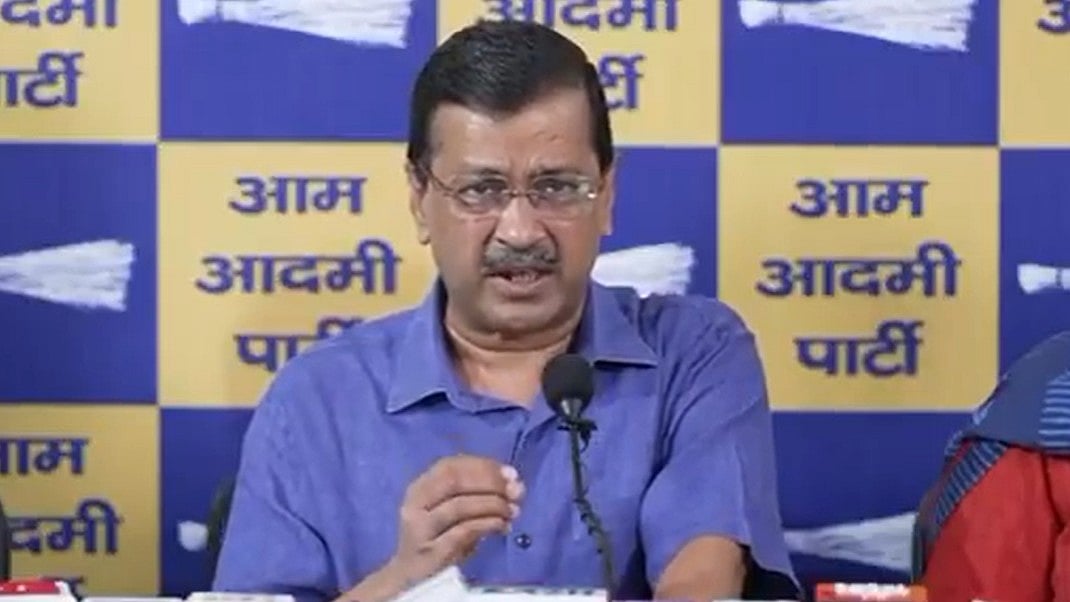
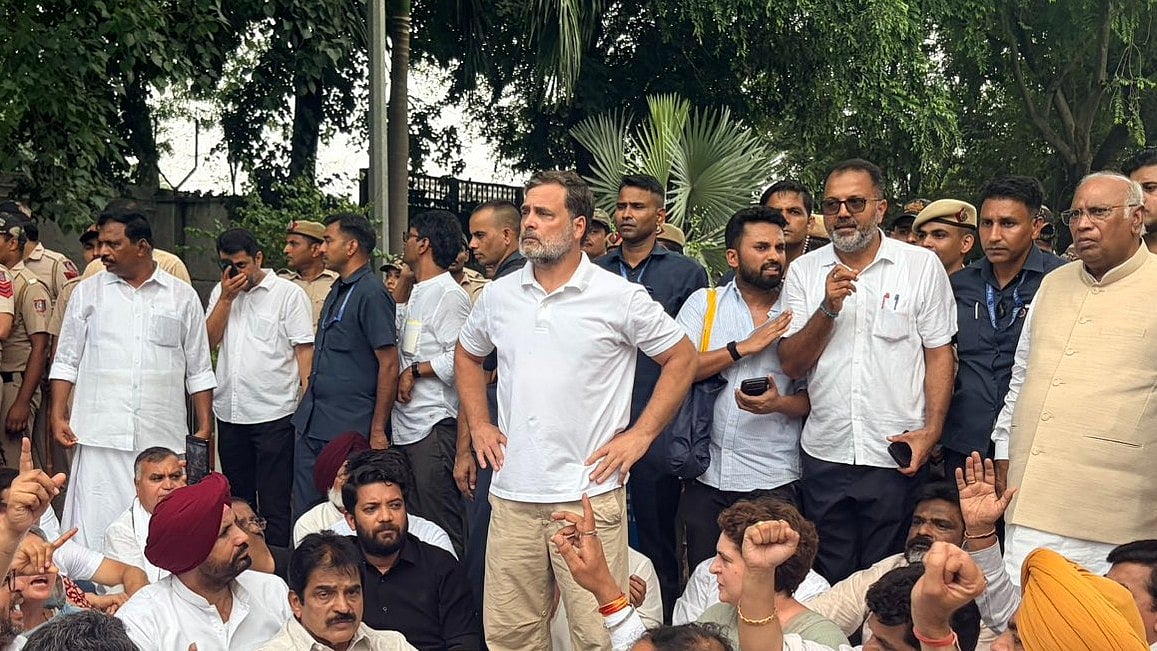
Arvind Kejriwal, the National Convenor of the Aam Aadmi Party (AAP), launched a scathing attack on Prime Minister Narendra Modi on Tuesday, criticizing the police action against protesters from the Campaign for Judicial Accountability and Reforms (CJP) during their march towards Parliament in Delhi.
The AAP chief's remarks came a day after clashes erupted between security personnel and CJP protesters, who were demonstrating over alleged exam paper leaks, evaluation irregularities, and demands for reforms in recruitment and competitive examination systems, including the National Eligibility cum Entrance Test (NEET). Kejriwal accused the Centre of threatening citizens instead of addressing their concerns.
In a strongly worded post on social media, Kejriwal wrote, 'Mr. Modi, this country does not belong to your father. Stop issuing threats, or else the people of the country will teach you such a lesson that history will remember what happened to a dictator.' The AAP chief's comments were in response to the police action against the protesters, which included a lathi-charge against students.
Earlier in the day, Kejriwal visited Delhi's Ram Manohar Lohia (RML) Hospital to meet protesters who were injured during Monday's clashes. Union Health Minister JP Nadda also visited RML Hospital to meet the injured protesters, in a gesture that signalled the government's willingness to engage with the protesters.
On Monday, Nadda held talks with CJP spokespersons Saurav Das and Ashutosh Ranka at his residence, marking the first formal engagement between the Centre and representatives of the protest movement. During the meeting, the Union minister heard their demands and appealed to them to call off their agitation.
The developments come amid escalating political exchanges over the handling of the student-led agitation, with the opposition accusing the government of suppressing dissent. The Centre, on the other hand, has urged protesters to resolve the issue through dialogue.
The CJP protest has sparked a nationwide debate over the issues of exam paper leaks, evaluation irregularities, and the need for reforms in recruitment and competitive examination systems. The protest has also highlighted the concerns of students and young people over the fairness and transparency of these systems.
The government's response to the protest has been criticized by the opposition, which has accused the Centre of using heavy-handed tactics to suppress dissent. The AAP and other opposition parties have demanded that the government address the concerns of the protesters and work towards finding a solution to the issues raised by them.
In conclusion, the CJP protest row has highlighted the deepening political divide in the country, with the opposition and the government locked in a bitter struggle over the issues of dissent, democracy, and governance. The outcome of this struggle will have significant implications for the future of Indian democracy and the rights of citizens to express their opinions and participate in the democratic process.
Frequently asked questions
What is the CJP protest about?
The CJP protest is about alleged exam paper leaks, evaluation irregularities, and demands for reforms in recruitment and competitive examination systems, including NEET.
Who met the CJP leaders on Monday?
Union Health Minister JP Nadda met CJP spokespersons Saurav Das and Ashutosh Ranka at his residence on Monday.