BMC Chief Considers Congestion Pricing for Mumbai
Mumbai may introduce congestion pricing, BMC Chief Ashwini Bhide says. Public transport upgrade is a must first.
'%3E%3Crect%20width%3D'96'%20height%3D'96'%20fill%3D'%23B3261E'%2F%3E%3Ccircle%20cx%3D'30'%20cy%3D'24'%20r%3D'44'%20fill%3D'%23fff'%20opacity%3D'.12'%2F%3E%3Ccircle%20cx%3D'60'%20cy%3D'74'%20r%3D'40'%20fill%3D'%23000'%20opacity%3D'.10'%2F%3E%3C%2Fg%3E%3Cg%20fill%3D'%23fff'%3E%3Crect%20x%3D'29'%20y%3D'49'%20width%3D'8'%20height%3D'19'%20rx%3D'1'%2F%3E%3Crect%20x%3D'39'%20y%3D'40'%20width%3D'9'%20height%3D'28'%20rx%3D'1'%2F%3E%3Crect%20x%3D'50'%20y%3D'45'%20width%3D'8'%20height%3D'23'%20rx%3D'1'%2F%3E%3Crect%20x%3D'60'%20y%3D'53'%20width%3D'7'%20height%3D'15'%20rx%3D'1'%2F%3E%3Crect%20x%3D'41'%20y%3D'34'%20width%3D'5'%20height%3D'6'%2F%3E%3C%2Fg%3E%3C%2Fsvg%3E)
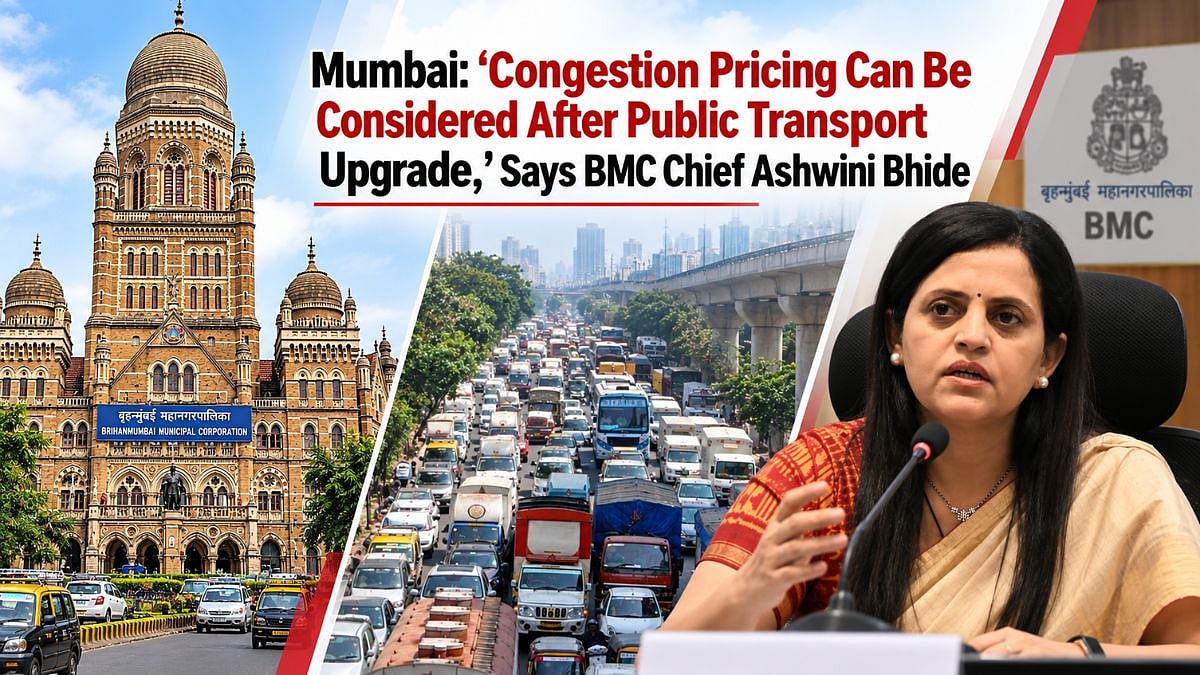
Mumbai's traffic woes may soon be addressed through congestion pricing, according to Municipal Commissioner Ashwini Bhide. In a recent podcast, Bhide stated that congestion pricing could be a viable solution to the city's traffic problems, but only after a robust public transport network is in place.
Bhide explained that cities like Singapore have successfully implemented congestion pricing due to their well-connected public transport systems, including metro, monorail, bus, and waterways. She suggested that Mumbai could follow a similar approach, introducing congestion pricing in certain areas once the public transport system is enhanced.
The idea of congestion pricing is not new to Mumbai, with discussions among politicians, transport experts, and commuters ongoing for years. The concept involves imposing a fee on vehicles entering or traveling through high-traffic areas, with the goal of reducing congestion and encouraging the use of public transport.
Bhide, who also heads the Mumbai Metro Rail Corporation, announced that all metro lines in Mumbai will be operational within the next five years. The Coastal Road project and other ongoing infrastructure initiatives are also expected to be completed within this timeframe.
BJP corporator Makarand Narwekar had previously proposed a congestion-pricing system targeting single-occupant private vehicles in South Mumbai's busiest areas, including Fort, Nariman Point, and Colaba. However, Bhide emphasized that any such system would require a reliable public transport alternative to be in place first.
Mumbai's traffic congestion is a major concern for residents and commuters, with the city's roads often gridlocked during peak hours. The introduction of congestion pricing could help alleviate this issue, but it remains to be seen whether the necessary public transport upgrades will be completed in time.
The BMC's plans for infrastructure expansion and public transport upgrades are ambitious, with a focus on creating a more efficient and sustainable transport network. If successful, these initiatives could pave the way for the introduction of congestion pricing in Mumbai, helping to reduce traffic congestion and improve air quality.
In the coming years, Mumbai's transport landscape is expected to undergo significant changes, with the completion of ongoing projects and the introduction of new initiatives. As the city continues to grow and develop, finding effective solutions to its traffic problems will be crucial to ensuring the quality of life for its residents.
The potential introduction of congestion pricing in Mumbai is a significant development, and one that will be closely watched by residents, commuters, and transport experts alike. With the right public transport infrastructure in place, congestion pricing could be a valuable tool in reducing traffic congestion and creating a more sustainable transport network for the city.
Frequently asked questions
What is congestion pricing?
Congestion pricing involves imposing a fee on vehicles entering or traveling through high-traffic areas.
When will congestion pricing be introduced in Mumbai?
Congestion pricing will be considered after the public transport system is upgraded, with all metro lines expected to be operational within the next five years.