US Judge Blocks Trump Rule on Foreign Student Visas
A US judge has blocked a new Trump rule limiting foreign student and journalist visas. The rule was set to take effect on Tuesday.
'%3E%3Crect%20width%3D'96'%20height%3D'96'%20fill%3D'%234A235A'%2F%3E%3Ccircle%20cx%3D'30'%20cy%3D'24'%20r%3D'44'%20fill%3D'%23fff'%20opacity%3D'.12'%2F%3E%3Ccircle%20cx%3D'60'%20cy%3D'74'%20r%3D'40'%20fill%3D'%23000'%20opacity%3D'.10'%2F%3E%3C%2Fg%3E%3Cg%20fill%3D'none'%20stroke%3D'%23fff'%20stroke-width%3D'3'%3E%3Ccircle%20cx%3D'48'%20cy%3D'48'%20r%3D'16'%2F%3E%3Cellipse%20cx%3D'48'%20cy%3D'48'%20rx%3D'6.5'%20ry%3D'16'%2F%3E%3Cline%20x1%3D'32'%20y1%3D'42'%20x2%3D'64'%20y2%3D'42'%2F%3E%3Cline%20x1%3D'32'%20y1%3D'54'%20x2%3D'64'%20y2%3D'54'%2F%3E%3C%2Fg%3E%3C%2Fsvg%3E)
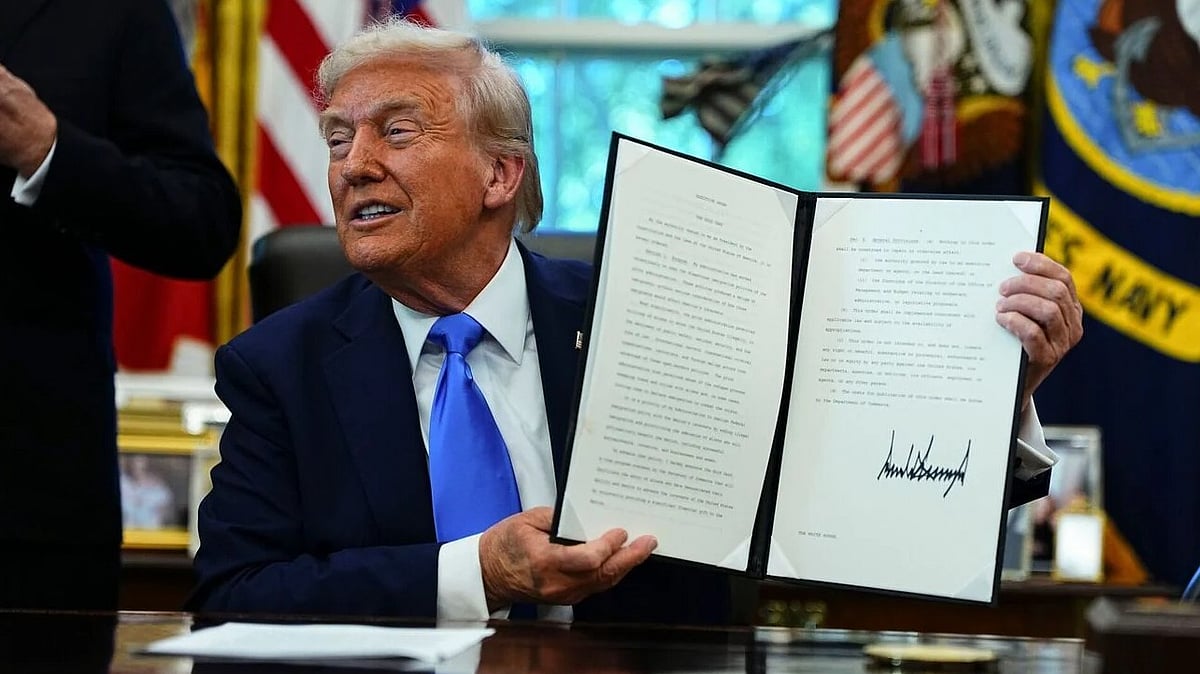
A US federal judge has temporarily blocked a new Trump administration rule that would impose stricter limits on how long foreign students and journalists can study or work in America. The decision, made by Massachusetts district judge F Dennis Saylor IV on Monday, will bring relief to international students, including many from India.
The judge ruled that the new policy would probably cause catastrophic damage to the US economy and higher-education system. He rejected the government's claims that the rule was needed to protect the country. The preliminary injunction halts the implementation of the new rule while the case is heard in court.
The Trump administration rule, finalized in July, put a four-year limit on student and exchange visitor visas, and a 240-day limit on journalists' visas, barring China. Mediapersons from China had a 90-day limit on visas issued to them as per the now-postponed rule. The new rules were to come into effect from Tuesday.
The rule allowed students and journalists to apply for extensions, but approval was at the discretion of officials at the Department of Homeland Security (DHS), with no provision to appeal the denial of extension. Several organizations, primarily representing the higher education sector and labor unions, had moved court with a plea to strike down the rule.
Harvard President Alan M. Garber had called the rule odd, contrasting the four-year cap with the typical length of a PhD program. The Department of Homeland Security (DHS) argued that the limits would help it curb fraud and make it easier to stop people from overstaying their visas.
Judge Saylor also specifically noted the possibility that the now-blocked rule could be abused. He wrote that the obvious likelihood that the visas of foreign journalists who are critical of the government will not be renewed is a concern.
The decision is a significant development for international students and journalists who were set to be affected by the new rule. It is likely to have implications for the US higher education system and the country's economy.
The US is home to many international students, with India being one of the top countries of origin. The new rule would have had a significant impact on these students, who contribute to the US economy and higher education system.
In conclusion, the blocking of the Trump rule on foreign student and journalist visas is a significant development that will bring relief to international students and journalists. The decision highlights the importance of protecting the rights of international students and journalists and ensuring that they are not unfairly targeted by immigration policies.
The case is ongoing, and the final outcome is yet to be determined. However, the preliminary injunction is a positive step for international students and journalists who were set to be affected by the new rule.
The decision also raises questions about the rationale behind the Trump administration's immigration policies. The judge's comments on the potential for abuse of the rule are particularly concerning and highlight the need for careful consideration of the impact of immigration policies on international students and journalists.
Overall, the blocking of the Trump rule on foreign student and journalist visas is a significant development that will have implications for the US higher education system, the economy, and international students and journalists.
Frequently asked questions
What was the Trump rule on foreign student visas?
The rule would have imposed a four-year limit on student and exchange visitor visas, and a 240-day limit on journalists' visas, barring China.
Why did the judge block the Trump rule?
The judge ruled that the new policy would probably cause catastrophic damage to the US economy and higher-education system, and that it could be abused to target foreign journalists who are critical of the government.