Congress MP Masood Explains Vande Mataram Stand
Congress MP Masood clarifies stance on Vande Mataram. He will rise but not sing.
'%3E%3Crect%20width%3D'96'%20height%3D'96'%20fill%3D'%231A5276'%2F%3E%3Ccircle%20cx%3D'30'%20cy%3D'24'%20r%3D'44'%20fill%3D'%23fff'%20opacity%3D'.12'%2F%3E%3Ccircle%20cx%3D'60'%20cy%3D'74'%20r%3D'40'%20fill%3D'%23000'%20opacity%3D'.10'%2F%3E%3C%2Fg%3E%3Cg%20fill%3D'%23fff'%3E%3Cpath%20d%3D'M31%2041%20L48%2031%20L65%2041%20Z'%2F%3E%3Crect%20x%3D'33'%20y%3D'43'%20width%3D'4'%20height%3D'17'%2F%3E%3Crect%20x%3D'41'%20y%3D'43'%20width%3D'4'%20height%3D'17'%2F%3E%3Crect%20x%3D'51'%20y%3D'43'%20width%3D'4'%20height%3D'17'%2F%3E%3Crect%20x%3D'59'%20y%3D'43'%20width%3D'4'%20height%3D'17'%2F%3E%3Crect%20x%3D'30'%20y%3D'62'%20width%3D'36'%20height%3D'4'%20rx%3D'1'%2F%3E%3C%2Fg%3E%3C%2Fsvg%3E)
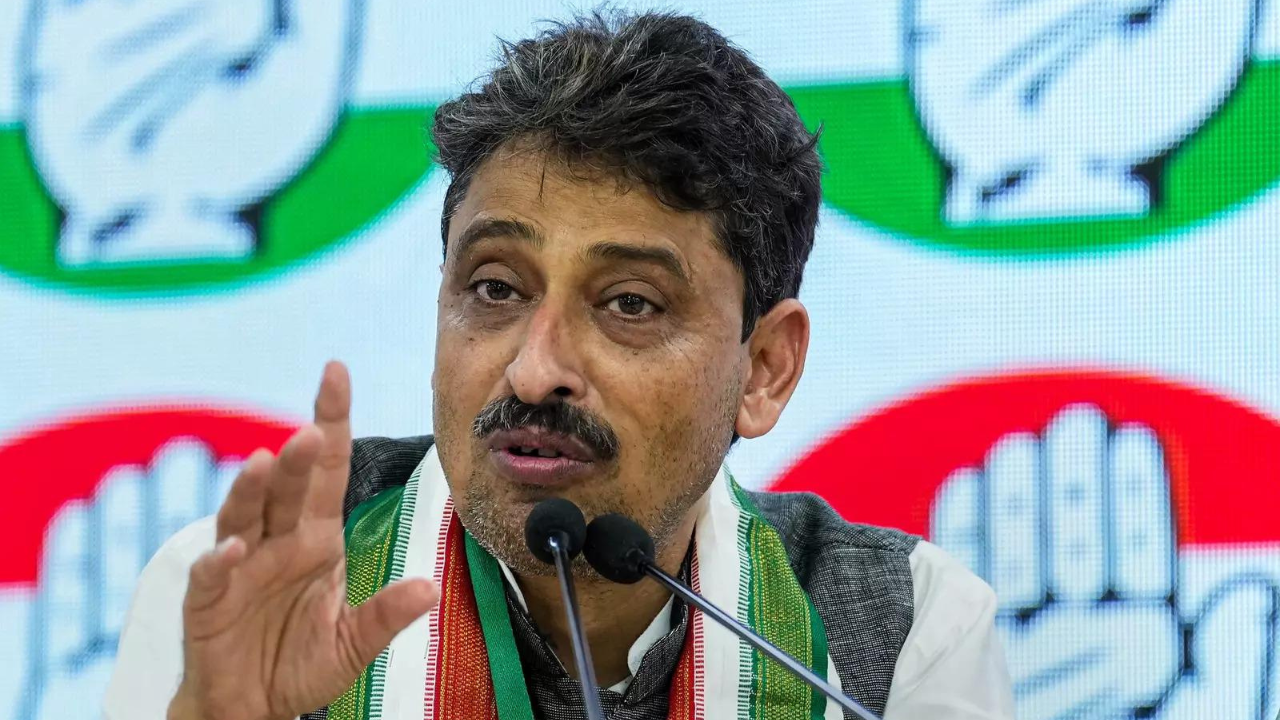
Congress MP Imran Masood has explained his stand on Vande Mataram, stating that he will rise for the national song but will not sing it.
This clarification comes as a response to the ongoing debate surrounding the national song. Masood's decision is based on his personal beliefs and values.
As a member of the Indian National Congress, Masood's stance may spark discussions within the party and among its supporters. The Congress party has historically been associated with the national movement and the adoption of Vande Mataram as a national song.
Vande Mataram, which translates to 'I bow to thee, Mother', is a poem written by Bankim Chandra Chattopadhyay in 1870. It was later adopted as a national song during the Indian independence movement. The song's significance and meaning have been interpreted in various ways over the years, with some viewing it as a symbol of patriotism and others as a representation of Hindu nationalism.
Masood's decision to rise for the national song but not sing it reflects the complexities surrounding Vande Mataram. His stance may be seen as a way to balance his personal beliefs with his duties as a member of parliament.
The debate surrounding Vande Mataram is not new and has been ongoing for several years. Different political parties and individuals have expressed varying opinions on the national song, with some advocating for its adoption as a national anthem and others opposing it.
In recent years, there have been instances where individuals have been criticized or penalized for not singing Vande Mataram. This has led to discussions about the limits of patriotism and the role of national symbols in Indian society.
Masood's clarification on his stand provides insight into the ongoing debate surrounding Vande Mataram. His decision to rise for the national song but not sing it highlights the complexities and nuances surrounding national symbols and patriotism in India.
The significance of Vande Mataram extends beyond its status as a national song. It represents a complex interplay of history, culture, and politics in India. As the country continues to evolve and grow, the debate surrounding Vande Mataram is likely to remain a topic of discussion and reflection.
Frequently asked questions
What is Congress MP Imran Masood's stand on Vande Mataram?
He will rise for the national song but will not sing it.
Why is Vande Mataram significant in Indian history?
Vande Mataram is a national song that was adopted during the Indian independence movement and represents a complex interplay of history, culture, and politics in India.