Pune: Illegal Hoardings Reappear At Hinjawadi Despite PMRDA Crackdown
Illegal hoardings continue to reappear at Hinjawadi Chowk despite PMRDA's repeated demolition drives. Residents raise concerns over the effectiveness of the authority's enforcement.
'%3E%3Crect%20width%3D'96'%20height%3D'96'%20fill%3D'%23B3261E'%2F%3E%3Ccircle%20cx%3D'30'%20cy%3D'24'%20r%3D'44'%20fill%3D'%23fff'%20opacity%3D'.12'%2F%3E%3Ccircle%20cx%3D'60'%20cy%3D'74'%20r%3D'40'%20fill%3D'%23000'%20opacity%3D'.10'%2F%3E%3C%2Fg%3E%3Cg%20fill%3D'%23fff'%3E%3Crect%20x%3D'29'%20y%3D'49'%20width%3D'8'%20height%3D'19'%20rx%3D'1'%2F%3E%3Crect%20x%3D'39'%20y%3D'40'%20width%3D'9'%20height%3D'28'%20rx%3D'1'%2F%3E%3Crect%20x%3D'50'%20y%3D'45'%20width%3D'8'%20height%3D'23'%20rx%3D'1'%2F%3E%3Crect%20x%3D'60'%20y%3D'53'%20width%3D'7'%20height%3D'15'%20rx%3D'1'%2F%3E%3Crect%20x%3D'41'%20y%3D'34'%20width%3D'5'%20height%3D'6'%2F%3E%3C%2Fg%3E%3C%2Fsvg%3E)
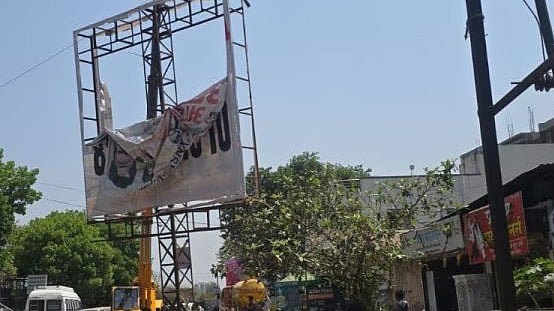
A major concern has been raised over the reappearance of illegal hoardings at Hinjawadi Chowk in Pune, despite the Pune Metropolitan Region Development Authority's (PMRDA) repeated demolition drives. The issue has been ongoing for over two years, following the fatal Ghatkopar hoarding collapse that led to a statewide crackdown on illegal billboards.
The PMRDA had identified 1,057 unauthorised hoardings across its jurisdiction, including 132 oversized structures in high-risk locations such as Hinjawadi, Wakad, and Mahalunge. The authority began its demolition drive after the election code of conduct was lifted in June 2024. However, the first operation at Hinjawadi Chowk and Wakad was affected by heavy rain, a shortage of cranes, and limited manpower.
Since then, PMRDA has carried out multiple enforcement drives, with several owners removing hoardings voluntarily after receiving notices, while others faced demolition and legal action. Ahead of the 2025 monsoon, PMRDA issued fresh notices directing owners to either regularise or remove unauthorised hoardings. Hinjawadi remained a priority due to its heavy traffic and the presence of large commercial billboards.
During April and May 2025, the authority removed eight illegal hoardings in Hinjawadi and along the Pune-Ahilyanagar Highway. Officials said 298 unauthorised hoardings were removed across the PMRDA region over the previous year, including 247 voluntarily removed by owners after notices and 51 demolished by the authority.
The latest action was carried out on July 30 and 31, when PMRDA identified eight oversized unauthorised hoardings near Laxmi Chowk in Hinjawadi. Following final notices issued on public safety grounds, six structures were removed by their owners, while the remaining two were demolished by PMRDA.
Despite these repeated drives, residents say illegal hoardings continue to appear at the busy Hinjawadi junction soon after demolition. They claim the delay in taking action has weakened the purpose of the crackdown and questioned why such structures continue to surface repeatedly.
Himmat Kharade, Joint Commissioner (Additional Charge), Unauthorised Construction and Demolition Department, PMRDA, responded to the concerns by stating that the recently removed hoardings were not erected at the exact same locations but within the same intersection. He said some owners had applied for permission, and PMRDA could initiate demolition only after those applications were processed.
The issue highlights the need for stricter enforcement and monitoring to prevent the reappearance of illegal hoardings. The PMRDA must take concrete steps to address the concerns of residents and ensure public safety.
The ongoing problem of illegal hoardings in Hinjawadi has significant implications for the city's infrastructure and public safety. It is essential for the authorities to take a proactive approach to prevent such structures from being erected in the first place. By doing so, they can minimize the risks associated with these structures and ensure a safer environment for residents and commuters.
In conclusion, the reappearance of illegal hoardings at Hinjawadi Chowk despite PMRDA's repeated demolition drives is a cause for concern. The authority must take immediate action to address the issue and prevent such structures from being erected in the future. This will not only ensure public safety but also maintain the aesthetic appeal of the city.
The effectiveness of the PMRDA's enforcement drives will be crucial in preventing the reappearance of illegal hoardings. The authority must work closely with residents and other stakeholders to identify and remove unauthorised structures. By doing so, they can create a safer and more sustainable environment for everyone.
The issue of illegal hoardings in Hinjawadi is a complex one, requiring a multi-faceted approach. The PMRDA must consider the root causes of the problem and develop strategies to address them. This may involve working with advertisers and property owners to provide alternative advertising options, as well as increasing public awareness about the risks associated with illegal hoardings.
Ultimately, the goal should be to create a city where public safety is paramount, and illegal structures are not tolerated. The PMRDA's efforts to remove unauthorised hoardings are a step in the right direction, but more needs to be done to prevent their reappearance. By working together, the authorities and residents can create a safer and more sustainable environment for everyone.
The significance of this issue extends beyond Hinjawadi, as it highlights the need for stricter enforcement and monitoring of illegal structures across the city. The PMRDA's efforts to address the problem in Hinjawadi can serve as a model for other areas, demonstrating the importance of proactive measures to prevent the erection of unauthorised structures.
In the broader context, the issue of illegal hoardings in Hinjawadi is a reflection of the city's growing pains. As Pune continues to develop and expand, it is essential to ensure that public safety and infrastructure keep pace. The PMRDA's efforts to remove unauthorised hoardings are an important step in this process, but more needs to be done to address the underlying issues driving the problem.
The city's residents and commuters have a right to expect a safe and sustainable environment, and it is the responsibility of the authorities to ensure that this is provided. By addressing the issue of illegal hoardings in Hinjawadi and elsewhere, the PMRDA can help create a better future for everyone in Pune.
The final outcome of the PMRDA's efforts to remove unauthorised hoardings in Hinjawadi will depend on the authority's ability to sustain its enforcement drives and prevent the reappearance of illegal structures. This will require ongoing monitoring and cooperation with residents and other stakeholders. If successful, the PMRDA's efforts can serve as a model for other cities facing similar challenges, demonstrating the importance of proactive measures to prevent the erection of unauthorised structures.
For Mumbai residents, the issue of illegal hoardings in Hinjawadi may seem distant, but it highlights the importance of addressing similar issues in their own city. The BMC and other authorities must take note of the PMRDA's efforts and consider similar measures to prevent the reappearance of illegal structures in Mumbai. By doing so, they can help create a safer and more sustainable environment for everyone in the city.
In conclusion, the reappearance of illegal hoardings at Hinjawadi Chowk despite PMRDA's repeated demolition drives is a complex issue requiring a multi-faceted approach. The authority must work closely with residents and other stakeholders to identify and remove unauthorised structures, while also addressing the root causes of the problem. By doing so, they can create a safer and more sustainable environment for everyone in Pune, and serve as a model for other cities facing similar challenges.
The significance of this issue for Mumbai residents lies in its highlighting of the need for stricter enforcement and monitoring of illegal structures. The BMC and other authorities must take proactive measures to prevent the erection of unauthorised structures, and work closely with residents and other stakeholders to identify and remove existing ones. By doing so, they can help create a safer and more sustainable environment for everyone in Mumbai.
The final message is one of hope and cooperation. By working together, the authorities and residents can create a safer and more sustainable environment for everyone. The issue of illegal hoardings in Hinjawadi is a challenge, but it is also an opportunity for the city to come together and address a common problem. The outcome will depend on the ability of the authorities and residents to work together and sustain their efforts over time.
The story of illegal hoardings in Hinjawadi is one of ongoing struggle and cooperation. The PMRDA's efforts to remove unauthorised structures are a step in the right direction, but more needs to be done to prevent their reappearance. The authority must continue to work closely with residents and other stakeholders to identify and remove existing structures, while also addressing the root causes of the problem.
The issue of illegal hoardings in Hinjawadi is a reminder that public safety and infrastructure are essential components of a sustainable city. The PMRDA's efforts to address the problem demonstrate the importance of proactive measures to prevent the erection of unauthorised structures. By working together, the authorities and residents can create a safer and more sustainable environment for everyone in Pune.
The significance of this issue for India as a whole lies in its highlighting of the need for stricter enforcement and monitoring of illegal structures. The issue of illegal hoardings in Hinjawadi is not unique to Pune, and other cities across the country face similar challenges. The PMRDA's efforts to address the problem can serve as a model for other cities, demonstrating the importance of proactive measures to prevent the erection of unauthorised structures.
In the end, the story of illegal hoardings in Hinjawadi is one of hope and cooperation. The PMRDA's efforts to remove unauthorised structures are a step in the right direction, but more needs to be done to prevent their reappearance. The authority must continue to work closely with residents and other stakeholders to identify and remove existing structures, while also addressing the root causes of the problem. By doing so, they can create a safer and more sustainable environment for everyone in Pune, and serve as a model for other cities facing similar challenges.
What it means for Mumbai and India is that the issue of illegal hoardings is a complex one, requiring a multi-faceted approach. The authorities must work closely with residents and other stakeholders to identify and remove unauthorised structures, while also addressing the root causes of the problem. By doing so, they can create a safer and more sustainable environment for everyone, and demonstrate the importance of proactive measures to prevent the erection of unauthorised structures.
The final thought is that the issue of illegal hoardings in Hinjawadi is a challenge, but it is also an opportunity for the city to come together and address a common problem. The PMRDA's efforts to remove unauthorised structures are a step in the right direction, but more needs to be done to prevent their reappearance. The authority must continue to work closely with residents and other stakeholders to identify and remove existing structures, while also addressing the root causes of the problem. By doing so, they can create a safer and more sustainable environment for everyone in Pune, and serve as a model for other cities facing similar challenges.
Frequently asked questions
What is the issue with illegal hoardings in Hinjawadi?
The issue is that despite PMRDA's repeated demolition drives, illegal hoardings continue to reappear at Hinjawadi Chowk, raising concerns over public safety and the effectiveness of the authority's enforcement.
What has PMRDA done to address the issue?
PMRDA has carried out multiple enforcement drives, removing 298 unauthorised hoardings across its region, including 247 voluntarily removed by owners after notices and 51 demolished by the authority.