India Reaches 300 GW Non-Fossil Power Capacity
India hits milestone, exceeds half of total power capacity. Solar leads growth.
'%3E%3Crect%20width%3D'96'%20height%3D'96'%20fill%3D'%230B6E4F'%2F%3E%3Ccircle%20cx%3D'30'%20cy%3D'24'%20r%3D'44'%20fill%3D'%23fff'%20opacity%3D'.12'%2F%3E%3Ccircle%20cx%3D'60'%20cy%3D'74'%20r%3D'40'%20fill%3D'%23000'%20opacity%3D'.10'%2F%3E%3C%2Fg%3E%3Cg%20fill%3D'none'%20stroke%3D'%23fff'%20stroke-width%3D'3.2'%20stroke-linecap%3D'round'%20stroke-linejoin%3D'round'%3E%3Cpolyline%20points%3D'31%2C59%2041%2C49%2049%2C54%2063%2C37'%2F%3E%3Cpolyline%20points%3D'55%2C37%2063%2C37%2063%2C45'%2F%3E%3C%2Fg%3E%3C%2Fsvg%3E)
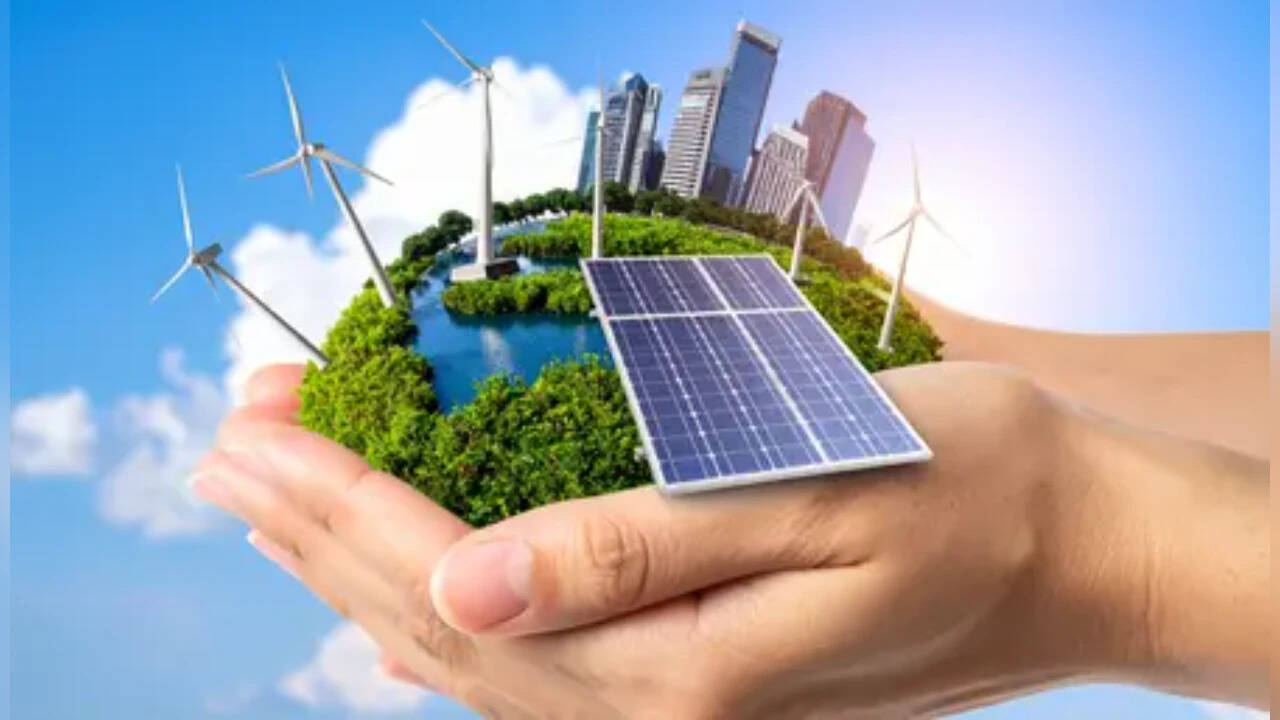
India has achieved a significant milestone in its pursuit of clean energy, reaching over 300 GW of non-fossil fuel electricity generation capacity. This milestone represents more than half of the nation's total installed power capacity, marking a major step towards a sustainable energy future.
The growth in non-fossil fuel capacity is led by solar power, followed by wind and hydro energy sources. The country's focus on renewable energy has driven this expansion, with solar power emerging as a major contributor to the nation's energy mix.
India has set an ambitious target of reaching 500 GW of non-fossil capacity by the year 2030. The achievement of the 300 GW milestone ahead of schedule is a testament to the country's commitment to reducing its carbon footprint and transitioning to cleaner sources of energy.
The growth in renewable energy has also driven substantial growth in domestic manufacturing for solar equipment. This has not only helped reduce the country's reliance on imported equipment but also created new opportunities for employment and economic growth.
The Indian government has implemented various policies and initiatives to support the growth of renewable energy, including tax incentives, subsidies, and investments in infrastructure. These efforts have helped create a favorable business environment for companies investing in renewable energy.
As the country continues to push towards its 2030 target, it is expected that the share of non-fossil fuels in the energy mix will continue to grow. This will not only help reduce the nation's carbon emissions but also improve energy security and reduce dependence on fossil fuels.
The achievement of the 300 GW milestone is a significant step towards a sustainable energy future for India. It demonstrates the country's ability to set and achieve ambitious targets, and its commitment to reducing its environmental impact.
In the context of India's energy landscape, the growth of non-fossil fuels is crucial for reducing the nation's carbon footprint and mitigating the impacts of climate change. The country's energy demands are expected to continue growing, driven by economic growth and urbanization. The transition to cleaner sources of energy will play a critical role in meeting these demands while minimizing the environmental impact.
The significance of this milestone extends beyond India's borders, as it demonstrates the country's commitment to global efforts to reduce carbon emissions and transition to a low-carbon economy. As a major emitter of greenhouse gases, India's actions will have a significant impact on global efforts to combat climate change.
In conclusion, India's achievement of 300 GW of non-fossil fuel electricity generation capacity is a major milestone in the country's transition to a sustainable energy future. It demonstrates the nation's commitment to reducing its carbon footprint and transitioning to cleaner sources of energy, and sets a positive example for other countries to follow.
Frequently asked questions
What is India's target for non-fossil fuel capacity by 2030?
India aims to reach 500 GW of non-fossil capacity by 2030.
What is driving the growth of non-fossil fuel capacity in India?
The growth is driven by solar power, followed by wind and hydro energy sources, with domestic manufacturing for solar equipment also seeing substantial growth.