Scientists Create Liver, Kidney Tissues In Space
Breakthrough in space research, liver and kidney tissues created
'%3E%3Crect%20width%3D'96'%20height%3D'96'%20fill%3D'%23B3261E'%2F%3E%3Ccircle%20cx%3D'30'%20cy%3D'24'%20r%3D'44'%20fill%3D'%23fff'%20opacity%3D'.12'%2F%3E%3Ccircle%20cx%3D'60'%20cy%3D'74'%20r%3D'40'%20fill%3D'%23000'%20opacity%3D'.10'%2F%3E%3C%2Fg%3E%3Cg%20fill%3D'%23fff'%3E%3Crect%20x%3D'29'%20y%3D'49'%20width%3D'8'%20height%3D'19'%20rx%3D'1'%2F%3E%3Crect%20x%3D'39'%20y%3D'40'%20width%3D'9'%20height%3D'28'%20rx%3D'1'%2F%3E%3Crect%20x%3D'50'%20y%3D'45'%20width%3D'8'%20height%3D'23'%20rx%3D'1'%2F%3E%3Crect%20x%3D'60'%20y%3D'53'%20width%3D'7'%20height%3D'15'%20rx%3D'1'%2F%3E%3Crect%20x%3D'41'%20y%3D'34'%20width%3D'5'%20height%3D'6'%2F%3E%3C%2Fg%3E%3C%2Fsvg%3E)
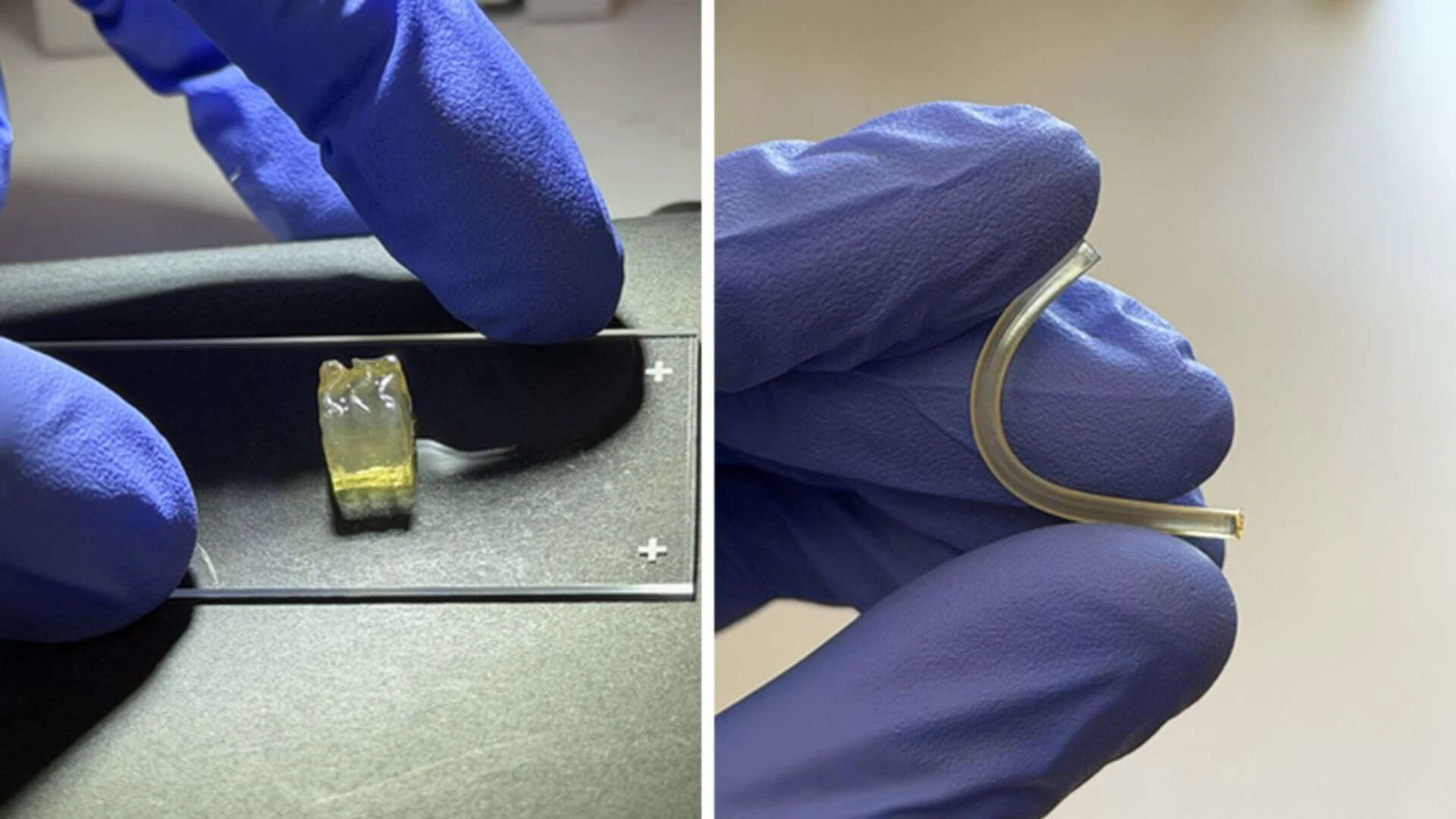
In a groundbreaking achievement, scientists have successfully grown liver and kidney tissues in space. This pioneering feat was made possible through a collaborative effort between Auxilium Biotechnologies and the Wake Forest Institute.
The researchers utilized advanced bioprinting techniques to cultivate the tissues, taking advantage of the unique microgravity environment in space. This environment allowed for optimal cell distribution and tissue growth, which is a crucial step towards developing innovative therapies for organ repair and replacement.
The team's innovative approach to bioprinting enabled them to achieve impressive scalability, paving the way for potential future breakthroughs in the field. The ability to grow tissues in space could have significant implications for the development of new treatments and therapies.
The microgravity environment in space provides a unique setting for scientific research, allowing scientists to study and experiment in ways that are not possible on Earth. The lack of gravity enables cells and tissues to grow and interact in distinct ways, which can lead to new insights and discoveries.
The successful cultivation of liver and kidney tissues in space is a major milestone in the field of regenerative medicine. It demonstrates the potential for space-based research to drive innovation and advance our understanding of human biology and disease.
The collaboration between Auxilium Biotechnologies and the Wake Forest Institute is a testament to the power of interdisciplinary research and collaboration. By combining their expertise and resources, the team was able to achieve a major breakthrough that could have significant implications for human health.
The development of new therapies and treatments for organ repair and replacement is a critical area of research, with the potential to improve the lives of millions of people around the world. The ability to grow tissues in space could provide a new avenue for the development of these therapies, and could potentially lead to major advances in the field.
The success of this mission is a significant step forward for the field of regenerative medicine, and demonstrates the potential for space-based research to drive innovation and advance our understanding of human biology and disease. It is likely to have a major impact on the development of new treatments and therapies, and could potentially lead to major advances in the field.
In the future, this research could lead to the development of new therapies and treatments for a range of diseases and conditions, including liver and kidney disease. It could also provide new insights into the biology of these diseases, and could potentially lead to the development of new diagnostic tools and therapies.
Overall, the successful cultivation of liver and kidney tissues in space is a major achievement that demonstrates the potential for space-based research to drive innovation and advance our understanding of human biology and disease. It is an exciting development that could have significant implications for human health, and could potentially lead to major advances in the field of regenerative medicine.
The implications of this research are far-reaching, and could have a major impact on the development of new treatments and therapies. It is a significant step forward for the field of regenerative medicine, and demonstrates the potential for space-based research to drive innovation and advance our understanding of human biology and disease.
In conclusion, the successful cultivation of liver and kidney tissues in space is a groundbreaking achievement that could have significant implications for human health. It demonstrates the potential for space-based research to drive innovation and advance our understanding of human biology and disease, and could potentially lead to major advances in the field of regenerative medicine.