Mumbai Gains 1,100 New Hospital Beds
New hospitals near completion, Shiv Sena opposes privatisation. Civic facilities to ease patient burden.
'%3E%3Crect%20width%3D'96'%20height%3D'96'%20fill%3D'%23B3261E'%2F%3E%3Ccircle%20cx%3D'30'%20cy%3D'24'%20r%3D'44'%20fill%3D'%23fff'%20opacity%3D'.12'%2F%3E%3Ccircle%20cx%3D'60'%20cy%3D'74'%20r%3D'40'%20fill%3D'%23000'%20opacity%3D'.10'%2F%3E%3C%2Fg%3E%3Cg%20fill%3D'%23fff'%3E%3Crect%20x%3D'29'%20y%3D'49'%20width%3D'8'%20height%3D'19'%20rx%3D'1'%2F%3E%3Crect%20x%3D'39'%20y%3D'40'%20width%3D'9'%20height%3D'28'%20rx%3D'1'%2F%3E%3Crect%20x%3D'50'%20y%3D'45'%20width%3D'8'%20height%3D'23'%20rx%3D'1'%2F%3E%3Crect%20x%3D'60'%20y%3D'53'%20width%3D'7'%20height%3D'15'%20rx%3D'1'%2F%3E%3Crect%20x%3D'41'%20y%3D'34'%20width%3D'5'%20height%3D'6'%2F%3E%3C%2Fg%3E%3C%2Fsvg%3E)
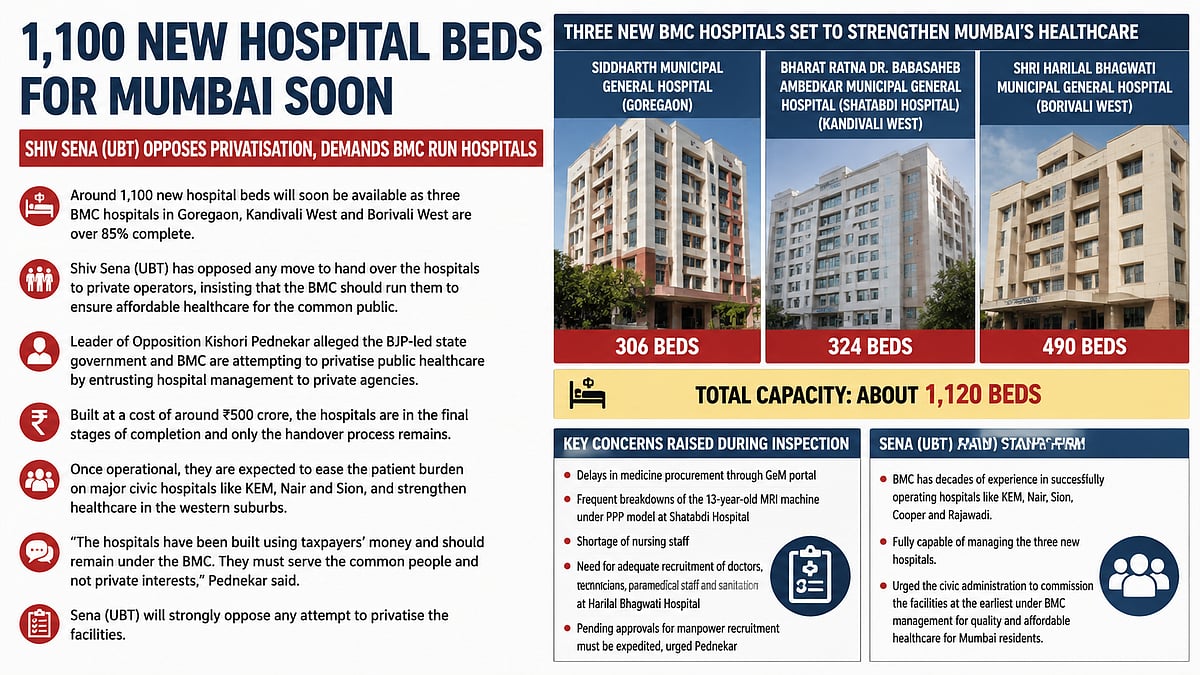
Mumbai is set to gain around 1,100 new hospital beds with the construction of three municipal general hospitals nearing completion. The Siddharth Municipal General Hospital in Goregaon, Bharat Ratna Dr. Babasaheb Ambedkar Municipal General Hospital in Kandivali West, and Shri Harilal Bhagwati Municipal General Hospital in Borivali West are more than 85% complete.
The new hospitals are expected to ease the patient burden on major civic hospitals like KEM, Nair, and Sion, while strengthening healthcare services in the western suburbs. The hospitals have been built at a cost of around Rs 500 crore and will provide a total of 1,120 beds.
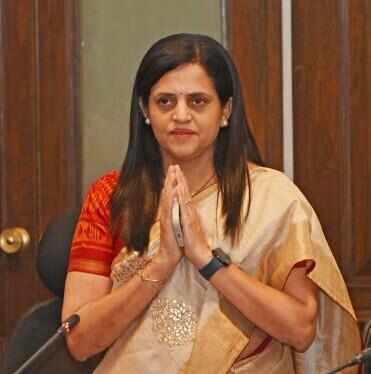
However, the Shiv Sena (UBT) has opposed any move to hand over the hospitals to private operators. Leader of the Opposition in the BMC, Kishori Pednekar, has demanded that the Brihanmumbai Municipal Corporation (BMC) should run the hospitals to ensure affordable healthcare for the common public.
Pednekar alleged that the BJP-led state government and the civic administration were attempting to privatise public healthcare by entrusting the management of the hospitals to private agencies. She said that the hospitals have been built using taxpayers' money and should remain under the BMC.
During an inspection of the three hospitals, Pednekar highlighted several issues, including delays in medicine procurement and frequent breakdowns of the MRI machine at Shatabdi Hospital. She also pointed to a shortage of nursing staff and urged the BMC to expedite pending approvals for manpower recruitment.
The BMC has decades of experience in successfully operating hospitals like KEM, Nair, Sion, Cooper, and Rajawadi, and Pednekar maintained that the civic body is fully capable of managing the three new hospitals. She urged the civic administration to commission the facilities at the earliest under BMC management so that Mumbai residents can benefit from quality and affordable healthcare.
The addition of the new hospitals is expected to significantly improve healthcare services in Mumbai. With the city's population continuing to grow, the need for quality and affordable healthcare has never been more pressing. The BMC's ability to manage the new hospitals will be crucial in ensuring that Mumbai residents have access to the healthcare they need.
In the coming months, the BMC is expected to finalize the plans for the new hospitals, including the recruitment of staff and the procurement of equipment. The civic body will also need to ensure that the hospitals are run efficiently and effectively, with a focus on providing quality healthcare to all patients.
The opposition to privatisation from the Shiv Sena (UBT) is likely to continue, with the party pushing for the BMC to retain control of the hospitals. As the debate over privatisation continues, one thing is clear: the new hospitals will be a significant boost to Mumbai's healthcare infrastructure, and their successful operation will be crucial in ensuring that the city's residents have access to quality and affordable healthcare.
The completion of the new hospitals is a major milestone for Mumbai's healthcare sector, and it is expected to have a significant impact on the city's residents. With the addition of 1,100 new hospital beds, Mumbai will be better equipped to handle the growing demand for healthcare services, and the city's residents will have access to quality and affordable healthcare.
In conclusion, the new hospitals in Mumbai are a significant development for the city's healthcare sector. The BMC's ability to manage the hospitals will be crucial in ensuring that Mumbai residents have access to quality and affordable healthcare. As the city continues to grow and develop, the need for quality and affordable healthcare will only continue to increase, making the successful operation of the new hospitals all the more important.