Trump Rules Out Strikes on Iran
US to use economic pressure, Trump says. No more strikes planned.
'%3E%3Crect%20width%3D'96'%20height%3D'96'%20fill%3D'%234A235A'%2F%3E%3Ccircle%20cx%3D'30'%20cy%3D'24'%20r%3D'44'%20fill%3D'%23fff'%20opacity%3D'.12'%2F%3E%3Ccircle%20cx%3D'60'%20cy%3D'74'%20r%3D'40'%20fill%3D'%23000'%20opacity%3D'.10'%2F%3E%3C%2Fg%3E%3Cg%20fill%3D'none'%20stroke%3D'%23fff'%20stroke-width%3D'3'%3E%3Ccircle%20cx%3D'48'%20cy%3D'48'%20r%3D'16'%2F%3E%3Cellipse%20cx%3D'48'%20cy%3D'48'%20rx%3D'6.5'%20ry%3D'16'%2F%3E%3Cline%20x1%3D'32'%20y1%3D'42'%20x2%3D'64'%20y2%3D'42'%2F%3E%3Cline%20x1%3D'32'%20y1%3D'54'%20x2%3D'64'%20y2%3D'54'%2F%3E%3C%2Fg%3E%3C%2Fsvg%3E)
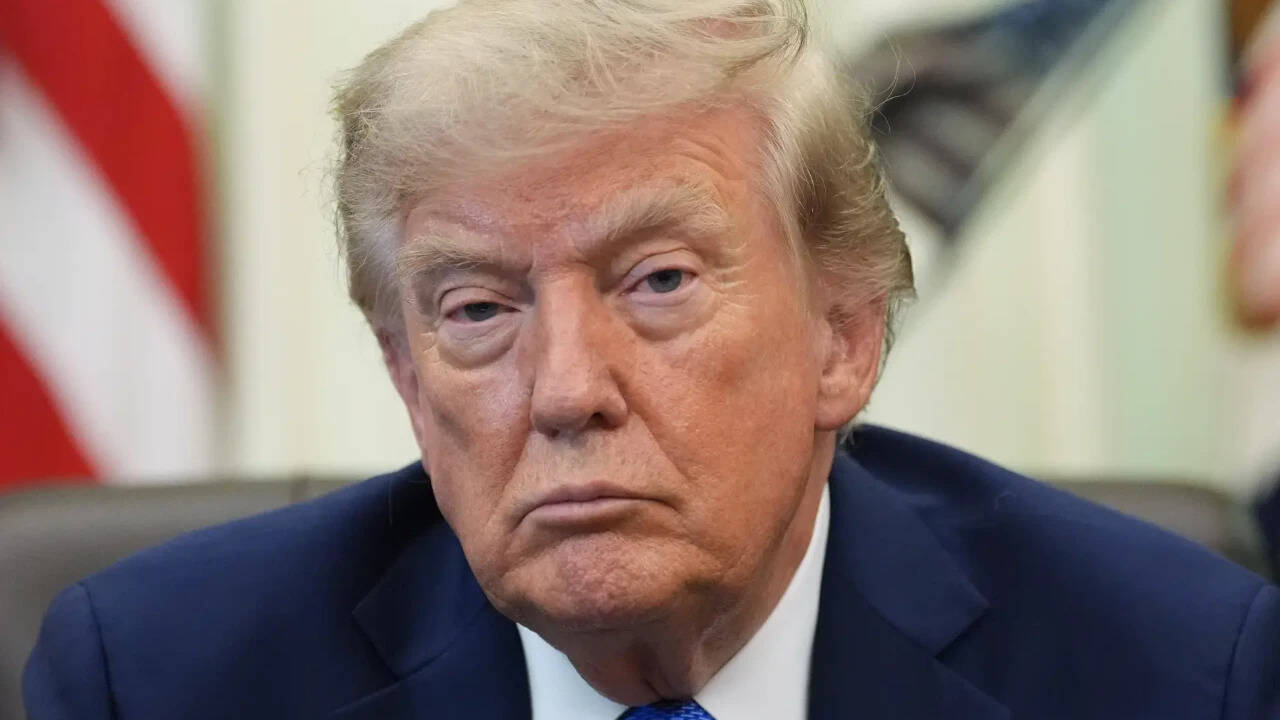
US President Donald Trump has announced that the United States will no longer pursue a strategy of military strikes against Iran. Instead, the country will focus on exerting economic pressure on the Iranian government. This decision comes after a period of heightened tensions between the two nations, with the US having previously launched airstrikes against Iranian targets. Trump's statement suggests a shift in approach, with the US opting for a more low-key strategy. The move is likely to be seen as an attempt to reduce the risk of further escalation and to encourage a return to diplomatic negotiations. The US has been imposing economic sanctions on Iran for some time, and these are likely to continue as a key part of the country's strategy. Trump's announcement has been seen as a significant development in the ongoing standoff between the US and Iran, and it remains to be seen how the Iranian government will respond. The US has been seeking to pressure Iran into renegotiating the terms of the nuclear deal that was agreed in 2015, and it is possible that the new strategy will include efforts to persuade other countries to impose their own sanctions on Iran. The situation remains complex and uncertain, with many observers warning that the risk of military conflict remains high. Despite this, Trump's announcement has been seen as a positive step, and it is hoped that it will help to reduce tensions and create space for a return to diplomatic talks. The US and Iran have been at odds for many years, and a resolution to the current crisis will require careful diplomacy and a willingness to compromise on both sides. The international community will be watching the situation closely, and it is likely that there will be many developments in the coming days and weeks.
The US-Iran crisis has been ongoing for some time, with the US withdrawing from the nuclear deal in 2018 and imposing sanctions on Iran. The Iranian government has responded by reducing its compliance with the terms of the deal, and there have been several incidents of military confrontation between the two countries. The situation has been further complicated by the involvement of other countries, including Saudi Arabia and the UAE, which have their own interests in the region. Despite the challenges, many observers believe that a diplomatic resolution to the crisis is still possible, and that the US and Iran can find a way to resolve their differences through negotiation.
The use of economic pressure as a tool of foreign policy is not new, and the US has used sanctions against a number of countries in the past. However, the effectiveness of this approach can be limited, and it is possible that the Iranian government will find ways to circumvent the sanctions. The US will need to be careful in its approach, and will need to work with other countries to ensure that the sanctions are effective.
The international community has been watching the US-Iran crisis with concern, and many countries have called for a return to diplomatic negotiations. The EU has been particularly active in seeking to resolve the crisis, and has hosted a number of meetings between the US and Iran. The UN has also been involved, and has called for a reduction in tensions and a return to diplomacy.
In conclusion, the US decision to rule out strikes on Iran and to focus on economic pressure is a significant development in the ongoing crisis. While there are many challenges ahead, it is possible that this new approach will help to reduce tensions and create space for a return to diplomatic talks. The international community will be watching the situation closely, and it is likely that there will be many developments in the coming days and weeks.
The US and Iran have a long and complex history, and the current crisis is just the latest episode in a longstanding dispute. The US has been seeking to pressure Iran into changing its behavior, and has used a range of tools, including military force and economic sanctions. The Iranian government has responded by reducing its compliance with international agreements, and by seeking to develop its own military capabilities. The situation remains uncertain, and it is possible that the crisis will continue for some time.
However, despite the challenges, many observers believe that a diplomatic resolution to the crisis is still possible. The US and Iran have negotiated successfully in the past, and it is possible that they can do so again. The international community will be watching the situation closely, and it is likely that there will be many developments in the coming days and weeks.
In the end, the US decision to rule out strikes on Iran and to focus on economic pressure is a positive step, and it is hoped that it will help to reduce tensions and create space for a return to diplomatic talks. The situation remains complex and uncertain, but it is possible that this new approach will help to resolve the crisis and create a more stable and secure region.
Frequently asked questions
What is the new US strategy on Iran?
The US will focus on economic pressure rather than military strikes.
Why has the US changed its approach?
The US is seeking to reduce the risk of further escalation and to encourage a return to diplomatic negotiations.