125-Million-Year-Old Fossil Reveals Unique Reproduction Method
Ancient shellfish fossils show early parental care. Developing young found inside adults' gills.

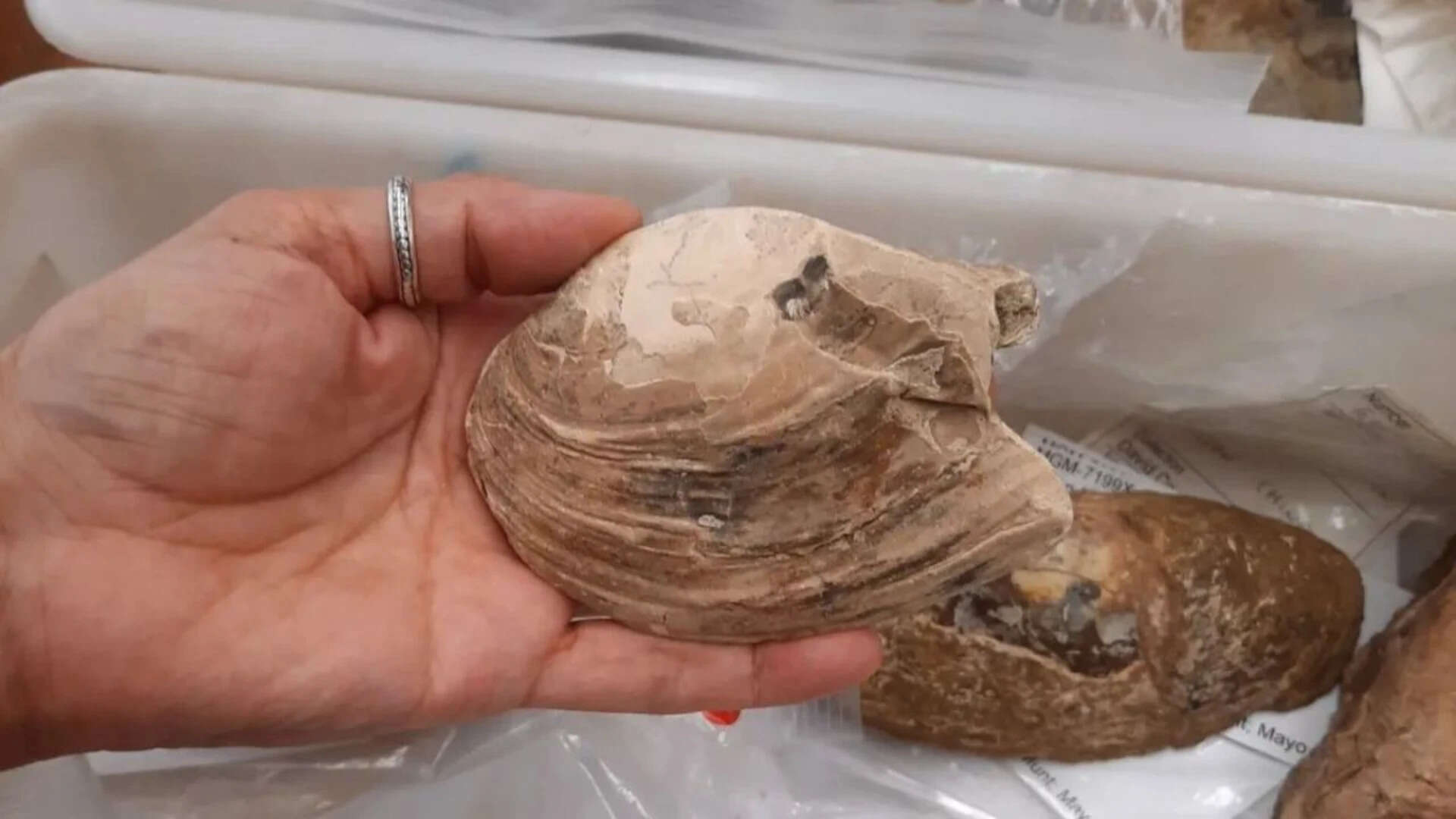
A groundbreaking discovery on the Isle of Wight has unearthed 125-million-year-old fossils of pregnant shellfish, providing a fascinating glimpse into the reproductive habits of ancient creatures. The fossils, which date back to the Early Cretaceous period, reveal that the developing young resided within the adults' gills, a unique aspect of shellfish behavior that highlights early parental care practices.
The research team involved in the discovery has shed light on the reproductive strategies that existed during this period, as well as the adaptations that enabled these molluscs to thrive in ancient freshwater ecosystems. The findings have significant implications for our understanding of the evolution of shellfish and their ability to survive in diverse environments.
The discovery of these ancient fossils has sparked interest among scientists, who are eager to learn more about the reproductive methods of early shellfish. The fact that the developing young were found inside the adults' gills suggests a high level of parental care, which is a rare phenomenon in the animal kingdom. This unique reproductive strategy may have played a crucial role in the survival and success of these ancient creatures.
The research has also highlighted the importance of the Isle of Wight as a site for fossil discoveries. The island's geological history has created a treasure trove of fossils, which have provided valuable insights into the evolution of life on Earth. The discovery of these 125-million-year-old fossils is a testament to the island's significance as a hub for paleontological research.
As scientists continue to study these ancient fossils, they may uncover more secrets about the reproductive habits of early shellfish. The findings of this research have the potential to revolutionize our understanding of the evolution of shellfish and their ability to adapt to changing environments. Furthermore, the discovery of these fossils may also provide insights into the evolution of other animals, highlighting the complex and fascinating history of life on Earth.
In the coming years, researchers may conduct further studies to learn more about the reproductive strategies of ancient shellfish. This may involve analyzing more fossils, as well as conducting experiments to simulate the conditions in which these creatures lived. As our understanding of these ancient creatures grows, we may uncover more surprising facts about their behavior and biology.