Aamir Khan's 3rd Marriage Sparks Fatwa
Aamir Khan faces fatwa over third marriage, Muslim cleric objects to interfaith union
'%3E%3Crect%20width%3D'96'%20height%3D'96'%20fill%3D'%23C2185B'%2F%3E%3Ccircle%20cx%3D'30'%20cy%3D'24'%20r%3D'44'%20fill%3D'%23fff'%20opacity%3D'.12'%2F%3E%3Ccircle%20cx%3D'60'%20cy%3D'74'%20r%3D'40'%20fill%3D'%23000'%20opacity%3D'.10'%2F%3E%3C%2Fg%3E%3Cpath%20fill%3D'%23fff'%20d%3D'M48%2031%20l4.6%2010.2%2011.2%201%20-8.4%207.5%202.5%2011%20-9.9%20-5.8%20-9.9%205.8%202.5%20-11%20-8.4%20-7.5%2011.2%20-1%20z'%2F%3E%3C%2Fsvg%3E)
A fatwa has been issued by Aligarh's Shahi Chief Mufti Maulana Chaudhary Ibrahim Hussain regarding Bollywood actor Aamir Khan's reported third marriage to a non-Muslim woman, Gauri Spratt. The Mufti stated that under Islamic law, a Muslim man cannot marry a non-Muslim woman who has not accepted Islam, making such a relationship religiously invalid.
The fatwa was issued after the Kshatriya Karni Sena sought clarification on the validity of Aamir Khan's marriage under Shariat. The organisation's National Vice President, Thakur Gyanendra Singh, accused Aamir Khan of promoting 'love jihad' by allegedly marrying Hindu women.
According to the Mufti, the Quran does not permit a Muslim man to marry a non-Muslim woman unless she accepts Islam. He emphasized that accepting Islam for marriage means believing in Allah as the only God, accepting Prophet Muhammad as the last messenger, having faith in the Quran, and living according to Islamic principles.
The Mufti also clarified that Islam allows a man to marry more than one woman only if he can treat all wives equally and fulfill their financial and marital rights. Marrying again while deceiving the first wife is considered a grave sin. Islamic law permits marriage with Christian or Jewish women under certain conditions, but marriage with women of other faiths without conversion is not permissible.
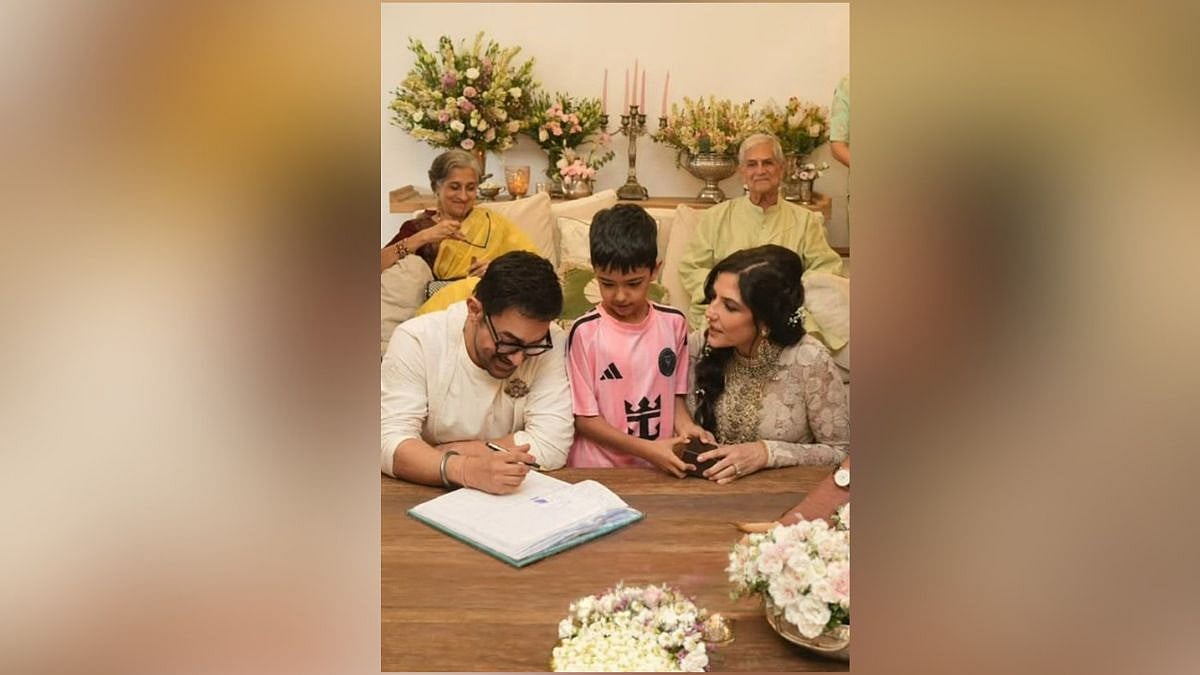
Aamir Khan, 61, entered into a registered marriage with Gauri Spratt on July 5 in a private ceremony attended by close family members and friends. This is his third marriage, following his previous marriages to Reena Dutta and Kiran Rao.
The Mufti clarified that the fatwa was only an explanation of the general principles of Islamic law and not a final ruling against Aamir Khan. He stated that any decision on the validity of a particular nikah can only be taken after examining all the facts.
The Kshatriya Karni Sena has demanded that the same religious standards applicable to ordinary Muslims should also apply to the actor. The organisation has threatened to continue its protest until action is taken according to 'law and religion'.
Aamir Khan's marriage to Gauri Spratt has sparked controversy, with some accusing him of promoting interfaith relationships without proper understanding or conversion. The issue has raised questions about the intersection of religion and personal law in India.
The fatwa issued by the Mufti highlights the complexities of interfaith relationships in India, particularly when it comes to Muslim personal law. The issue is likely to spark further debate and discussion about the role of religion in personal relationships.
In conclusion, the fatwa issued against Aamir Khan's third marriage has brought attention to the complexities of interfaith relationships in India. The issue raises important questions about the intersection of religion and personal law, and is likely to have significant implications for the debate on religious freedom and personal choice in the country.