Amit Shah: Decolonisation Necessary for India
Amit Shah speaks on decolonisation, India's history and self-confidence.
'%3E%3Crect%20width%3D'96'%20height%3D'96'%20fill%3D'%231A5276'%2F%3E%3Ccircle%20cx%3D'30'%20cy%3D'24'%20r%3D'44'%20fill%3D'%23fff'%20opacity%3D'.12'%2F%3E%3Ccircle%20cx%3D'60'%20cy%3D'74'%20r%3D'40'%20fill%3D'%23000'%20opacity%3D'.10'%2F%3E%3C%2Fg%3E%3Cg%20fill%3D'%23fff'%3E%3Cpath%20d%3D'M31%2041%20L48%2031%20L65%2041%20Z'%2F%3E%3Crect%20x%3D'33'%20y%3D'43'%20width%3D'4'%20height%3D'17'%2F%3E%3Crect%20x%3D'41'%20y%3D'43'%20width%3D'4'%20height%3D'17'%2F%3E%3Crect%20x%3D'51'%20y%3D'43'%20width%3D'4'%20height%3D'17'%2F%3E%3Crect%20x%3D'59'%20y%3D'43'%20width%3D'4'%20height%3D'17'%2F%3E%3Crect%20x%3D'30'%20y%3D'62'%20width%3D'36'%20height%3D'4'%20rx%3D'1'%2F%3E%3C%2Fg%3E%3C%2Fsvg%3E)
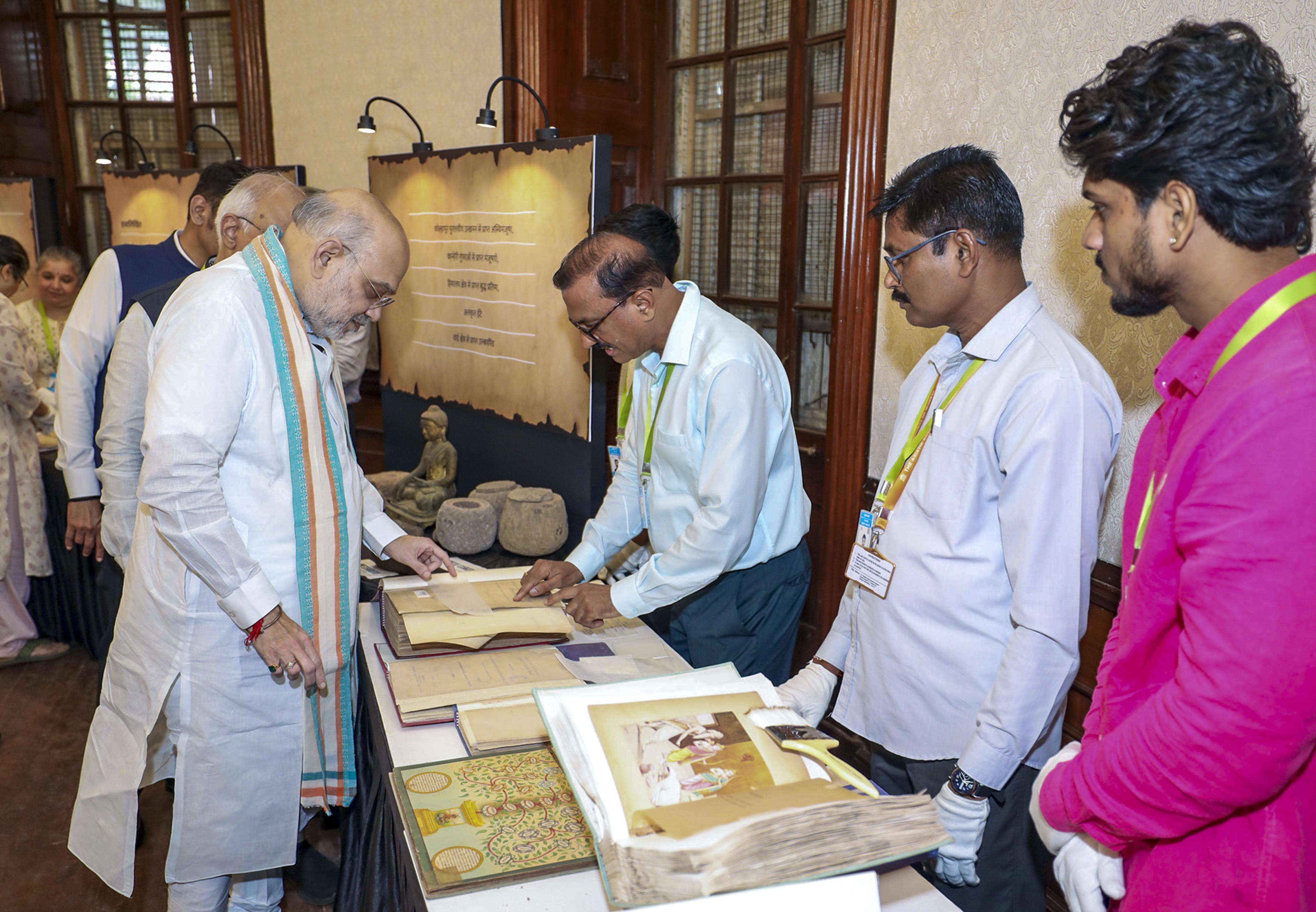
Union Home Minister Amit Shah recently emphasized the importance of decolonisation in India, stating that it does not mean erasing the country's history, but rather freeing its knowledge from the grip of the British Empire.
According to Shah, the British Empire used Indology to undermine India's self-confidence and distort its history. He believes that decolonisation is essential to restore India's true heritage and promote a more accurate understanding of its past.
Shah's comments come at a time when there is a growing debate in India about the need to decolonise its education system and promote a more indigenous perspective on history. Many experts argue that the current curriculum is still heavily influenced by colonial-era ideologies and does not adequately reflect India's rich cultural diversity.
The British Empire's legacy in India is complex and multifaceted, with both positive and negative impacts on the country's development. However, Shah's statement highlights the need to re-examine this legacy and promote a more nuanced understanding of India's history.
In recent years, there has been a growing movement in India to reclaim its cultural heritage and promote a more indigenous perspective on history. This movement has been driven in part by the government's efforts to promote Indian languages and culture, as well as by the work of scholars and activists who are seeking to challenge dominant narratives and promote a more inclusive understanding of India's past.
The issue of decolonisation is not unique to India, but is part of a broader global conversation about the need to challenge dominant narratives and promote a more inclusive understanding of history. As India continues to grapple with its complex legacy, it is likely that the debate over decolonisation will remain an important and contentious issue.
In conclusion, Amit Shah's statement highlights the importance of decolonisation in India and the need to promote a more accurate understanding of its history. By freeing its knowledge from the grip of the British Empire, India can restore its true heritage and promote a more inclusive understanding of its past.
The move towards decolonisation is a significant step towards promoting India's self-confidence and cultural diversity. It is essential to acknowledge the country's complex history and promote a more nuanced understanding of its legacy. By doing so, India can move forward and build a more inclusive and equitable society.
The government's efforts to promote Indian languages and culture are a step in the right direction. However, more needs to be done to challenge dominant narratives and promote a more indigenous perspective on history. It is only by doing so that India can truly reclaim its cultural heritage and promote a more accurate understanding of its past.
As India continues to evolve and grow, it is likely that the debate over decolonisation will remain an important and contentious issue. However, by promoting a more inclusive understanding of its history and cultural diversity, India can build a more equitable and just society for all its citizens.
The need for decolonisation is not just limited to India, but is a global issue that requires attention and action. By promoting a more nuanced understanding of history and cultural diversity, countries around the world can build more inclusive and equitable societies.
In the context of India, decolonisation is a necessary step towards promoting self-confidence and cultural diversity. It is essential to acknowledge the country's complex history and promote a more accurate understanding of its legacy. By doing so, India can move forward and build a more inclusive and equitable society for all its citizens.
The importance of decolonisation cannot be overstated. It is a necessary step towards promoting a more inclusive understanding of history and cultural diversity. By freeing its knowledge from the grip of the British Empire, India can restore its true heritage and promote a more accurate understanding of its past.
In conclusion, Amit Shah's statement highlights the importance of decolonisation in India and the need to promote a more accurate understanding of its history. By promoting a more inclusive understanding of its past, India can build a more equitable and just society for all its citizens.
Frequently asked questions
What is decolonisation in the context of India?
Decolonisation in India refers to the process of freeing the country's knowledge and education system from the grip of the British Empire and promoting a more indigenous perspective on history.
Why is decolonisation necessary for India?
Decolonisation is necessary for India to restore its true heritage and promote a more accurate understanding of its past, and to challenge dominant narratives that have been imposed by the British Empire.