Africans Rescued from Slave Ships Traced to Childhood Homes
Tooth chemistry reveals origins of 152 Africans, Historical records and DNA used
'%3E%3Crect%20width%3D'96'%20height%3D'96'%20fill%3D'%23B3261E'%2F%3E%3Ccircle%20cx%3D'30'%20cy%3D'24'%20r%3D'44'%20fill%3D'%23fff'%20opacity%3D'.12'%2F%3E%3Ccircle%20cx%3D'60'%20cy%3D'74'%20r%3D'40'%20fill%3D'%23000'%20opacity%3D'.10'%2F%3E%3C%2Fg%3E%3Cg%20fill%3D'%23fff'%3E%3Crect%20x%3D'29'%20y%3D'49'%20width%3D'8'%20height%3D'19'%20rx%3D'1'%2F%3E%3Crect%20x%3D'39'%20y%3D'40'%20width%3D'9'%20height%3D'28'%20rx%3D'1'%2F%3E%3Crect%20x%3D'50'%20y%3D'45'%20width%3D'8'%20height%3D'23'%20rx%3D'1'%2F%3E%3Crect%20x%3D'60'%20y%3D'53'%20width%3D'7'%20height%3D'15'%20rx%3D'1'%2F%3E%3Crect%20x%3D'41'%20y%3D'34'%20width%3D'5'%20height%3D'6'%2F%3E%3C%2Fg%3E%3C%2Fsvg%3E)
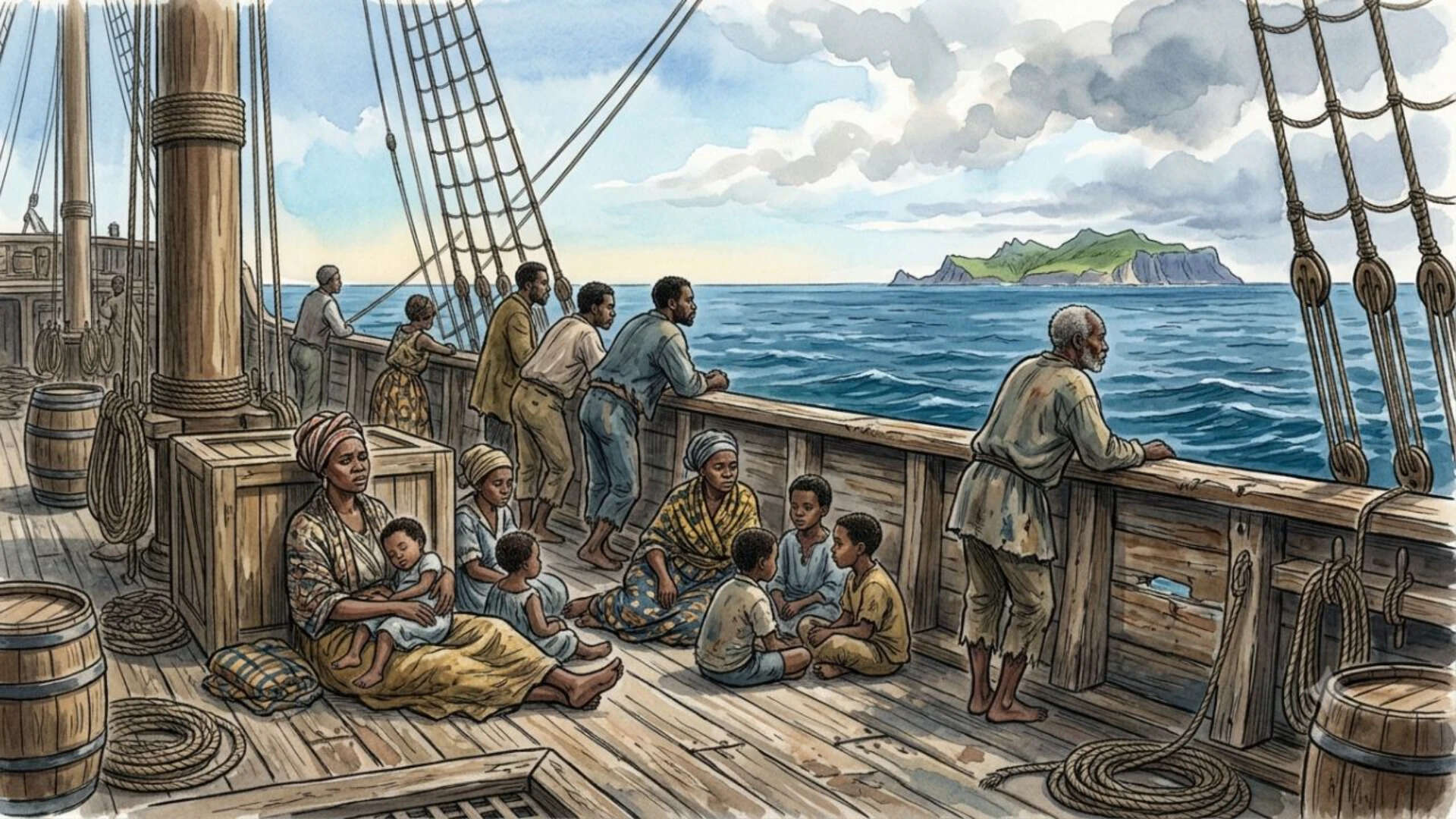
A groundbreaking study has successfully uncovered the childhood origins of 152 Africans who were rescued from illegal slave ships and taken to Saint Helena nearly 200 years ago.
The research team utilized a combination of tooth chemistry, ancient DNA, and historical records to determine the origins of these individuals. The findings indicate that they came from various parts of Central Africa, with many being forced to travel long distances before reaching the coast.
The study's lead researchers employed a novel approach, analyzing the chemical composition of the Africans' teeth to pinpoint their childhood locations. This method, known as tooth chemistry, involves examining the unique chemical signatures present in an individual's teeth, which are shaped by the environment and diet of their childhood.
By combining tooth chemistry with ancient DNA analysis and historical records, the researchers were able to reconstruct the lives of these individuals and gain insight into the transatlantic slave trade. The study's findings suggest that many of the Africans were forcibly relocated from their homes in Central Africa, traveling extensive distances before being captured and sold into slavery.
The transatlantic slave trade, which occurred from the 15th to the 19th century, was a brutal system that saw millions of Africans forcibly enslaved and transported to the Americas. The trade had a profound impact on the lives of those enslaved, as well as on the social, economic, and cultural fabric of the regions involved.
The study's results are significant, as they help restore the identities of people whose lives were erased by the transatlantic slave trade. For centuries, the stories and experiences of enslaved Africans were suppressed or forgotten, leaving behind a legacy of silence and invisibility. This research helps to reclaim and honor the memories of these individuals, providing a glimpse into their lives and experiences.
The use of tooth chemistry, ancient DNA, and historical records in this study demonstrates the power of interdisciplinary research in uncovering the past. By combining multiple lines of evidence, researchers can reconstruct the lives of historical individuals and gain a deeper understanding of the complex social, cultural, and economic systems that shaped their world.
The findings of this study have important implications for our understanding of the transatlantic slave trade and its legacy. They highlight the need for continued research into the experiences of enslaved Africans and the importance of preserving and honoring their memories.
In conclusion, the study's discovery of the childhood origins of 152 Africans rescued from slave ships is a significant breakthrough, providing new insights into the lives of individuals affected by the transatlantic slave trade. The research demonstrates the potential of interdisciplinary approaches to uncover the past and highlights the importance of preserving and honoring the memories of those who were enslaved.
The study's results are a testament to the power of science and history to uncover the truth and restore the identities of those who were forgotten. As we continue to learn more about the transatlantic slave trade and its legacy, we are reminded of the importance of remembering and honoring the lives of those who were affected by this brutal system.