Sensex Up 0.4%, Nifty Down 0.04% After CAS Mechanism
Sensex and Nifty diverge, Sensex gains 310 points, Nifty loses 10 points.
'%3E%3Crect%20width%3D'96'%20height%3D'96'%20fill%3D'%230B6E4F'%2F%3E%3Ccircle%20cx%3D'30'%20cy%3D'24'%20r%3D'44'%20fill%3D'%23fff'%20opacity%3D'.12'%2F%3E%3Ccircle%20cx%3D'60'%20cy%3D'74'%20r%3D'40'%20fill%3D'%23000'%20opacity%3D'.10'%2F%3E%3C%2Fg%3E%3Cg%20fill%3D'none'%20stroke%3D'%23fff'%20stroke-width%3D'3.2'%20stroke-linecap%3D'round'%20stroke-linejoin%3D'round'%3E%3Cpolyline%20points%3D'31%2C59%2041%2C49%2049%2C54%2063%2C37'%2F%3E%3Cpolyline%20points%3D'55%2C37%2063%2C37%2063%2C45'%2F%3E%3C%2Fg%3E%3C%2Fsvg%3E)

The Indian equity benchmark indices, Sensex and Nifty, have shown divergence for the second day in a row after the implementation of the closing auction session (CAS) mechanism.
The Sensex is trading in the green, with a gain of over 310 points, or 0.4 percent, at 78,740, while the Nifty is in the red with a marginal loss of around 10 points to trade at 24,605.
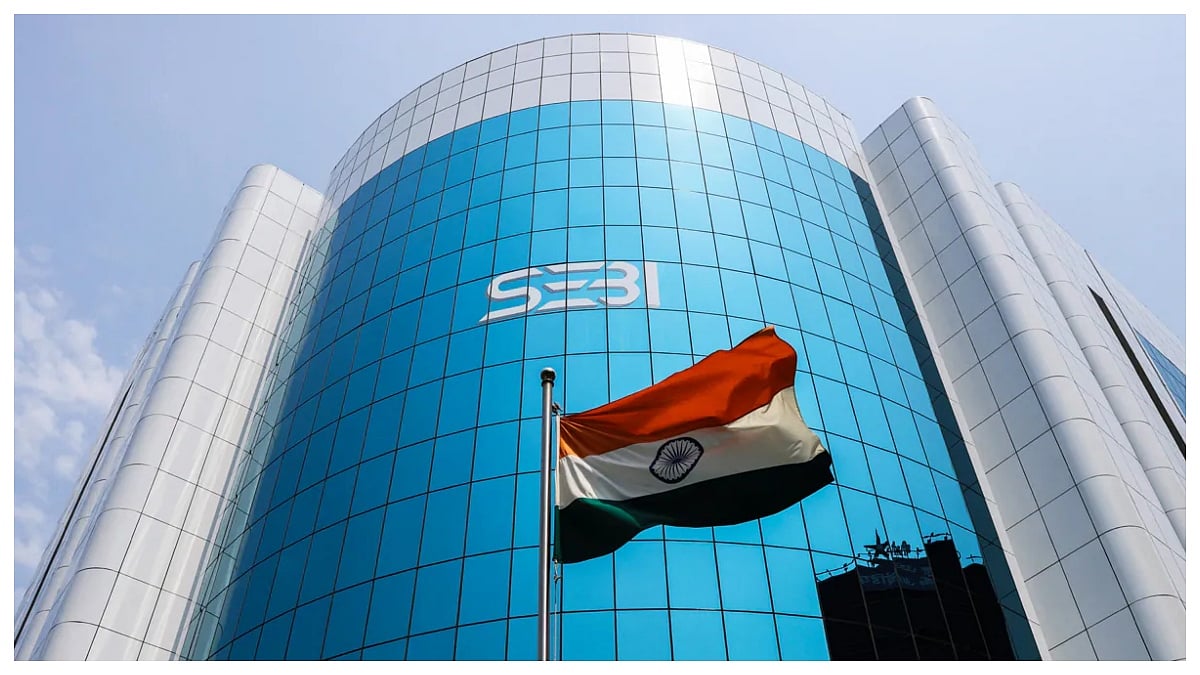
The market regulator implemented the CAS mechanism to determine the closing prices of eligible Futures & Options (F&O) stocks. The Sensex opened higher by 627 points at 79,055 compared to the previous close of 78,428, while the Nifty opened just 55 points, or 0.22 percent, higher.
Despite the divergence, the market breadth remained positive, with 2,149 stocks trading in the green and 924 stocks in the red out of the 3,177 stocks trading on the National Stock Exchange.
Among the Nifty 50 gainers, Grasim Industries was trading at the top with a rise of over 2.22 percent, followed by Larsen & Toubro, which was up by 1.8 percent. Stocks of automobile and information technology companies also remained in the green.
On the other hand, Apollo Hospitals led the losers with a decline of 1.1 percent, followed by ITC, which lost 1 percent. Banking stocks, such as ICICI Bank, Axis Bank, and Kotak Mahindra Bank, also dominated the losers chart.
The decline came despite the Reserve Bank of India keeping the repo rate unchanged at 5.25 percent in its latest Monetary Policy Committee meeting. The central bank also raised the GDP growth forecast for FY27 and eased its inflation expectation on the back of robust domestic demand.
The CAS mechanism is aimed at providing a more efficient and transparent way of determining the closing prices of eligible F&O stocks. The implementation of this mechanism is expected to reduce the volatility in the market and provide a more accurate picture of the market sentiment.
The divergence between the Sensex and Nifty is being closely watched by market participants, as it may indicate a change in the market trend. The Sensex and Nifty are two of the most widely followed indices in the Indian stock market, and their movement has a significant impact on the overall market sentiment.
In the context of the Indian economy, the movement of the Sensex and Nifty is closely linked to the overall economic growth and investor sentiment. The Indian stock market has been one of the best-performing markets in the world, and the movement of the Sensex and Nifty is closely watched by investors and market participants.
The Reserve Bank of India's decision to keep the repo rate unchanged and raise the GDP growth forecast is expected to have a positive impact on the market. The robust domestic demand is expected to drive the economic growth, and the easing of inflation expectation is expected to reduce the volatility in the market.
In conclusion, the divergence between the Sensex and Nifty is a significant development in the Indian stock market, and it is being closely watched by market participants. The implementation of the CAS mechanism is expected to reduce the volatility in the market and provide a more accurate picture of the market sentiment. The movement of the Sensex and Nifty is closely linked to the overall economic growth and investor sentiment, and it is expected to have a significant impact on the overall market trend.
Frequently asked questions
What is the CAS mechanism?
The CAS mechanism is a system used to determine the closing prices of eligible Futures & Options (F&O) stocks.
Why did the Sensex and Nifty diverge?
The divergence between the Sensex and Nifty may indicate a change in the market trend, but the exact reason is not clear.