Astronauts Closer to Point Nemo than People on Earth
Point Nemo, a spacecraft cemetery, is extremely remote. It houses over 263 satellites.
'%3E%3Crect%20width%3D'96'%20height%3D'96'%20fill%3D'%23B3261E'%2F%3E%3Ccircle%20cx%3D'30'%20cy%3D'24'%20r%3D'44'%20fill%3D'%23fff'%20opacity%3D'.12'%2F%3E%3Ccircle%20cx%3D'60'%20cy%3D'74'%20r%3D'40'%20fill%3D'%23000'%20opacity%3D'.10'%2F%3E%3C%2Fg%3E%3Cg%20fill%3D'%23fff'%3E%3Crect%20x%3D'29'%20y%3D'49'%20width%3D'8'%20height%3D'19'%20rx%3D'1'%2F%3E%3Crect%20x%3D'39'%20y%3D'40'%20width%3D'9'%20height%3D'28'%20rx%3D'1'%2F%3E%3Crect%20x%3D'50'%20y%3D'45'%20width%3D'8'%20height%3D'23'%20rx%3D'1'%2F%3E%3Crect%20x%3D'60'%20y%3D'53'%20width%3D'7'%20height%3D'15'%20rx%3D'1'%2F%3E%3Crect%20x%3D'41'%20y%3D'34'%20width%3D'5'%20height%3D'6'%2F%3E%3C%2Fg%3E%3C%2Fsvg%3E)
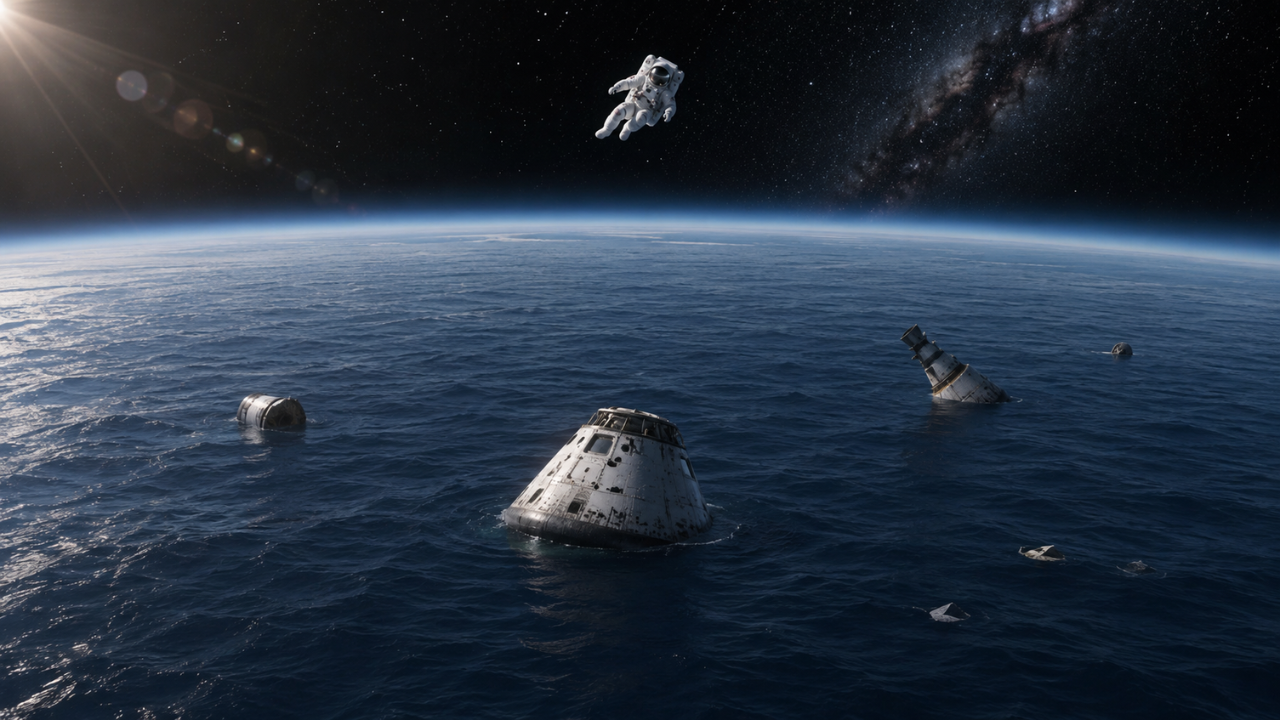
Point Nemo, located in the Pacific Ocean, is the world's only spacecraft cemetery, with a history dating back to 1971. This remote location has been designated as the final resting place for over 263 retired satellites and rocket stages. The primary reason for choosing this location is to minimize the risk of orbital debris falling on populated areas, thereby ensuring human safety.
The decision to dispose of spacecraft in Point Nemo is a strategic one, aimed at mitigating the growing problem of space junk. By intentionally crashing spacecraft into the ocean, space agencies can prevent them from becoming a hazard in orbit. However, this approach also raises concerns about the potential impact on the marine ecosystem. The remnants of spacecraft can contain hazardous materials, which may pose a threat to the unique and fragile environment of the Pacific Ocean.
Despite these concerns, current international regulations prioritize human safety over the preservation of the marine environment. This is reflected in the guidelines set by space agencies and regulatory bodies, which focus on minimizing the risk of debris falling on land or in populated areas. While this approach is understandable, it highlights the need for a more comprehensive framework that balances human safety with environmental protection.
Point Nemo's remote location makes it an ideal spot for spacecraft disposal, but it also underscores the vast distances involved in space exploration. In some cases, astronauts in orbit can be closer to Point Nemo than people living on Earth, due to the curvature of our planet. This unusual fact highlights the complexities of space travel and the challenges of managing space debris.
As the number of satellites and spacecraft in orbit continues to grow, the issue of space junk is becoming increasingly pressing. The use of Point Nemo as a spacecraft cemetery is a pragmatic solution, but it also raises important questions about our responsibility to protect the environment, both on Earth and in space. Ultimately, a more sustainable approach to space exploration and debris management will be needed to ensure the long-term health of our planet and the surrounding space.
The preservation of the marine ecosystem in Point Nemo is a concern that requires attention from space agencies, regulatory bodies, and environmental organizations. By working together, we can develop a more comprehensive framework for managing space debris and protecting the environment. This will not only ensure human safety but also preserve the unique and fragile ecosystems that exist on our planet.
In conclusion, Point Nemo is a remote and unusual location that plays a critical role in space exploration. While it serves as a necessary solution for managing space debris, it also highlights the need for a more sustainable approach to space travel and environmental protection. As we continue to push the boundaries of space exploration, we must also prioritize the preservation of our planet and the surrounding space.
Frequently asked questions
What is Point Nemo used for?
Point Nemo is used as a spacecraft cemetery, where retired satellites and rocket stages are disposed of.
Why is Point Nemo chosen for spacecraft disposal?
Point Nemo is chosen due to its remote location, which minimizes the risk of orbital debris falling on populated areas.