Tribal Activists, Father Start Hunger Strike Over Girl's Leprosy Drug Death
Protesters demand FIR against health officials, alleging negligence in 9-year-old's treatment
'%3E%3Crect%20width%3D'96'%20height%3D'96'%20fill%3D'%23B3261E'%2F%3E%3Ccircle%20cx%3D'30'%20cy%3D'24'%20r%3D'44'%20fill%3D'%23fff'%20opacity%3D'.12'%2F%3E%3Ccircle%20cx%3D'60'%20cy%3D'74'%20r%3D'40'%20fill%3D'%23000'%20opacity%3D'.10'%2F%3E%3C%2Fg%3E%3Cg%20fill%3D'%23fff'%3E%3Crect%20x%3D'29'%20y%3D'49'%20width%3D'8'%20height%3D'19'%20rx%3D'1'%2F%3E%3Crect%20x%3D'39'%20y%3D'40'%20width%3D'9'%20height%3D'28'%20rx%3D'1'%2F%3E%3Crect%20x%3D'50'%20y%3D'45'%20width%3D'8'%20height%3D'23'%20rx%3D'1'%2F%3E%3Crect%20x%3D'60'%20y%3D'53'%20width%3D'7'%20height%3D'15'%20rx%3D'1'%2F%3E%3Crect%20x%3D'41'%20y%3D'34'%20width%3D'5'%20height%3D'6'%2F%3E%3C%2Fg%3E%3C%2Fsvg%3E)
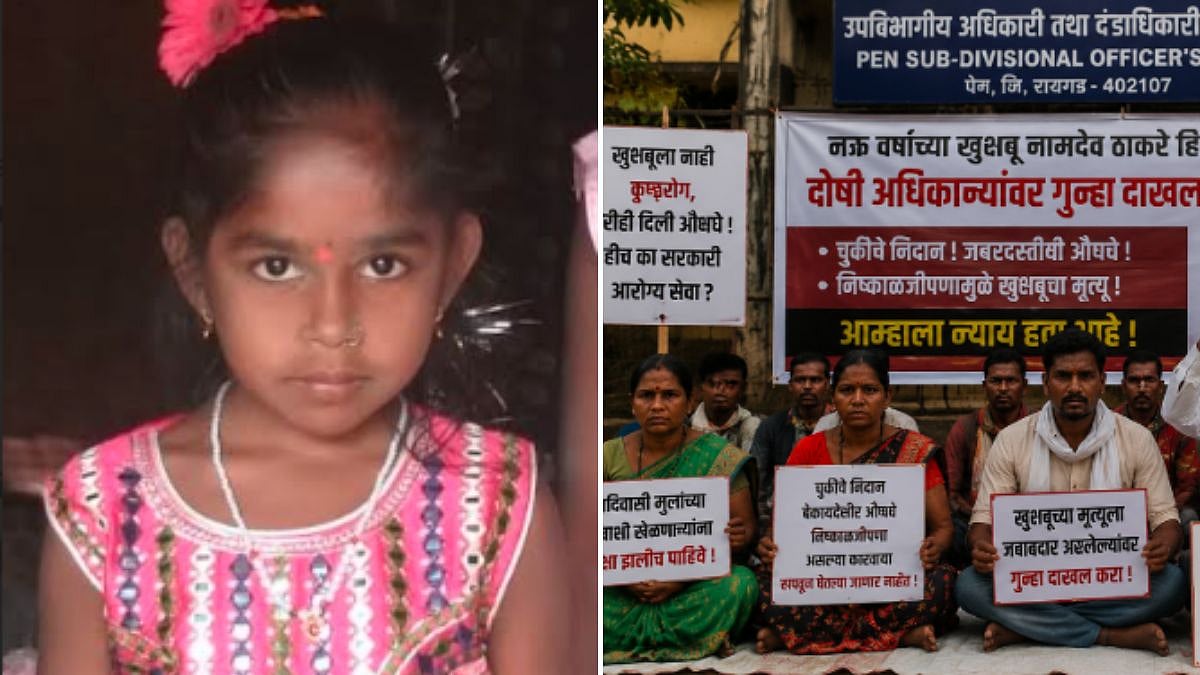
A hunger strike is set to begin outside the Pen Sub-Divisional Officer's office in Navi Mumbai, led by tribal activists and the father of Khushbu Namdev Thakre, a 9-year-old girl who died after a severe reaction to leprosy medication.
The protesters are demanding the registration of an FIR against health department and Integrated Tribal Development Project (ITDP) officials, alleging that negligence in her treatment led to her death. Khushbu, a Class IV student, died on January 22, 2025, after being administered medication during a government leprosy screening campaign, despite later being found not to have leprosy.
According to her family, Khushbu was wrongly diagnosed with leprosy and given medication without their consent, triggering a severe reaction that damaged her kidneys. The family has consistently maintained that doctors at MGM Hospital later informed them that she did not have leprosy.
The matter has been raised twice in the Maharashtra Legislative Assembly, and a government committee was constituted to investigate the incident. The committee concluded that negligence had occurred during Khushbu's treatment, but no criminal case has been registered against the officials concerned.
Social activist Santosh Thakur stated that the administration and police have failed to register an FIR, despite the committee's findings. The hunger strike is the latest phase of a prolonged campaign for justice, with protesters demanding that criminal charges be filed against the officials and employees of the health department and the Integrated Tribal Development Project.
In May 2025, hundreds of tribal residents marched to the Pen Tehsil office seeking criminal action against the officials involved. The protesters had also demanded the release of Khushbu's clinical analysis report, a time-bound judicial inquiry, compensation of Rs 10 lakh for the family, and systemic reforms in healthcare for students studying in government Ashram schools.
The hunger strike will be participated in by Khushbu's father, Namdev Thakre, along with activists Nanda Mhatre, Santosh Thakur, and other supporters. The protesters are determined to continue their hunger strike until criminal action is initiated against the officials responsible for the child's death.
This incident has highlighted the need for greater accountability and transparency in government healthcare programs, particularly in rural and tribal areas. The protesters' demands for justice and reforms in healthcare are likely to resonate with many in the community.
The Maharashtra government has been under pressure to take action against the officials responsible for Khushbu's death. The hunger strike is a desperate attempt by the protesters to bring attention to the case and to push for justice.
The incident has also raised questions about the effectiveness of government healthcare programs and the need for greater oversight and accountability. The protesters' demands for systemic reforms in healthcare are likely to be closely watched by the community and the government.
In conclusion, the hunger strike by tribal activists and Khushbu's father is a cry for justice and accountability in the face of alleged negligence and wrongdoing by government officials. The incident has highlighted the need for greater transparency and accountability in government healthcare programs and the importance of ensuring that those responsible for wrongdoing are held accountable.
Frequently asked questions
What is the reason for the hunger strike in Navi Mumbai?
The hunger strike is being held to demand justice for the death of 9-year-old Khushbu Namdev Thakre, who died after a severe reaction to leprosy medication.
What are the protesters demanding?
The protesters are demanding the registration of an FIR against health department and Integrated Tribal Development Project (ITDP) officials, alleging negligence in Khushbu's treatment.