Anak Krakatau Volcano Erupts, Shuts Jakarta Airport
Indonesia's Anak Krakatau volcano erupts, disrupting flights and affecting passengers.
'%3E%3Crect%20width%3D'96'%20height%3D'96'%20fill%3D'%231B5E20'%2F%3E%3Ccircle%20cx%3D'30'%20cy%3D'24'%20r%3D'44'%20fill%3D'%23fff'%20opacity%3D'.12'%2F%3E%3Ccircle%20cx%3D'60'%20cy%3D'74'%20r%3D'40'%20fill%3D'%23000'%20opacity%3D'.10'%2F%3E%3C%2Fg%3E%3Cg%3E%3Ccircle%20cx%3D'48'%20cy%3D'48'%20r%3D'15'%20fill%3D'%23fff'%2F%3E%3Cpath%20d%3D'M43%2034%20Q50%2048%2043%2062'%20fill%3D'none'%20stroke%3D'%238a94a6'%20stroke-width%3D'2.4'%2F%3E%3Cpath%20d%3D'M47%2033%20Q54%2048%2047%2063'%20fill%3D'none'%20stroke%3D'%238a94a6'%20stroke-width%3D'1.8'%20stroke-dasharray%3D'1.5%203'%2F%3E%3C%2Fg%3E%3C%2Fsvg%3E)
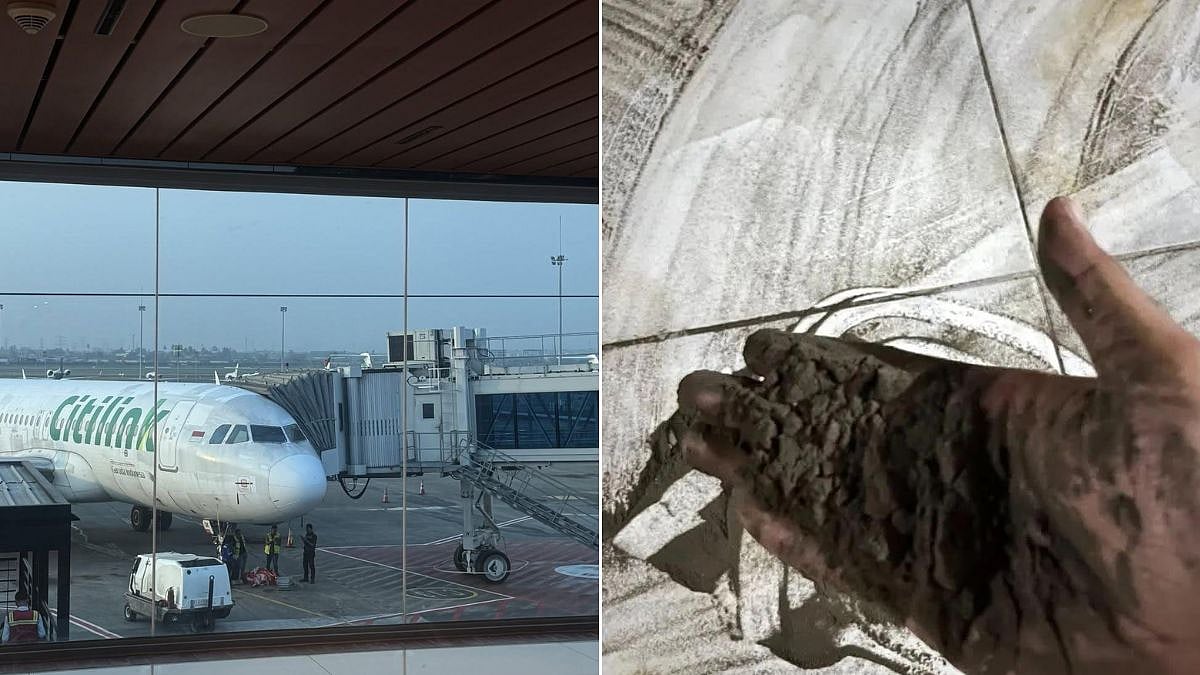
A powerful eruption of Indonesia's Anak Krakatau volcano on Sunday prompted the closure of Jakarta's Soekarno-Hatta International Airport and disrupted other domestic airports. The volcano, located in the Sunda Strait between Java and Sumatra islands, erupted twice on Sunday, with the first eruption occurring at 3:53 am and lasting for 30 seconds, followed by a second eruption three hours later that lasted for 16 seconds.
According to Indonesia's Geological Agency, the volcano had shown signs of activity since Friday before the eruptions. Closed-circuit camera footage captured lava flares from the volcano, and ash reached a height of 6,000 meters on the side of Java. No casualties were reported, and no evacuation order was issued, as the nearest settlement is more than 16 kilometers away from the active crater.
The eruption affected not only Jakarta but also other parts of western Indonesia, including Lampung province on Sumatra's southern tip. Volcanic ash spread across these areas, prompting AirNav Indonesia to close airspace around Soekarno-Hatta and Halim Perdanakusuma airports in Jakarta, as well as six other airports. The closure of Soekarno-Hatta airport alone affected 467 flights, disrupting the travel plans of approximately 150,000 passengers.
The airport was ordered to remain closed until 11:59 pm on Sunday, and the flight suspension was later extended until 1:30 PM local time on Monday due to ongoing volcanic ash-related aviation risks. Passengers were left stranded, with many expressing frustration and acceptance of the situation. Diego Urdiales, a Spanish tourist, stated that it was an inconvenience, while Michele Gouw, an Indonesian passenger, acknowledged that it was a natural disaster and that they had to accept it and wait for further directions from the airline and airport authorities.
The eruption of Anak Krakatau is a significant event, as the volcano has been active since 1927 and has undergone periodic eruptions. The Indonesian government has been monitoring the volcano's activity closely, and the country's Centre for Volcanology and Geological Hazard Mitigation has been providing updates on the situation.
In terms of the impact on air travel, the closure of airports and cancellation of flights have caused significant disruptions to passengers and airlines. The Indonesian Directorate General of Civil Aviation has been working to mitigate the effects of the eruption and ensure the safety of air travel in the region.
The eruption of Anak Krakatau serves as a reminder of the potential risks and impacts of natural disasters on air travel and daily life. As the situation continues to unfold, it is essential for authorities to monitor the volcano's activity closely and provide updates to the public to ensure their safety.
In conclusion, the eruption of Anak Krakatau volcano has caused significant disruptions to air travel and daily life in Indonesia, affecting thousands of passengers and prompting the closure of airports. As the situation continues to evolve, it is crucial for authorities to prioritize the safety of the public and provide updates on the volcano's activity.
Frequently asked questions
What is the current status of Jakarta airport?
The airport was ordered closed until 11:59 pm on Sunday and the flight suspension was later extended until 1:30 PM local time on Monday.
How many passengers were affected by the eruption?
Approximately 150,000 passengers were affected by the closure of Soekarno-Hatta airport alone.