Pregnant Woman Carried To Hospital In Makeshift Sling Near Mumbai
Villagers carry pregnant woman to hospital due to lack of road. Incident highlights infrastructure gaps near Mumbai.
'%3E%3Crect%20width%3D'96'%20height%3D'96'%20fill%3D'%23B3261E'%2F%3E%3Ccircle%20cx%3D'30'%20cy%3D'24'%20r%3D'44'%20fill%3D'%23fff'%20opacity%3D'.12'%2F%3E%3Ccircle%20cx%3D'60'%20cy%3D'74'%20r%3D'40'%20fill%3D'%23000'%20opacity%3D'.10'%2F%3E%3C%2Fg%3E%3Cg%20fill%3D'%23fff'%3E%3Crect%20x%3D'29'%20y%3D'49'%20width%3D'8'%20height%3D'19'%20rx%3D'1'%2F%3E%3Crect%20x%3D'39'%20y%3D'40'%20width%3D'9'%20height%3D'28'%20rx%3D'1'%2F%3E%3Crect%20x%3D'50'%20y%3D'45'%20width%3D'8'%20height%3D'23'%20rx%3D'1'%2F%3E%3Crect%20x%3D'60'%20y%3D'53'%20width%3D'7'%20height%3D'15'%20rx%3D'1'%2F%3E%3Crect%20x%3D'41'%20y%3D'34'%20width%3D'5'%20height%3D'6'%2F%3E%3C%2Fg%3E%3C%2Fsvg%3E)
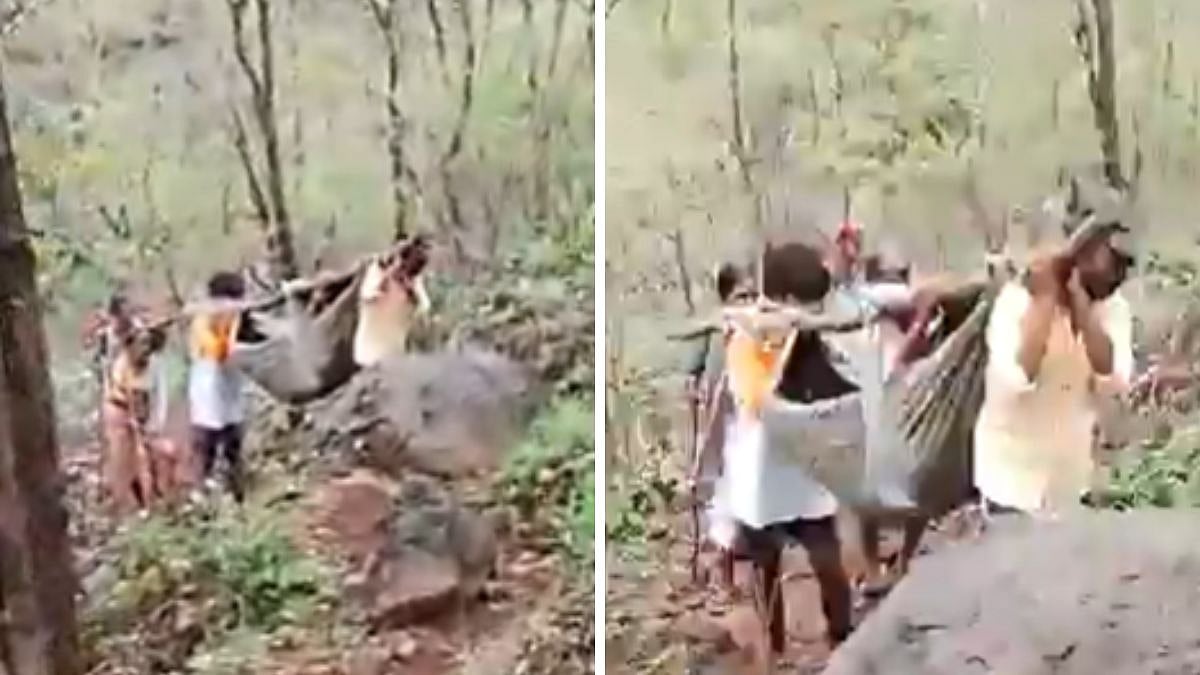
A pregnant woman was carried to a hospital in a makeshift cloth sling by villagers in Umbarane Wadi, Khalapur taluka, Raigad district, due to the absence of a motorable road. The incident occurred barely 80 kilometres from Mumbai and just a few kilometres from the Khalapur Toll Plaza on the Mumbai-Pune Expressway.
The woman, identified as the wife of Ananta Pardhi, went into labour and had to be carried by villagers through a rugged forest path to Chouk Hospital. With no proper road leading to the tribal hamlet, residents fashioned a sling using a bedsheet and walked several kilometres across rocky terrain and streams to reach medical help.
Umbarane Wadi is among four tribal settlements that continue to lack basic infrastructure such as all-weather roads and electricity despite decades after Independence. The narrow footpath connecting the village to Chouk has been washed away by the recent heavy monsoon rains, making access even more difficult.
The incident has triggered criticism from local residents, who questioned the government's claims of development while basic connectivity remains unavailable in villages located only a short distance from one of the country's most modern expressways. The contrast has drawn sharp attention as motorists continue to pay tolls at the Khalapur Toll Plaza for travelling on the Mumbai-Pune Expressway, while residents living just a few kilometres away are still forced to carry patients on foot due to the absence of a proper road.
The remote hamlets are located close to the Morbe Dam, which supplies drinking water to Navi Mumbai, and are situated near the Mumbai-Pune Expressway, one of India's busiest highways. Despite being close to these modern infrastructure projects, the villages lack basic amenities such as roads and electricity.
Locals have renewed their demand for an all-weather road, electricity and other basic civic amenities, arguing that access to healthcare should not depend on villagers carrying patients through forests and streams during the monsoon. The incident highlights the infrastructure gaps that continue to exist just outside Mumbai, despite the city's reputation as a hub of development and progress.
The woman was later admitted to Chouk Hospital for delivery, and her condition is currently stable. However, the incident has sparked outrage and concern among local residents, who are demanding better infrastructure and basic amenities from the government.
In recent years, the government has made several claims about development and progress in the region, but incidents like this highlight the ground reality and the need for better infrastructure and basic amenities in rural areas. The lack of basic infrastructure such as roads and electricity is a major concern for residents, and it is imperative that the government takes immediate action to address these issues.
The incident is a stark reminder of the need for better infrastructure and basic amenities in rural areas, and it is hoped that the government will take immediate action to address these issues and provide better access to healthcare and other basic services for residents in the region.
In conclusion, the incident of a pregnant woman being carried to a hospital in a makeshift sling near Mumbai highlights the infrastructure gaps and lack of basic amenities in rural areas. It is imperative that the government takes immediate action to address these issues and provide better access to healthcare and other basic services for residents in the region. This incident is a wake-up call for the government to focus on developing rural infrastructure and providing basic amenities to all citizens, regardless of their location.