Film 'Satluj' Sparks Political Debate in Punjab
Punjab's political landscape is being reshaped by the film 'Satluj'.
'%3E%3Crect%20width%3D'96'%20height%3D'96'%20fill%3D'%231A5276'%2F%3E%3Ccircle%20cx%3D'30'%20cy%3D'24'%20r%3D'44'%20fill%3D'%23fff'%20opacity%3D'.12'%2F%3E%3Ccircle%20cx%3D'60'%20cy%3D'74'%20r%3D'40'%20fill%3D'%23000'%20opacity%3D'.10'%2F%3E%3C%2Fg%3E%3Cg%20fill%3D'%23fff'%3E%3Cpath%20d%3D'M31%2041%20L48%2031%20L65%2041%20Z'%2F%3E%3Crect%20x%3D'33'%20y%3D'43'%20width%3D'4'%20height%3D'17'%2F%3E%3Crect%20x%3D'41'%20y%3D'43'%20width%3D'4'%20height%3D'17'%2F%3E%3Crect%20x%3D'51'%20y%3D'43'%20width%3D'4'%20height%3D'17'%2F%3E%3Crect%20x%3D'59'%20y%3D'43'%20width%3D'4'%20height%3D'17'%2F%3E%3Crect%20x%3D'30'%20y%3D'62'%20width%3D'36'%20height%3D'4'%20rx%3D'1'%2F%3E%3C%2Fg%3E%3C%2Fsvg%3E)
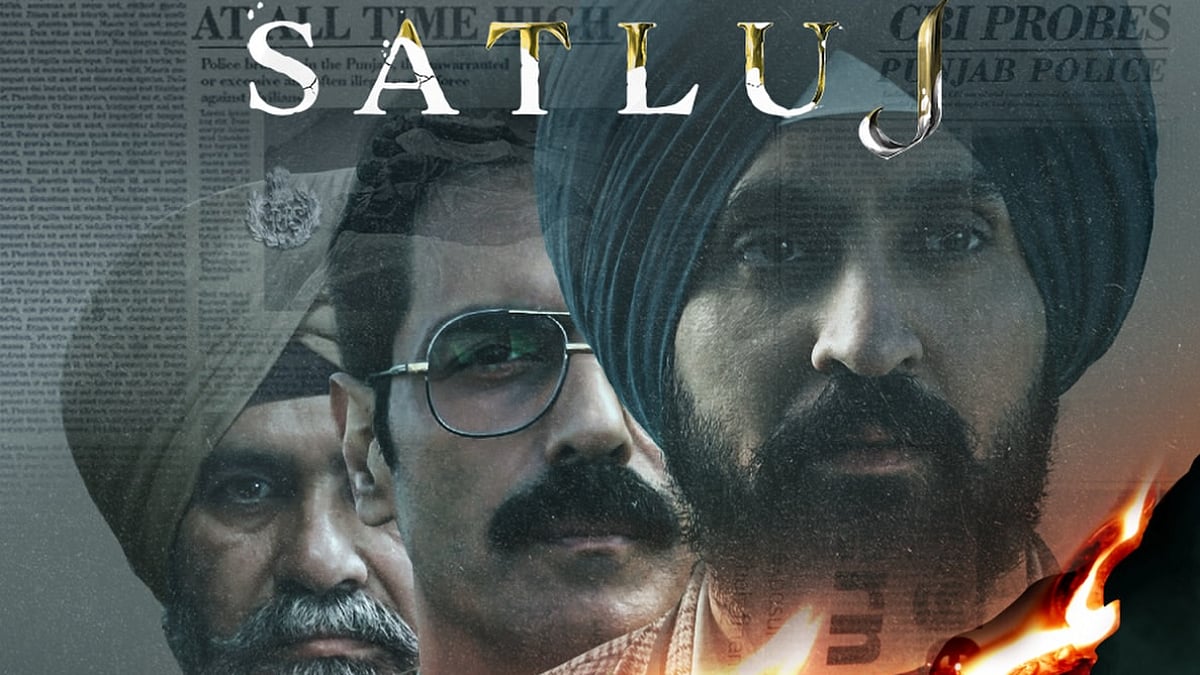
The release of the film 'Satluj' has ignited a highly sensitive and potentially explosive debate in Punjab's political arena. The film has brought back painful memories of the state's militancy era, raising questions about state action and human rights. This has forced major political parties to reassess their electoral strategies ahead of the 2027 polls.
The Shiromani Akali Dal (SAD) has been quick to seize the opportunity, openly defending the film and planning to organize screenings across hundreds of villages. The party aims to reconnect with rural Sikh voters who drifted away after the farmers' agitation and years of decline. By leveraging the emotional appeal of the film, the Akalis hope to revive memories of alleged excesses during the militancy period and reinforce their narrative of protecting Sikh interests.
The Bharatiya Janata Party (BJP), on the other hand, faces a complicated challenge. The party has consistently projected itself as anti-terrorism and anti-separatism, but opposing the film could risk alienating rural Sikh voters. The BJP has been trying to expand its support base into rural Sikh constituencies, but this effort suffered a setback after the farm laws protests. If the BJP openly opposes the film, it may rekindle farmers' resentment and harm its electoral prospects.
Punjab's modern history is marked by the violence of the 1980s and early 1990s, which remains a living memory for many families. The film 'Satluj' has reopened old wounds, and the political responses are being shaped by electoral compulsions rather than artistic merit. With the Assembly elections due next year, every party recognizes that its stand on the film could influence rural voters, Sikh sentiment, and public perceptions about justice, terrorism, and governance.
The Akali Dal's strategy of organizing village-level screenings is significant, as it aims to rebuild grassroots networks, revive local leadership, and reconnect with voters who had abandoned the party. Rural Punjab remains the Akali Dal's natural electoral base, and if the party succeeds in converting emotional sentiment into political support, it could begin recovering lost ground before the elections.
The controversy surrounding 'Satluj' has also highlighted the complexities of Punjab's electoral landscape. The state's politics is characterized by a delicate balance between different communities, and any misstep could have significant consequences. As the elections approach, the political parties will need to navigate this sensitive terrain carefully, balancing their electoral strategies with the need to address the concerns and sentiments of various stakeholders.
In the context of Punjab's history and politics, the film 'Satluj' has become a lightning rod for the state's most sensitive and contentious issues. The debate surrounding the film reflects the deeper tensions and contradictions that have shaped the state's political narrative over the years. As the political parties navigate this complex landscape, they will need to be mindful of the potential consequences of their actions, both for their electoral prospects and for the state's social and political fabric.
The significance of the film 'Satluj' lies in its potential to reshape Punjab's political narrative before the 2027 polls. The controversy surrounding the film has already begun to influence the electoral calculations of major political parties, and its impact is likely to be felt in the months to come. As the state prepares for the elections, the debate surrounding 'Satluj' will remain a critical factor in shaping the political discourse and determining the course of Punjab's future.
In conclusion, the film 'Satluj' has sparked a highly sensitive and potentially explosive debate in Punjab's political arena. The controversy surrounding the film reflects the deeper tensions and contradictions that have shaped the state's political narrative over the years. As the political parties navigate this complex landscape, they will need to be mindful of the potential consequences of their actions, both for their electoral prospects and for the state's social and political fabric. The impact of the film will be felt in the months to come, and it has the potential to reshape Punjab's political narrative before the 2027 polls.