China's Carriers Face Submarine Threats
China's growing aircraft carrier fleet is vulnerable to submarine attacks.
'%3E%3Crect%20width%3D'96'%20height%3D'96'%20fill%3D'%234A235A'%2F%3E%3Ccircle%20cx%3D'30'%20cy%3D'24'%20r%3D'44'%20fill%3D'%23fff'%20opacity%3D'.12'%2F%3E%3Ccircle%20cx%3D'60'%20cy%3D'74'%20r%3D'40'%20fill%3D'%23000'%20opacity%3D'.10'%2F%3E%3C%2Fg%3E%3Cg%20fill%3D'none'%20stroke%3D'%23fff'%20stroke-width%3D'3'%3E%3Ccircle%20cx%3D'48'%20cy%3D'48'%20r%3D'16'%2F%3E%3Cellipse%20cx%3D'48'%20cy%3D'48'%20rx%3D'6.5'%20ry%3D'16'%2F%3E%3Cline%20x1%3D'32'%20y1%3D'42'%20x2%3D'64'%20y2%3D'42'%2F%3E%3Cline%20x1%3D'32'%20y1%3D'54'%20x2%3D'64'%20y2%3D'54'%2F%3E%3C%2Fg%3E%3C%2Fsvg%3E)
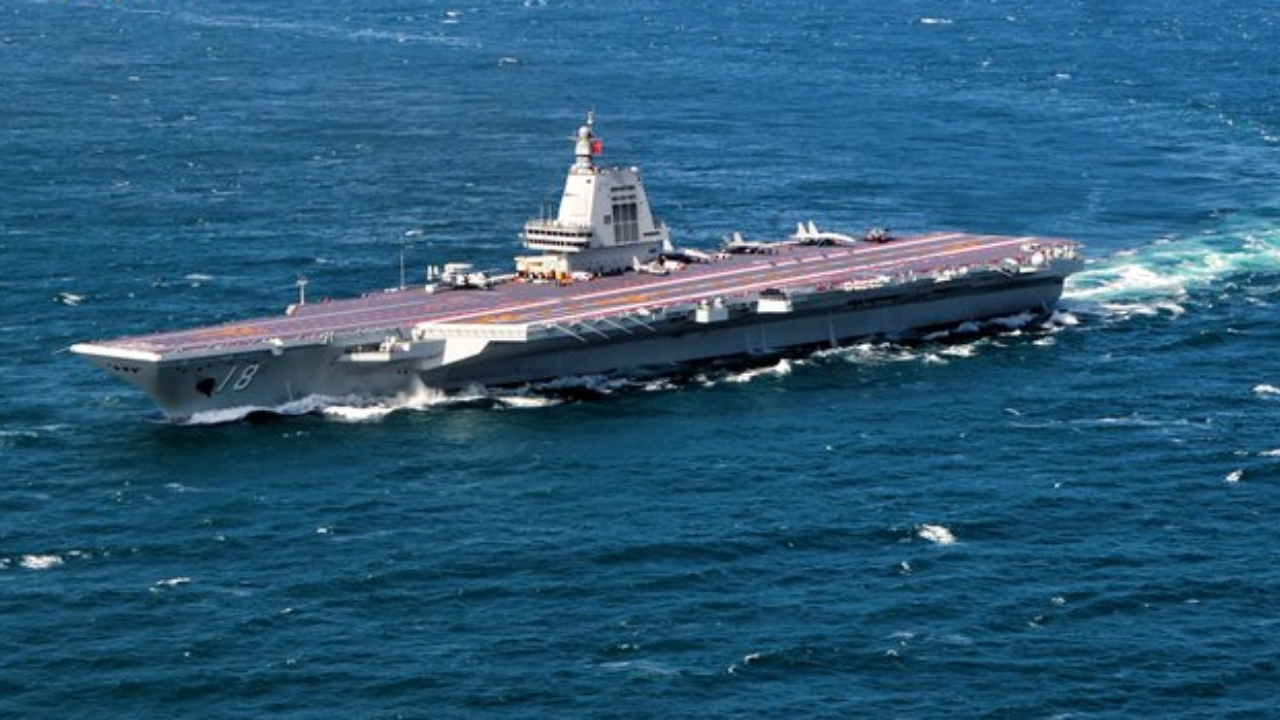
China's expanding aircraft carrier fleet is facing a significant challenge from submarines operated by adversaries like the US and Japan. These advanced submarines are capable of launching undetected attacks, posing a substantial threat to China's naval ambitions.
The Chinese navy's anti-submarine warfare capabilities have persistent gaps in tracking hostile vessels, making it difficult for them to counter the submarine threat effectively. As China's carriers move further into the Pacific, their exposure to potential attacks increases.
This strategic shift is part of China's efforts to project power and expand its naval presence in the region. However, it also heightens the vulnerability of its carriers to ambushes by enemy submarines. The US and Japan possess some of the most advanced submarines in the world, with capabilities that far surpass those of China's anti-submarine warfare systems.
China's aircraft carrier fleet is a key component of its naval modernization efforts, aimed at establishing the country as a major maritime power. The fleet's growth is part of a broader strategy to expand China's military presence in the Asia-Pacific region and to protect its growing economic and strategic interests.
The submarine threat to China's carriers is not limited to the US and Japan. Other countries in the region, such as South Korea and Australia, also operate advanced submarines that could potentially pose a threat to Chinese naval vessels.
China is working to improve its anti-submarine warfare capabilities, including the development of new sensors and weapons systems. However, the country still faces significant challenges in tracking and countering hostile submarines, particularly in the open ocean.
The vulnerability of China's carriers to submarine attacks has significant implications for the country's naval strategy and its ability to project power in the region. As China continues to expand its naval presence, it will need to address the submarine threat in order to ensure the effectiveness of its aircraft carrier fleet.
In conclusion, China's growing aircraft carrier fleet faces significant challenges from submarines operated by adversaries in the region. The country's anti-submarine warfare capabilities are still developing, and it will need to continue to invest in new technologies and systems in order to counter the submarine threat effectively.
The strategic implications of this threat are far-reaching, and China will need to carefully consider its naval strategy in order to mitigate the risks posed by enemy submarines. As the country continues to expand its naval presence in the Asia-Pacific region, it will need to balance its desire to project power with the need to protect its vessels from potential attacks.
Frequently asked questions
What is the main threat to China's aircraft carriers?
The main threat to China's aircraft carriers is from submarines operated by adversaries like the US and Japan.
Why are China's carriers vulnerable to submarine attacks?
China's carriers are vulnerable to submarine attacks because the country's anti-submarine warfare capabilities have persistent gaps in tracking hostile vessels.