Mumbai Doctors Use Cancer Meds On Unborn Baby
Mumbai doctors use anti-cancer meds to shrink tumours in unborn baby. Treatment successful.

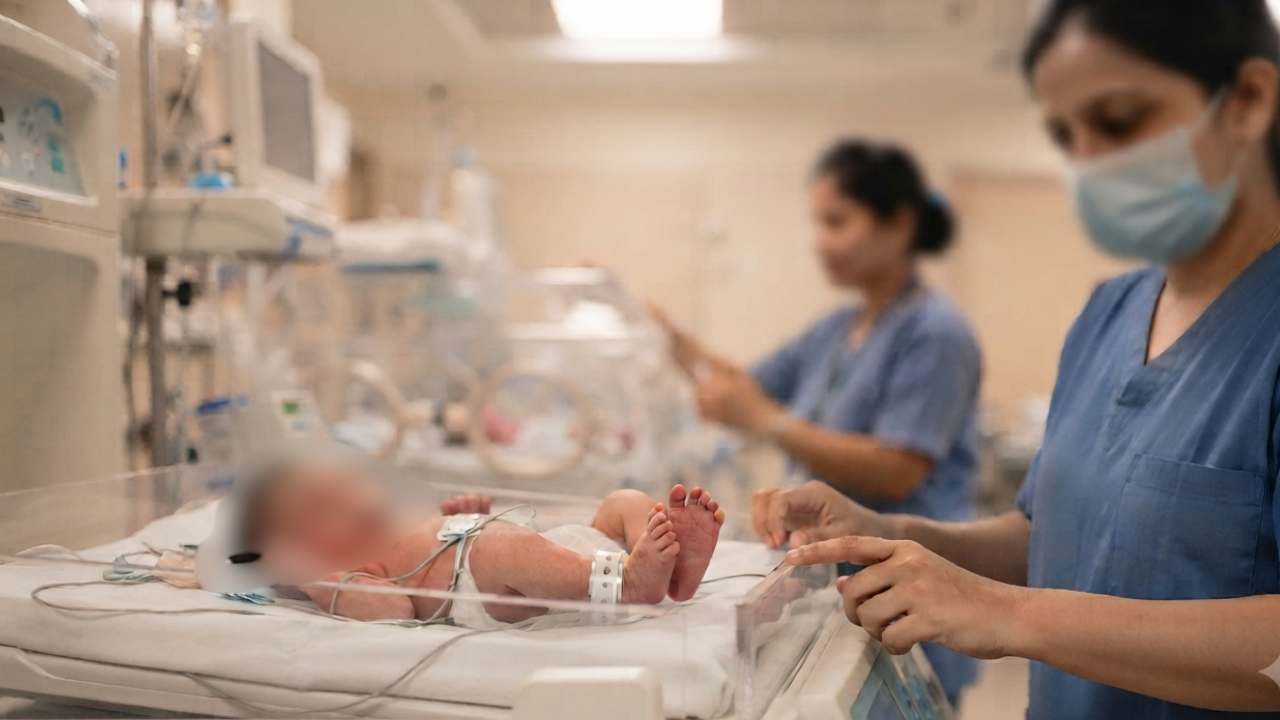
A medical team in Mumbai has successfully used an anti-cancer drug to shrink tumours in an unborn baby. The baby's mother, a resident of Mumbai, was administered the drug Everolimus, which crossed the placenta and reached the foetus, reducing the size of five heart tumours and brain nodules.
The treatment was a complex process that required careful monitoring and administration of the drug. The doctors involved in the case have stated that the use of Everolimus in this manner is a potential first in Mumbai, and it marks a significant breakthrough in the treatment of foetal tumours.
The baby, a boy, was born with reduced tumour size, and since his delivery, the tumours have not shown any signs of growth. This is a positive outcome, and the medical team is hopeful that the baby will make a full recovery.
The use of anti-cancer drugs to treat foetal tumours is a relatively new area of research, and this case highlights the potential benefits of such treatment. The fact that the drug was able to cross the placenta and reach the foetus without causing any harm is a significant finding, and it opens up new possibilities for the treatment of congenital tumours.
In recent years, there have been significant advances in the field of foetal medicine, and this case is an example of how these advances can be used to improve outcomes for babies with congenital conditions. The medical team involved in the case has stated that they are hopeful that this treatment will become more widely available in the future.
The success of this treatment is a testament to the skill and expertise of the medical team involved, and it highlights the importance of continued research and innovation in the field of foetal medicine. As medical technology continues to evolve, it is likely that we will see more cases like this, where innovative treatments are used to improve outcomes for babies with congenital conditions.
The use of Everolimus to treat foetal tumours is a significant breakthrough, and it has the potential to improve outcomes for babies with congenital tumours. The fact that the treatment was successful in this case is a positive outcome, and it highlights the importance of continued research and innovation in the field of foetal medicine.
In Mumbai, this case is being seen as a major breakthrough, and it is likely to have significant implications for the treatment of foetal tumours in the future. The medical team involved in the case is hopeful that this treatment will become more widely available, and that it will improve outcomes for babies with congenital conditions.
The success of this treatment is a significant development, and it highlights the importance of continued innovation and research in the field of foetal medicine. As medical technology continues to evolve, it is likely that we will see more cases like this, where innovative treatments are used to improve outcomes for babies with congenital conditions.
This breakthrough has the potential to improve the lives of many babies and their families, and it is a significant step forward in the treatment of foetal tumours. The medical team involved in the case deserves credit for their skill and expertise, and for their commitment to improving outcomes for babies with congenital conditions.
In conclusion, the use of anti-cancer meds to shrink tumours in an unborn baby is a significant breakthrough, and it has the potential to improve outcomes for babies with congenital tumours. The success of this treatment is a testament to the skill and expertise of the medical team involved, and it highlights the importance of continued research and innovation in the field of foetal medicine.