Himachal Finds 67 Vulnerable Glacial Lakes
Himachal identifies risky lakes, plans early warnings. Four lakes to get sensors first.
'%3E%3Crect%20width%3D'96'%20height%3D'96'%20fill%3D'%23B3261E'%2F%3E%3Ccircle%20cx%3D'30'%20cy%3D'24'%20r%3D'44'%20fill%3D'%23fff'%20opacity%3D'.12'%2F%3E%3Ccircle%20cx%3D'60'%20cy%3D'74'%20r%3D'40'%20fill%3D'%23000'%20opacity%3D'.10'%2F%3E%3C%2Fg%3E%3Cg%20fill%3D'%23fff'%3E%3Crect%20x%3D'29'%20y%3D'49'%20width%3D'8'%20height%3D'19'%20rx%3D'1'%2F%3E%3Crect%20x%3D'39'%20y%3D'40'%20width%3D'9'%20height%3D'28'%20rx%3D'1'%2F%3E%3Crect%20x%3D'50'%20y%3D'45'%20width%3D'8'%20height%3D'23'%20rx%3D'1'%2F%3E%3Crect%20x%3D'60'%20y%3D'53'%20width%3D'7'%20height%3D'15'%20rx%3D'1'%2F%3E%3Crect%20x%3D'41'%20y%3D'34'%20width%3D'5'%20height%3D'6'%2F%3E%3C%2Fg%3E%3C%2Fsvg%3E)
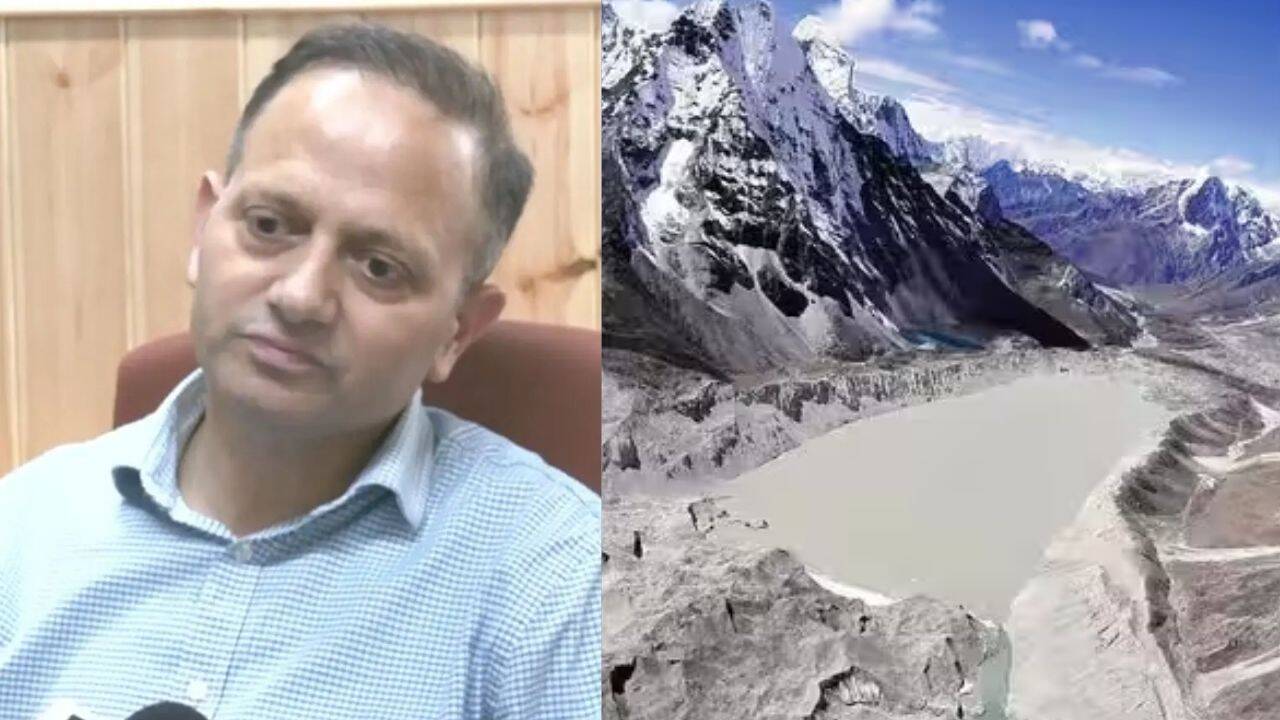
Himachal Pradesh has identified 67 vulnerable glacial lakes that pose a risk of glacial lake outburst floods (GLOFs). The state is closely monitoring these lakes using satellite imagery and other scientific data to detect any changes that could increase the risk of GLOFs.
The state government is exploring technical solutions to install sensors in these locations to transmit real-time information. This is a challenging task as many of these locations do not have conventional communication networks.
As a first step, the government plans to install early warning systems in four of the identified lakes. This will help in providing timely warnings to people living in downstream areas in case of a GLOF.
Glacial lake outburst floods are a major concern in the Himalayan region, including Himachal Pradesh. These floods can cause significant damage to life and property, and can also affect the state's infrastructure, including roads, bridges, and hydropower projects.
The identification of vulnerable glacial lakes is a crucial step in mitigating the risk of GLOFs. The state government's plan to install early warning systems is a welcome move, and it is expected to help in reducing the risk of damage from GLOFs.
The use of satellite imagery and other scientific data is also a significant step in monitoring the glacial lakes. This will help in detecting any changes in the lakes, such as an increase in water level or a change in the lake's shape, which could indicate an increased risk of a GLOF.
The state government's efforts to mitigate the risk of GLOFs are part of a larger effort to address the impacts of climate change in the Himalayan region. Climate change is causing glaciers to melt at a rapid rate, which is leading to an increase in the number of glacial lakes and the risk of GLOFs.
In conclusion, the identification of 67 vulnerable glacial lakes in Himachal Pradesh is a significant concern, and the state government's plan to install early warning systems is a welcome move. The use of satellite imagery and other scientific data will help in monitoring the lakes and reducing the risk of GLOFs.
The state's efforts to mitigate the risk of GLOFs are crucial, given the potential damage that these floods can cause. The government's plan to install early warning systems in four lakes is a first step, and it is expected to help in reducing the risk of damage from GLOFs.
Overall, the identification of vulnerable glacial lakes and the plan to install early warning systems are significant steps in addressing the impacts of climate change in the Himalayan region.
Frequently asked questions
What is the risk posed by glacial lakes in Himachal Pradesh?
Glacial lakes pose a risk of glacial lake outburst floods (GLOFs), which can cause significant damage to life and property.
How is the state government planning to mitigate this risk?
The state government is planning to install early warning systems in four of the identified lakes and use satellite imagery and other scientific data to monitor the lakes.