Maharashtra Suggests Marathas As OBC Sub-Category
Maharashtra government tells Bombay HC Marathas could be OBC sub-category.
'%3E%3Crect%20width%3D'96'%20height%3D'96'%20fill%3D'%231A5276'%2F%3E%3Ccircle%20cx%3D'30'%20cy%3D'24'%20r%3D'44'%20fill%3D'%23fff'%20opacity%3D'.12'%2F%3E%3Ccircle%20cx%3D'60'%20cy%3D'74'%20r%3D'40'%20fill%3D'%23000'%20opacity%3D'.10'%2F%3E%3C%2Fg%3E%3Cg%20fill%3D'%23fff'%3E%3Cpath%20d%3D'M31%2041%20L48%2031%20L65%2041%20Z'%2F%3E%3Crect%20x%3D'33'%20y%3D'43'%20width%3D'4'%20height%3D'17'%2F%3E%3Crect%20x%3D'41'%20y%3D'43'%20width%3D'4'%20height%3D'17'%2F%3E%3Crect%20x%3D'51'%20y%3D'43'%20width%3D'4'%20height%3D'17'%2F%3E%3Crect%20x%3D'59'%20y%3D'43'%20width%3D'4'%20height%3D'17'%2F%3E%3Crect%20x%3D'30'%20y%3D'62'%20width%3D'36'%20height%3D'4'%20rx%3D'1'%2F%3E%3C%2Fg%3E%3C%2Fsvg%3E)
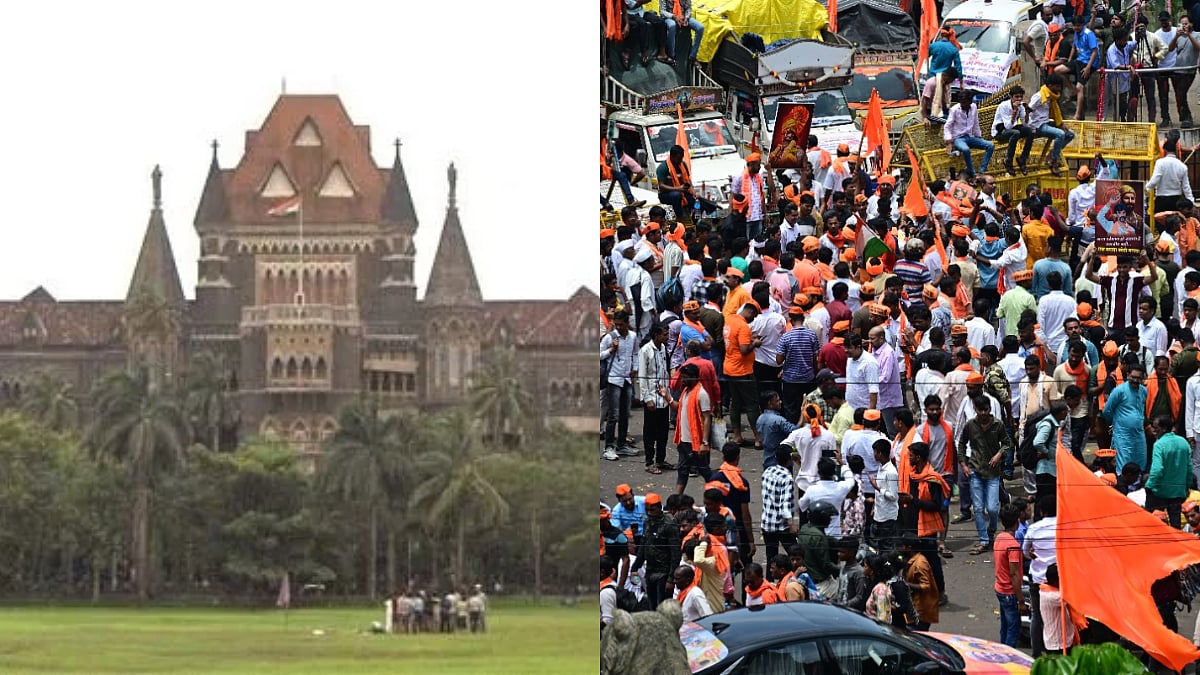
The Maharashtra government has suggested that the Maratha community could be considered as a sub-category within the Other Backward Classes (OBC) quota.
This proposal was made by Advocate General Milind Sathe during a hearing at the Bombay High Court on Friday. Sathe argued that the Supreme Court has recognised the legality of sub-classification among Scheduled Castes, Scheduled Tribes and OBCs.
The state government also argued that the 50 per cent ceiling on reservations is not completely inflexible, citing the reservation provided to Economically Weaker Sections (EWS) as an example. This reservation takes the overall reservation beyond the 50 per cent threshold and has received constitutional recognition from the Supreme Court.
The arguments were made during the hearing of a batch of 18 petitions challenging the Maharashtra government's decision to provide 10 per cent reservation to the Maratha community under the Socially and Educationally Backward Classes (SEBC) category.
The petitions have challenged the constitutional validity of the Maratha reservation, particularly in view of the existing 50 per cent reservation ceiling. The matters are being heard by a full bench comprising Acting Chief Justice Ravindra Ghuge, Justice Sandeep Marne and Justice Jadhav.
During the hearing, the state government also placed historical records before the court to support its contention regarding the social and educational backwardness of the Maratha community.
These records indicated that before 1956, the Maratha community was considered backward in parts of Madhya Vidarbha and Marathwada. The state argued that these historical records had also been considered by the Justice Shukre Commission while assessing the backwardness of the community.
The full bench adjourned the hearing until September 2, when arguments in the batch of petitions are expected to continue.
The Maharashtra government's suggestion that the Maratha community could be considered as a sub-category within the OBC quota is a significant development in the ongoing debate over reservations in the state.
The proposal has the potential to impact the lives of millions of people in Maharashtra, and its outcome will be closely watched by communities across the state.
In the coming weeks, the Bombay High Court will continue to hear arguments on the matter, and its decision will have far-reaching implications for the state's reservation policy.
The case highlights the complexities and challenges involved in implementing reservation policies, and the need for a nuanced and informed approach to addressing the social and economic disparities that exist in Indian society.
Ultimately, the outcome of the case will depend on the court's interpretation of the constitutional framework and the legal validity of the state government's proposal.
As the hearing continues, it is likely that the court will consider a range of factors, including the historical records of the Maratha community, the Justice Shukre Commission's findings, and the implications of the proposal for the state's reservation policy.
The decision of the Bombay High Court will be a significant milestone in the ongoing debate over reservations in Maharashtra, and its impact will be felt for years to come.
The Maratha community, which constitutes a significant proportion of the state's population, will be eagerly awaiting the court's decision, which will have a major impact on their lives and opportunities.
The state government's proposal has sparked a lively debate over the issue of reservations, with some arguing that it is a necessary step to address the social and economic disparities faced by the Maratha community, while others have raised concerns about the potential implications for other communities in the state.
As the case continues to unfold, it is likely that the court will face a range of complex and challenging questions, including the issue of whether the Maratha community can be considered as a sub-category within the OBC quota, and the implications of such a decision for the state's reservation policy.
The Bombay High Court's decision will be a significant test of the constitutional framework and the legal validity of the state government's proposal, and its outcome will have far-reaching implications for the state and its people.
In conclusion, the Maharashtra government's suggestion that the Maratha community could be considered as a sub-category within the OBC quota is a significant development in the ongoing debate over reservations in the state, and its outcome will be closely watched by communities across the state.
Frequently asked questions
What is the Maharashtra government's proposal for the Maratha community?
The Maharashtra government has proposed that the Maratha community could be considered as a sub-category within the Other Backward Classes (OBC) quota.
What is the significance of the 50% reservation ceiling in this case?
The 50% reservation ceiling is not completely inflexible, as cited by the reservation provided to Economically Weaker Sections (EWS), which takes the overall reservation beyond the 50% threshold and has received constitutional recognition from the Supreme Court.