Jitendra Singh Rejects Rahul Gandhi's Allegation Against Amit Shah
Union Minister Jitendra Singh rebuts Rahul Gandhi's claim, says no minister can order police firing.
'%3E%3Crect%20width%3D'96'%20height%3D'96'%20fill%3D'%231A5276'%2F%3E%3Ccircle%20cx%3D'30'%20cy%3D'24'%20r%3D'44'%20fill%3D'%23fff'%20opacity%3D'.12'%2F%3E%3Ccircle%20cx%3D'60'%20cy%3D'74'%20r%3D'40'%20fill%3D'%23000'%20opacity%3D'.10'%2F%3E%3C%2Fg%3E%3Cg%20fill%3D'%23fff'%3E%3Cpath%20d%3D'M31%2041%20L48%2031%20L65%2041%20Z'%2F%3E%3Crect%20x%3D'33'%20y%3D'43'%20width%3D'4'%20height%3D'17'%2F%3E%3Crect%20x%3D'41'%20y%3D'43'%20width%3D'4'%20height%3D'17'%2F%3E%3Crect%20x%3D'51'%20y%3D'43'%20width%3D'4'%20height%3D'17'%2F%3E%3Crect%20x%3D'59'%20y%3D'43'%20width%3D'4'%20height%3D'17'%2F%3E%3Crect%20x%3D'30'%20y%3D'62'%20width%3D'36'%20height%3D'4'%20rx%3D'1'%2F%3E%3C%2Fg%3E%3C%2Fsvg%3E)
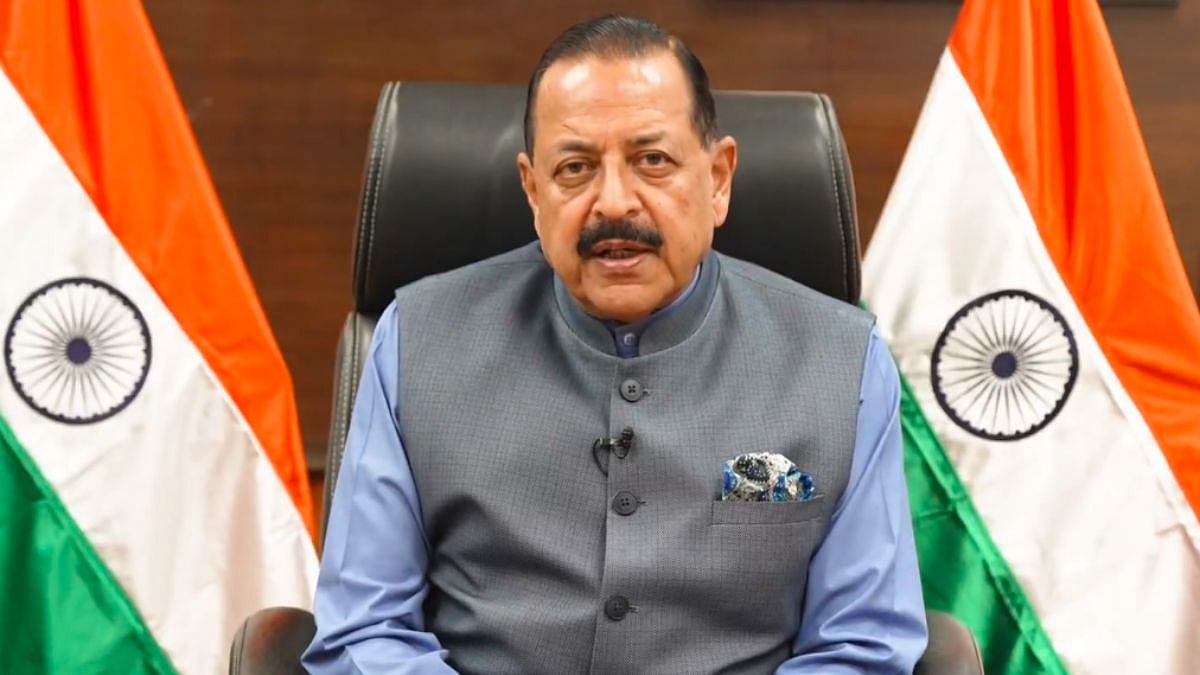
Union Minister of State in the Prime Minister's Office, Dr Jitendra Singh, has strongly rejected Congress leader Rahul Gandhi's allegation that Union Home Minister Amit Shah ordered police to open fire on student protesters.
The rebuttal came during a discussion on The Public Examinations (Prevention of Unfair Means) Amendment Bill, 2026 in the Lok Sabha. Singh stated that no minister has the authority to order police firing, and such decisions are taken by the local executive magistrate.
According to Singh, the orders for firing on a protesting mob are always issued by a Magistrate, such as a District Magistrate (DM) or Sub-Divisional Magistrate (SDM), and never by a minister. He expressed surprise that the opposition seemed to lack understanding of the country's administrative system.
Rahul Gandhi had alleged that Amit Shah had ordered the police to fire at protesting students, demanding his removal as Home Minister and a Supreme Court-monitored probe into the student crackdown. However, Singh rejected this allegation on factual grounds, stating that no bullets were fired during the protest, and only tear gas was used.
The minister reiterated that the authority to order firing rests with the executive magistrate, not with any minister. His remarks triggered a sharp reaction from the ruling NDA, with several leaders demanding an apology from Gandhi and calling the claim baseless.
The Congress party defended Gandhi's remarks, maintaining that the Home Minister should address the House and clarify the government's position. The incident highlights the ongoing tensions between the ruling party and the opposition, with both sides engaging in a war of words over the allegations.
The controversy surrounding the student protests and the alleged police crackdown has sparked a heated debate in the country, with many calling for greater transparency and accountability from the government. As the situation continues to unfold, it remains to be seen how the government will respond to the allegations and what measures will be taken to address the concerns of the opposition and the public.
In the meantime, the ruling party and the opposition will likely continue to engage in a bitter war of words, with each side trying to outmaneuver the other. The incident has once again highlighted the deep divisions within the country's political landscape and the need for greater dialogue and cooperation between different parties.
The allegations made by Rahul Gandhi and the subsequent rebuttal by Jitendra Singh have significant implications for the country's political landscape. The incident has sparked a heated debate about the role of the government and the opposition in addressing the concerns of the public and ensuring accountability.
As the country moves forward, it is essential to address the underlying issues that have led to the current controversy. This includes ensuring greater transparency and accountability from the government, as well as promoting greater dialogue and cooperation between different parties. Only through such efforts can the country hope to build a more stable and prosperous future for all its citizens.
In conclusion, the rejection of Rahul Gandhi's allegation by Jitendra Singh has significant implications for the country's political landscape. The incident highlights the need for greater transparency and accountability from the government, as well as the importance of promoting greater dialogue and cooperation between different parties. As the situation continues to unfold, it remains to be seen how the government will respond to the allegations and what measures will be taken to address the concerns of the opposition and the public.
Frequently asked questions
What was Rahul Gandhi's allegation against Amit Shah?
Rahul Gandhi alleged that Amit Shah ordered police to fire at protesting students.
Who has the authority to order police firing?
The authority to order police firing rests with the local executive magistrate, not with any minister.