US Scientists Use Sharks to Improve Hurricane Forecasts
Sharks help forecast hurricane intensification, US scientists tag sharks to collect ocean data.
'%3E%3Crect%20width%3D'96'%20height%3D'96'%20fill%3D'%23B3261E'%2F%3E%3Ccircle%20cx%3D'30'%20cy%3D'24'%20r%3D'44'%20fill%3D'%23fff'%20opacity%3D'.12'%2F%3E%3Ccircle%20cx%3D'60'%20cy%3D'74'%20r%3D'40'%20fill%3D'%23000'%20opacity%3D'.10'%2F%3E%3C%2Fg%3E%3Cg%20fill%3D'%23fff'%3E%3Crect%20x%3D'29'%20y%3D'49'%20width%3D'8'%20height%3D'19'%20rx%3D'1'%2F%3E%3Crect%20x%3D'39'%20y%3D'40'%20width%3D'9'%20height%3D'28'%20rx%3D'1'%2F%3E%3Crect%20x%3D'50'%20y%3D'45'%20width%3D'8'%20height%3D'23'%20rx%3D'1'%2F%3E%3Crect%20x%3D'60'%20y%3D'53'%20width%3D'7'%20height%3D'15'%20rx%3D'1'%2F%3E%3Crect%20x%3D'41'%20y%3D'34'%20width%3D'5'%20height%3D'6'%2F%3E%3C%2Fg%3E%3C%2Fsvg%3E)
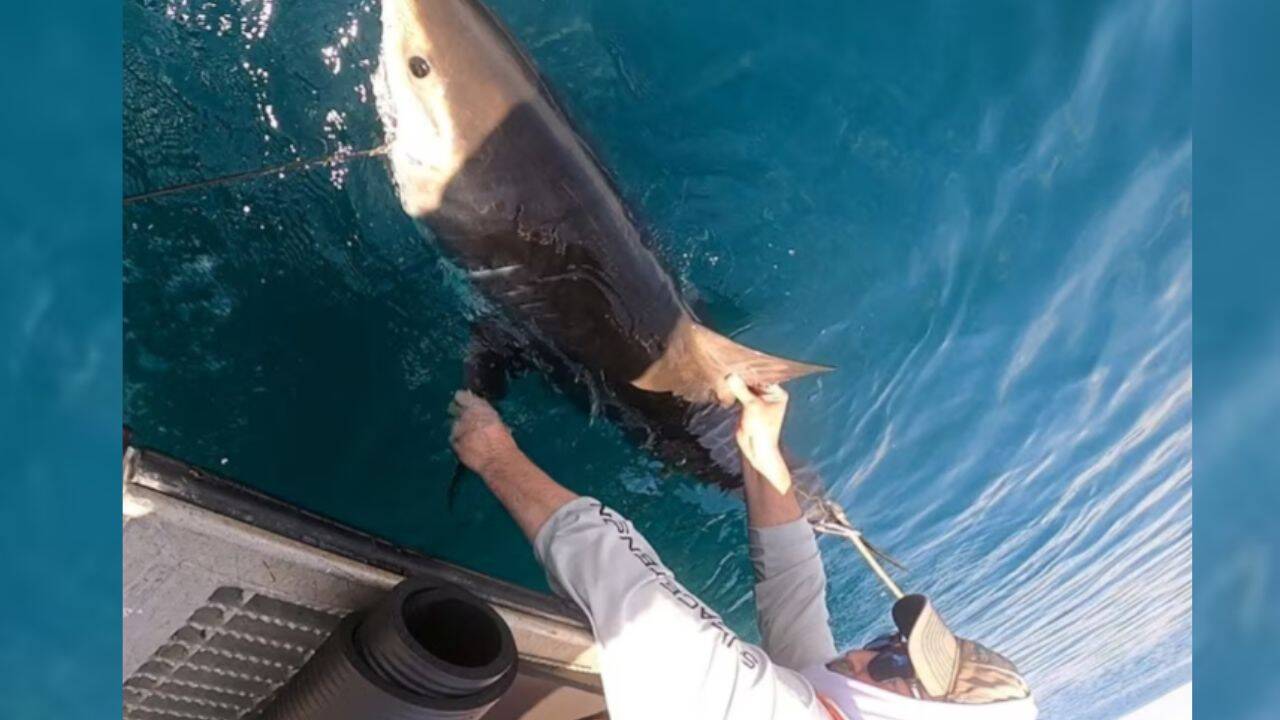
US scientists from the University of Delaware are using sharks as mobile ocean sensors to improve hurricane forecasts.
The researchers have attached electronic tags to sharks that collect water temperature, salinity, and depth data as the animals move through the Atlantic Ocean.
This innovative approach aims to gather data on ocean conditions that influence hurricane intensity.
By understanding these conditions better, scientists hope to improve the accuracy of hurricane forecasts.
Hurricanes are powerful storm systems that form over warm ocean waters, and their intensity can be affected by various factors, including sea surface temperature and salinity.
The use of sharks as ocean sensors provides a unique opportunity to collect data in real-time, allowing scientists to study the complex interactions between the ocean and the atmosphere.
The study's findings could have significant implications for hurricane forecasting and warning systems, potentially saving lives and reducing damage to infrastructure.
The University of Delaware researchers are at the forefront of this innovative research, which could lead to breakthroughs in our understanding of hurricane behavior.
As hurricane seasons become more unpredictable, the need for accurate forecasting and warning systems has never been more pressing.
The use of sharks as mobile ocean sensors is a promising development in this field, and one that could ultimately help save lives and protect communities from the devastating effects of hurricanes.
Frequently asked questions
How are sharks being used to improve hurricane forecasts?
Sharks are being used as mobile ocean sensors, with electronic tags attached to them to collect water temperature, salinity, and depth data.
What is the goal of the University of Delaware study?
The goal of the study is to improve understanding of ocean conditions that influence hurricane intensity, and ultimately improve the accuracy of hurricane forecasts.