Bengaluru Mobility Issues Grow
Bengaluru faces commuting woes, impacting daily life.
'%3E%3Crect%20width%3D'96'%20height%3D'96'%20fill%3D'%23B3261E'%2F%3E%3Ccircle%20cx%3D'30'%20cy%3D'24'%20r%3D'44'%20fill%3D'%23fff'%20opacity%3D'.12'%2F%3E%3Ccircle%20cx%3D'60'%20cy%3D'74'%20r%3D'40'%20fill%3D'%23000'%20opacity%3D'.10'%2F%3E%3C%2Fg%3E%3Cg%20fill%3D'%23fff'%3E%3Crect%20x%3D'29'%20y%3D'49'%20width%3D'8'%20height%3D'19'%20rx%3D'1'%2F%3E%3Crect%20x%3D'39'%20y%3D'40'%20width%3D'9'%20height%3D'28'%20rx%3D'1'%2F%3E%3Crect%20x%3D'50'%20y%3D'45'%20width%3D'8'%20height%3D'23'%20rx%3D'1'%2F%3E%3Crect%20x%3D'60'%20y%3D'53'%20width%3D'7'%20height%3D'15'%20rx%3D'1'%2F%3E%3Crect%20x%3D'41'%20y%3D'34'%20width%3D'5'%20height%3D'6'%2F%3E%3C%2Fg%3E%3C%2Fsvg%3E)
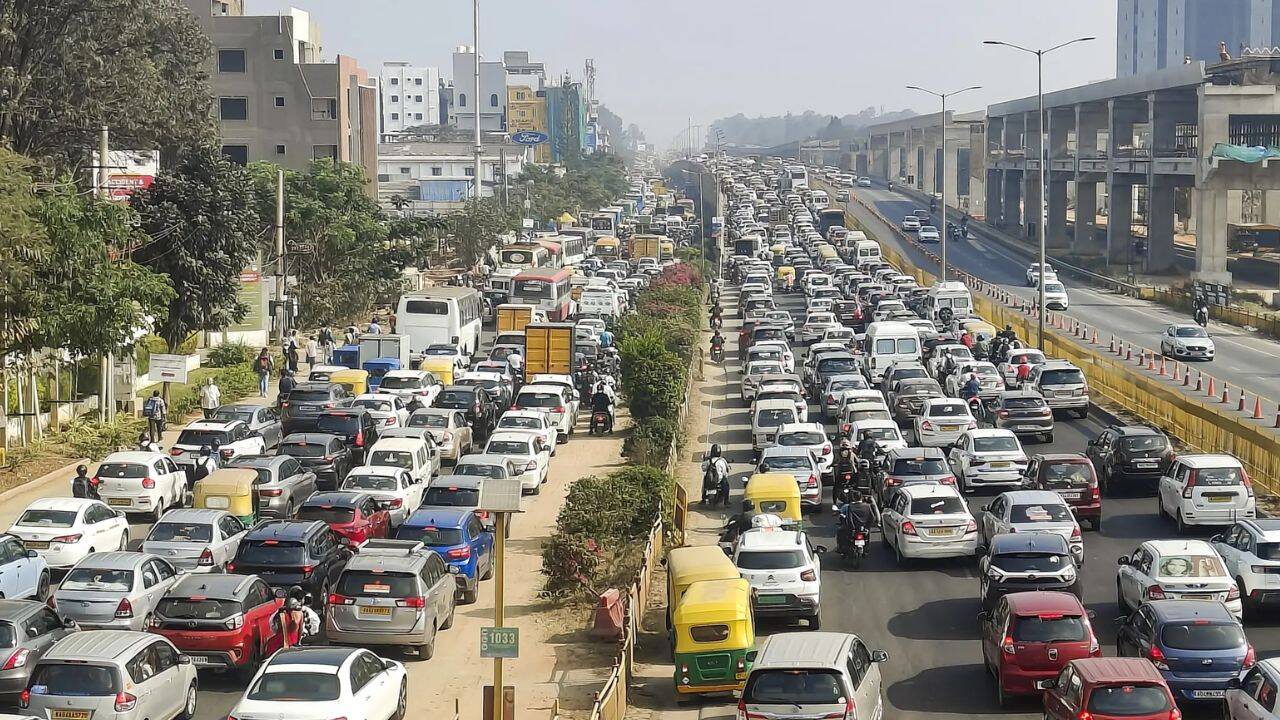
Bengaluru, known for its thriving job market and pleasant weather, is struggling with a growing concern: mobility. The city's commuting times have become increasingly unpredictable, significantly impacting daily life and productivity. Despite the expansion of Namma Metro, the city's metro system, many residents still face challenges with last-mile connectivity.
The Bangalore Metropolitan Transport Corporation (BMTC) buses carry the bulk of the city's daily commuters, but the system needs better integration with other transport modes. The lack of a connected mobility system is beginning to take a toll on the city's growth. As Bengaluru continues to attract new residents and businesses, its mobility infrastructure must be able to sustain this growth.
The city's traffic congestion is a major contributor to the mobility issues. The rapid growth of the city has led to an increase in the number of vehicles on the road, resulting in longer commute times. The Namma Metro, while a significant improvement, still has limited coverage, leaving many areas without access to the metro system.
To address these issues, the city must focus on building a comprehensive mobility system that integrates all modes of transport. This includes improving last-mile connectivity, increasing the frequency and coverage of public transport, and promoting the use of alternative modes of transport such as cycling and walking.
The BMTC has taken steps to improve its services, including the introduction of new bus routes and the expansion of its fleet. However, more needs to be done to address the city's mobility challenges. The city must also invest in infrastructure such as roads, footpaths, and cycling lanes to make commuting safer and more efficient.
As Bengaluru continues to grow and develop, it is essential that its mobility infrastructure keeps pace. The city must prioritize the development of a connected mobility system to ensure that its residents can move around the city safely and efficiently. This will not only improve the quality of life for residents but also support the city's economic growth and development.
In conclusion, while Bengaluru has many strengths, its mobility issues are a growing concern. The city must take proactive steps to address these challenges and build a comprehensive mobility system that meets the needs of its residents. By doing so, Bengaluru can continue to thrive and maintain its position as a leading city in India.
The city's mobility issues have significant implications for its residents, businesses, and economy. As the city continues to grow, it is essential that its mobility infrastructure is able to support this growth. By investing in a connected mobility system, Bengaluru can ensure that its residents can move around the city safely and efficiently, supporting the city's economic growth and development.
The future of Bengaluru's mobility depends on the city's ability to address its current challenges and build a comprehensive mobility system. With the right investments and planning, Bengaluru can create a mobility system that is efficient, safe, and sustainable, supporting the city's growth and development for years to come.
What it means for Bengaluru is that the city must prioritize mobility to sustain its growth. The city's residents, businesses, and economy depend on a well-functioning mobility system. By addressing its mobility challenges, Bengaluru can ensure that it remains a thriving and attractive city for residents and businesses alike.
Frequently asked questions
What is the main mobility issue in Bengaluru?
The main mobility issue in Bengaluru is unpredictable commuting times, which significantly impact daily life and productivity.
What can be done to address Bengaluru's mobility issues?
To address Bengaluru's mobility issues, the city must build a connected mobility system that integrates all modes of transport, improves last-mile connectivity, and promotes alternative modes of transport.