Nashik Completes SIR First Phase, Focus Shifts to Electoral Rolls
Nashik completes house-to-house survey, next step is draft electoral roll publication. Officials to handle objections and hearings transparently.
'%3E%3Crect%20width%3D'96'%20height%3D'96'%20fill%3D'%231A5276'%2F%3E%3Ccircle%20cx%3D'30'%20cy%3D'24'%20r%3D'44'%20fill%3D'%23fff'%20opacity%3D'.12'%2F%3E%3Ccircle%20cx%3D'60'%20cy%3D'74'%20r%3D'40'%20fill%3D'%23000'%20opacity%3D'.10'%2F%3E%3C%2Fg%3E%3Cg%20fill%3D'%23fff'%3E%3Cpath%20d%3D'M31%2041%20L48%2031%20L65%2041%20Z'%2F%3E%3Crect%20x%3D'33'%20y%3D'43'%20width%3D'4'%20height%3D'17'%2F%3E%3Crect%20x%3D'41'%20y%3D'43'%20width%3D'4'%20height%3D'17'%2F%3E%3Crect%20x%3D'51'%20y%3D'43'%20width%3D'4'%20height%3D'17'%2F%3E%3Crect%20x%3D'59'%20y%3D'43'%20width%3D'4'%20height%3D'17'%2F%3E%3Crect%20x%3D'30'%20y%3D'62'%20width%3D'36'%20height%3D'4'%20rx%3D'1'%2F%3E%3C%2Fg%3E%3C%2Fsvg%3E)
The first phase of the Special Intensive Revision (SIR) in Nashik has been completed within the stipulated period.
The house-to-house survey, which aimed to verify the residence of voters, has been finished, and the focus now shifts to the next stages of the SIR process.
Chief Electoral Officer S Chokkalingam directed officials to publish the draft electoral roll, handle objections, and conduct hearings in a systematic and transparent manner.
He also emphasized the need to ensure that no misconceptions arise regarding absent voters, migrated voters, deceased voters, or duplicate entries in the electoral rolls.
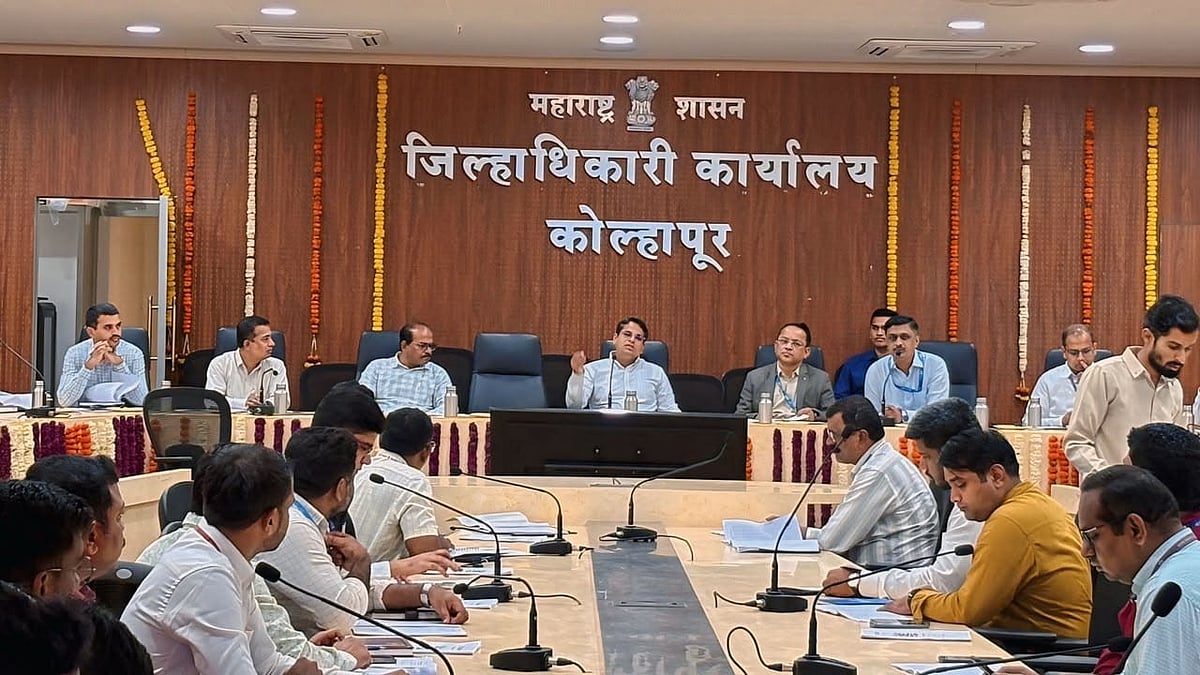
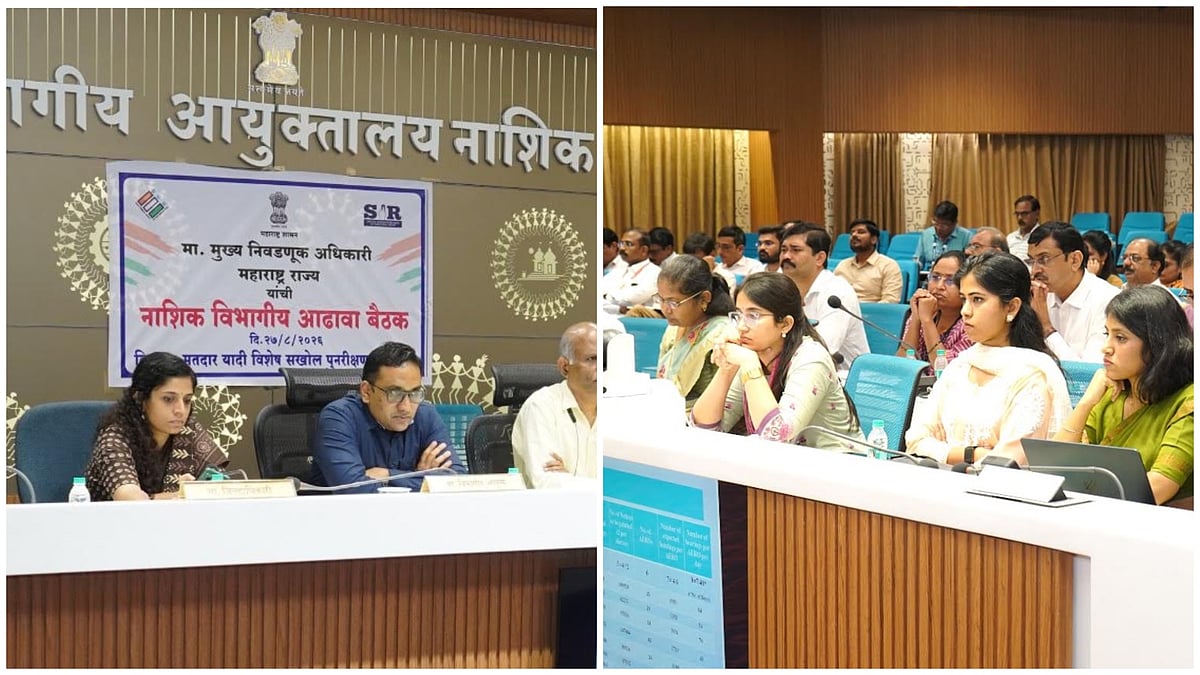
Chokkalingam was speaking at a review meeting on the SIR work in the Nashik division, which was attended by various officials, including Divisional Commissioner Dr Pravin Gedam and collectors from different districts.
During the first phase, verification was carried out to determine whether the concerned voter was actually residing at the registered address. The mapping of voter records was also undertaken on the basis of enumeration forms and available electoral records.
With the first phase completed, the election machinery should remain fully prepared for the second phase, Chokkalingam said. The work related to electronic roll printing should be completed promptly.
After the publication of the draft electoral rolls, election officials should remain active and provide citizens with accurate information about the process. If voters whose names have been deleted raise objections, the issues should be addressed appropriately.
Chokkalingam instructed officials to follow the Election Commission’s guidelines regarding the issuance of notices, collection of documents, and preliminary verification. Digital platforms should be used while serving notices to voters in connection with objections over deleted names.
Proper hearings should be conducted, and appropriate action taken thereafter. Officials must respond promptly to voters’ doubts and objections to prevent the spread of misinformation or misunderstandings regarding the process.
Chokkalingam also stressed the need for greater public awareness through the media and sought the cooperation of all sections of society. He directed officials to hold meetings with political representatives and public representatives.
The completion of the first phase of the SIR in Nashik is a significant step towards ensuring the accuracy and integrity of the electoral rolls. The next stages of the process will be crucial in addressing any objections or concerns raised by voters.
The Election Commission’s guidelines will be followed to ensure that the process is transparent and fair. The use of digital platforms will also help to streamline the process and prevent any misconceptions or misunderstandings.
In the end, the successful completion of the SIR process in Nashik will contribute to the overall integrity of the electoral system in the country.
Frequently asked questions
What is the next step in the SIR process in Nashik?
The next step is the publication of the draft electoral roll, handling objections, and conducting hearings.
What is the purpose of the SIR process?
The purpose of the SIR process is to verify the residence of voters and ensure the accuracy and integrity of the electoral rolls.