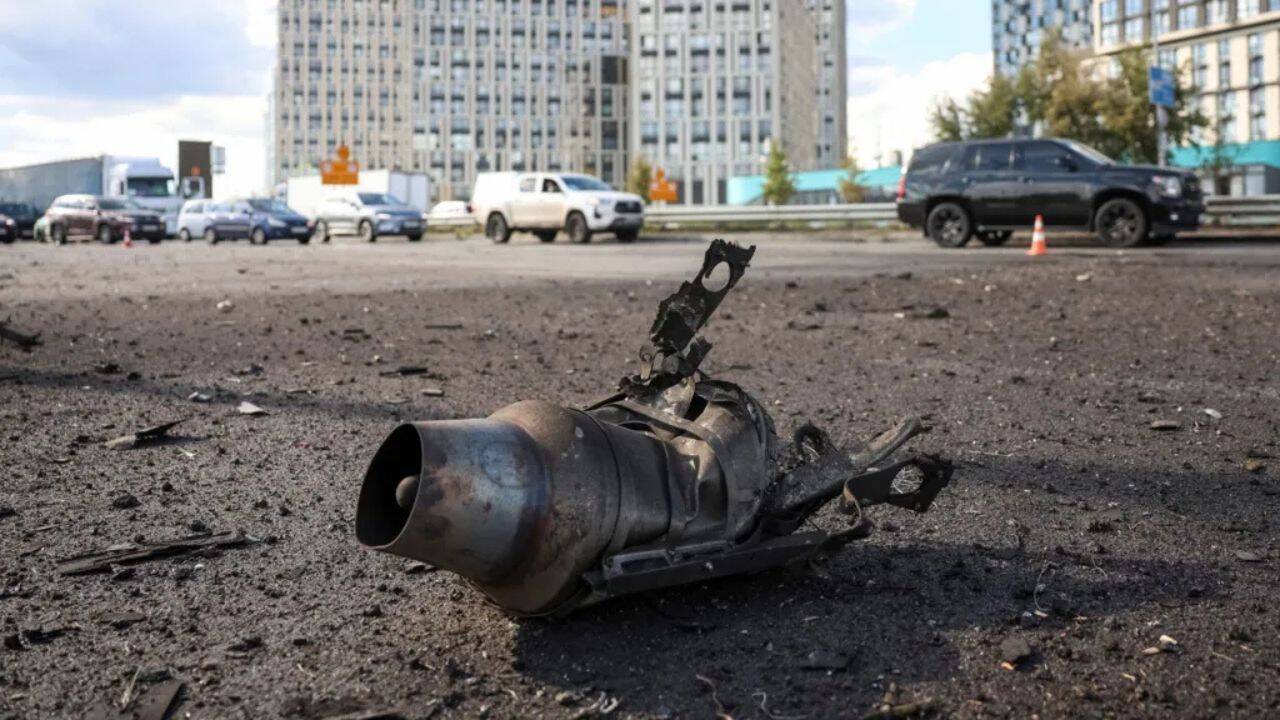
BRICS Warns Against Middle East Escalation
BRICS nations warn against actions that could escalate conflict in the Middle East, backing a two-state framework in Gaza. The New Delhi Declaration calls for maximum restraint and respect for state sovereignty.
'%3E%3Crect%20width%3D'96'%20height%3D'96'%20fill%3D'%234A235A'%2F%3E%3Ccircle%20cx%3D'30'%20cy%3D'24'%20r%3D'44'%20fill%3D'%23fff'%20opacity%3D'.12'%2F%3E%3Ccircle%20cx%3D'60'%20cy%3D'74'%20r%3D'40'%20fill%3D'%23000'%20opacity%3D'.10'%2F%3E%3C%2Fg%3E%3Cg%20fill%3D'none'%20stroke%3D'%23fff'%20stroke-width%3D'3'%3E%3Ccircle%20cx%3D'48'%20cy%3D'48'%20r%3D'16'%2F%3E%3Cellipse%20cx%3D'48'%20cy%3D'48'%20rx%3D'6.5'%20ry%3D'16'%2F%3E%3Cline%20x1%3D'32'%20y1%3D'42'%20x2%3D'64'%20y2%3D'42'%2F%3E%3Cline%20x1%3D'32'%20y1%3D'54'%20x2%3D'64'%20y2%3D'54'%2F%3E%3C%2Fg%3E%3C%2Fsvg%3E)

The New Delhi Declaration of BRICS 2026 has expressed deep concern over the escalating tensions in the Middle East, warning against actions that could plunge the region into unrestricted conflict. The declaration, signed by the member states, calls for exercising maximum restraint and avoiding actions that could further aggravate the situation.
The BRICS nations, which include Brazil, Russia, India, China, and South Africa, have emphasized the need for strategic restraint, stating that military actions targeting sovereign territories undermine global stability. The declaration notes that all military conduct must strictly respect state sovereignty and that non-combatants and critical networks must be shielded from hostility.
The Israeli-Palestinian conflict and the ongoing humanitarian emergency in Gaza are major cornerstones of the declaration's regional coverage. The text takes a firm stance against unilateral measures, demilitarizing humanitarian delivery while rejecting demographic or territorial alterations to the Gaza Strip. The leaders express grave concern over the disruption of basic human needs, condemning all violations, including the use of starvation as a method of warfare and attacks targeting civilians and civilian infrastructure.
The declaration explicitly counters any proposals that would alter the geopolitical or demographic reality of Palestine, calling for halting any policies aimed at forced displacement of Palestinians from the Gaza Strip and rejecting arrangements that legitimize or prolong occupation. The BRICS nations reaffirm their support for a sovereign, independent state as the only viable path to enduring peace, stating that a just and lasting solution to the Israeli-Palestinian conflict can only be achieved by peaceful means and depends on the fulfillment of the legitimate rights of the Palestinian people.
The declaration highlights institutional continuity by backing Palestine's full admission to international organizations and reaffirming support for a two-state framework, with the 1967 borders, including the Gaza Strip and the West Bank, with East Jerusalem as its capital. The BRICS nations have sent a strong message, calling for maximum restraint and respect for state sovereignty, and emphasizing the need for a peaceful solution to the Israeli-Palestinian conflict.
The New Delhi Declaration is a significant development in the context of the Middle East conflict, as it reflects a shared consensus among the BRICS nations on the urgent need for strategic restraint and a peaceful solution to the conflict. The declaration's emphasis on respect for state sovereignty and the protection of civilians and civilian infrastructure is a crucial step towards achieving a lasting peace in the region.
The BRICS nations have also emphasized the need for international cooperation and diplomacy to resolve the conflict, stating that a just and lasting solution can only be achieved through peaceful means. The declaration's call for maximum restraint and respect for state sovereignty is a significant development, as it reflects a growing consensus among nations on the need for a peaceful solution to the conflict.
In conclusion, the New Delhi Declaration of BRICS 2026 is a significant development in the context of the Middle East conflict, as it reflects a shared consensus among the BRICS nations on the urgent need for strategic restraint and a peaceful solution to the conflict. The declaration's emphasis on respect for state sovereignty and the protection of civilians and civilian infrastructure is a crucial step towards achieving a lasting peace in the region.
The significance of the declaration lies in its ability to bring together nations with diverse interests and perspectives, and to provide a framework for cooperation and diplomacy. The BRICS nations have sent a strong message, calling for maximum restraint and respect for state sovereignty, and emphasizing the need for a peaceful solution to the Israeli-Palestinian conflict. As the situation in the Middle East continues to evolve, the New Delhi Declaration will play a crucial role in shaping the international response to the conflict.
Frequently asked questions
What is the main focus of the New Delhi Declaration of BRICS 2026?
The main focus of the declaration is the deteriorating security environment in the Middle East, with a particular emphasis on the Israeli-Palestinian conflict and the humanitarian emergency in Gaza.
What is the BRICS nations' stance on the Israeli-Palestinian conflict?
The BRICS nations support a two-state framework, with the 1967 borders, including the Gaza Strip and the West Bank, with East Jerusalem as its capital, and call for a peaceful solution to the conflict.