West Bengal New Industrial Policy To Give Landowners Stake
West Bengal's new industrial policy to encourage landowners' stake in industries, employment and entrepreneurship.
'%3E%3Crect%20width%3D'96'%20height%3D'96'%20fill%3D'%231A5276'%2F%3E%3Ccircle%20cx%3D'30'%20cy%3D'24'%20r%3D'44'%20fill%3D'%23fff'%20opacity%3D'.12'%2F%3E%3Ccircle%20cx%3D'60'%20cy%3D'74'%20r%3D'40'%20fill%3D'%23000'%20opacity%3D'.10'%2F%3E%3C%2Fg%3E%3Cg%20fill%3D'%23fff'%3E%3Cpath%20d%3D'M31%2041%20L48%2031%20L65%2041%20Z'%2F%3E%3Crect%20x%3D'33'%20y%3D'43'%20width%3D'4'%20height%3D'17'%2F%3E%3Crect%20x%3D'41'%20y%3D'43'%20width%3D'4'%20height%3D'17'%2F%3E%3Crect%20x%3D'51'%20y%3D'43'%20width%3D'4'%20height%3D'17'%2F%3E%3Crect%20x%3D'59'%20y%3D'43'%20width%3D'4'%20height%3D'17'%2F%3E%3Crect%20x%3D'30'%20y%3D'62'%20width%3D'36'%20height%3D'4'%20rx%3D'1'%2F%3E%3C%2Fg%3E%3C%2Fsvg%3E)
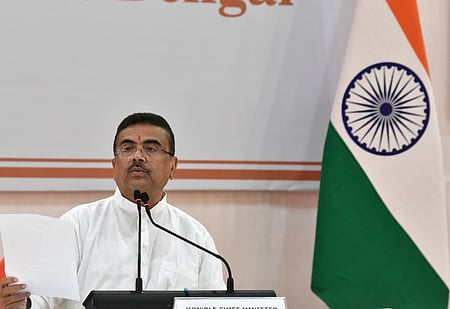
The West Bengal government is set to announce its new industrial policy by mid-September, which is likely to include a provision to make landowners stakeholders in new industrial units. This move aims to eliminate complications in land procurement for industries, which were witnessed during the previous Left Front regime.
The proposed policy includes two options to make landowners stakeholders: providing employment to one member of the land-owning family in the industrial unit or enabling landowners to set up 'indirect support' entrepreneurship catering to the main industrial unit. This could include local tailoring units or canteens supplying uniforms and lunch-boxes for factory workers.
The state government official involved in preparing the policy stated that big industrial units have a scope for support industries, which can be both 'direct' and 'indirect' entrepreneurship. The 'indirect support' entrepreneurship will provide opportunities for landowners to be stakeholders in the industrial units.
The new industrial policy will give priority to sectors having strong demand for small support businesses, such as textiles and garments, iron and steel, and information technology. In North Bengal, the policy will also stress the Triple-T (tea, timber, and tourism) sector.
The state Commerce and Industries Minister, Tapas Roy, announced that the new policy will focus on sectors that have a high potential for ancillary industries. This move is expected to boost the state's economy and provide opportunities for landowners and local entrepreneurs.
The West Bengal government's decision to involve landowners in the industrial units is a significant step towards resolving the land procurement issues that plagued the state in the past. The new policy is expected to promote industrial growth and development in the state.
The state government's efforts to promote entrepreneurship and provide employment opportunities to landowners are commendable. The new industrial policy is likely to have a positive impact on the state's economy and provide a boost to the industrial sector.
In conclusion, the West Bengal government's new industrial policy is a significant step towards promoting industrial growth and development in the state. The policy's focus on involving landowners in the industrial units and providing opportunities for entrepreneurship is expected to have a positive impact on the state's economy.
The policy's emphasis on sectors such as textiles and garments, iron and steel, and information technology is also expected to boost the state's economy. The Triple-T sector in North Bengal is also expected to benefit from the new policy.
Overall, the West Bengal government's new industrial policy is a welcome move that is expected to promote industrial growth and development in the state. The policy's focus on involving landowners and promoting entrepreneurship is likely to have a positive impact on the state's economy and provide opportunities for local entrepreneurs.
The state government's efforts to promote industrial growth and development are commendable, and the new policy is expected to be a significant step towards achieving this goal. The policy's emphasis on sectors such as textiles and garments, iron and steel, and information technology is expected to boost the state's economy and provide opportunities for local entrepreneurs.
In the coming months, the state government is expected to announce more details about the new industrial policy. The policy is likely to have a significant impact on the state's economy and provide opportunities for industrial growth and development.
The West Bengal government's decision to involve landowners in the industrial units is a significant step towards resolving the land procurement issues that plagued the state in the past. The new policy is expected to promote industrial growth and development in the state and provide opportunities for local entrepreneurs.
The state government's efforts to promote entrepreneurship and provide employment opportunities to landowners are commendable. The new industrial policy is likely to have a positive impact on the state's economy and provide a boost to the industrial sector.
The policy's emphasis on sectors such as textiles and garments, iron and steel, and information technology is also expected to boost the state's economy. The Triple-T sector in North Bengal is also expected to benefit from the new policy.
In conclusion, the West Bengal government's new industrial policy is a significant step towards promoting industrial growth and development in the state. The policy's focus on involving landowners in the industrial units and providing opportunities for entrepreneurship is expected to have a positive impact on the state's economy.
The policy's emphasis on sectors such as textiles and garments, iron and steel, and information technology is expected to boost the state's economy. The Triple-T sector in North Bengal is also expected to benefit from the new policy.
Overall, the West Bengal government's new industrial policy is a welcome move that is expected to promote industrial growth and development in the state. The policy's focus on involving landowners and promoting entrepreneurship is likely to have a positive impact on the state's economy and provide opportunities for local entrepreneurs.
The state government's efforts to promote industrial growth and development are commendable, and the new policy is expected to be a significant step towards achieving this goal.
Frequently asked questions
What is the main objective of West Bengal's new industrial policy?
The main objective is to eliminate complications in land procurement for industries and promote industrial growth and development in the state.
What sectors will the new policy focus on?
The policy will focus on sectors such as textiles and garments, iron and steel, and information technology, as well as the Triple-T sector in North Bengal.