BMC Introduces QR Collars For Stray Dogs
Mumbai to track stray dogs with QR collars, aims to be rabies-free by 2030.
'%3E%3Crect%20width%3D'96'%20height%3D'96'%20fill%3D'%23B3261E'%2F%3E%3Ccircle%20cx%3D'30'%20cy%3D'24'%20r%3D'44'%20fill%3D'%23fff'%20opacity%3D'.12'%2F%3E%3Ccircle%20cx%3D'60'%20cy%3D'74'%20r%3D'40'%20fill%3D'%23000'%20opacity%3D'.10'%2F%3E%3C%2Fg%3E%3Cg%20fill%3D'%23fff'%3E%3Crect%20x%3D'29'%20y%3D'49'%20width%3D'8'%20height%3D'19'%20rx%3D'1'%2F%3E%3Crect%20x%3D'39'%20y%3D'40'%20width%3D'9'%20height%3D'28'%20rx%3D'1'%2F%3E%3Crect%20x%3D'50'%20y%3D'45'%20width%3D'8'%20height%3D'23'%20rx%3D'1'%2F%3E%3Crect%20x%3D'60'%20y%3D'53'%20width%3D'7'%20height%3D'15'%20rx%3D'1'%2F%3E%3Crect%20x%3D'41'%20y%3D'34'%20width%3D'5'%20height%3D'6'%2F%3E%3C%2Fg%3E%3C%2Fsvg%3E)
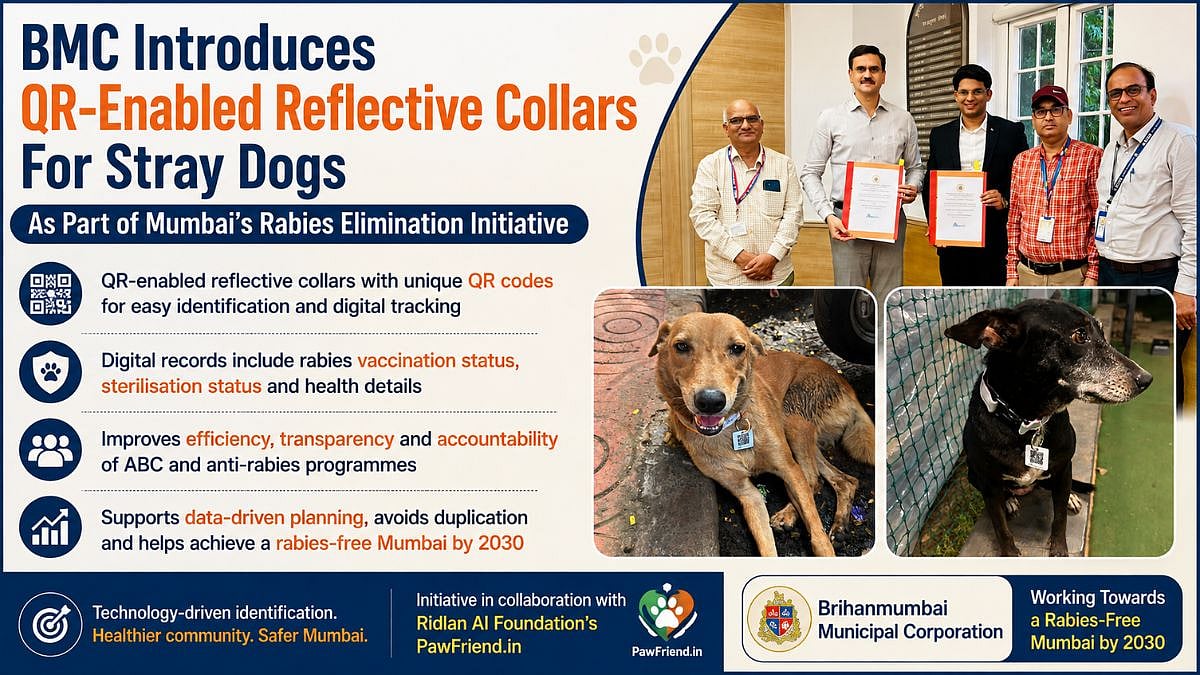
The Brihanmumbai Municipal Corporation (BMC) has introduced a new initiative to track and monitor stray dogs in Mumbai.
As part of its plan to make Mumbai a rabies-free city by 2030, the BMC has introduced reflective collars with QR tags for stray dogs. This will enable easy physical identification and digital tracking of vaccinated and sterilised community dogs by citizens and field personnel.
The initiative is a part of the civic body's plan to strengthen stray dog management, animal birth control, and anti-rabies measures across Mumbai. The collaboration was announced in the presence of Deputy Municipal Commissioner Vinayak Vispute and Akshay Ridlan, among others.
The QR-code collar initiative is being undertaken in collaboration with Ridlan AI Foundation's PawFriend.in. Under the initiative, PawFriend.in will provide QR-enabled reflective collars carrying a unique QR code for community dogs. The QR code will be linked to a digital record containing important information about the individual animal, including its rabies vaccination status, sterilisation status, and relevant health details.
The initiative is said to help create a centralised and continuously updated digital registry of community dogs, thereby improving the efficiency, transparency, and accountability of the Animal Birth Control (ABC) and anti-rabies vaccination programmes. The identification system is also expected to help BMC and citizens distinguish between dogs that have already been vaccinated or sterilised and those requiring intervention, reducing duplication of efforts and enabling more efficient utilisation of public resources.
Earlier, vaccinated dogs were identified through coloured ink or other temporary markings. However, such markings could fade or disappear within a short period, making long-term identification and monitoring difficult. With the introduction of QR-enabled 'Aadhaar-style' collars, the identification of vaccinated and sterilised dogs can become significantly more durable, systematic, and technology-driven.
The QR tags can provide access to the animal's recorded information, subject to applicable data-access protocols, and facilitate better monitoring of vaccination, sterilisation, and health interventions. The digital infrastructure is also expected to support evidence-based planning, avoidance of repeat interventions and expenditure, and improved follow-up care for community dogs.
The BMC's initiative is a significant step towards making Mumbai a rabies-free city by 2030. With the help of technology and collaboration with organisations like PawFriend.in, the civic body aims to create a more efficient and effective system for managing stray dogs in the city.
The introduction of QR-enabled collars for stray dogs is a positive development for animal welfare in Mumbai. It is expected to improve the lives of community dogs and reduce the risk of rabies in the city. As the BMC continues to work towards its goal of making Mumbai a rabies-free city, initiatives like this will play a crucial role in achieving success.
In conclusion, the BMC's initiative to introduce QR-enabled collars for stray dogs is a significant step towards improving animal welfare and reducing the risk of rabies in Mumbai. With the help of technology and collaboration with organisations like PawFriend.in, the civic body aims to create a more efficient and effective system for managing stray dogs in the city.
Frequently asked questions
What is the purpose of the QR collars for stray dogs in Mumbai?
The QR collars are intended to track and monitor vaccinated and sterilised community dogs, reducing duplication of efforts and enabling more efficient utilisation of public resources.
How will the QR collars help in making Mumbai a rabies-free city?
The QR collars will help create a centralised and continuously updated digital registry of community dogs, improving the efficiency, transparency, and accountability of the Animal Birth Control (ABC) and anti-rabies vaccination programmes.