Iran Rejects US Economic Threats
Iran dismisses US economic pressure, says no one believes US threats.
'%3E%3Crect%20width%3D'96'%20height%3D'96'%20fill%3D'%234A235A'%2F%3E%3Ccircle%20cx%3D'30'%20cy%3D'24'%20r%3D'44'%20fill%3D'%23fff'%20opacity%3D'.12'%2F%3E%3Ccircle%20cx%3D'60'%20cy%3D'74'%20r%3D'40'%20fill%3D'%23000'%20opacity%3D'.10'%2F%3E%3C%2Fg%3E%3Cg%20fill%3D'none'%20stroke%3D'%23fff'%20stroke-width%3D'3'%3E%3Ccircle%20cx%3D'48'%20cy%3D'48'%20r%3D'16'%2F%3E%3Cellipse%20cx%3D'48'%20cy%3D'48'%20rx%3D'6.5'%20ry%3D'16'%2F%3E%3Cline%20x1%3D'32'%20y1%3D'42'%20x2%3D'64'%20y2%3D'42'%2F%3E%3Cline%20x1%3D'32'%20y1%3D'54'%20x2%3D'64'%20y2%3D'54'%2F%3E%3C%2Fg%3E%3C%2Fsvg%3E)
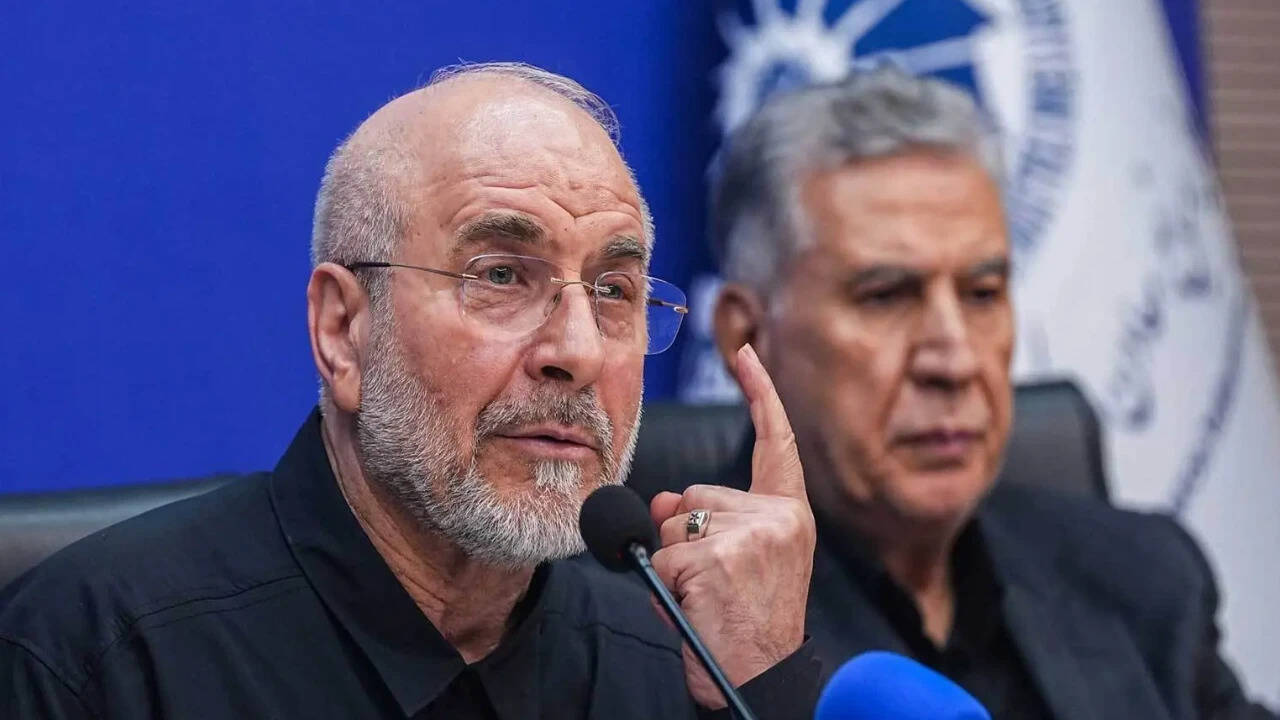
Iran has rejected the US's ability to impose further economic restrictions, stating that the US is not in a strong economic position to do so. This statement comes as a response to the US's recent threats of increased economic pressure on Iran.
The Iranian government has expressed its skepticism towards the US's ability to impose effective economic sanctions, citing the US's own economic struggles. Iran's statement suggests that the US's economic threats are not taken seriously by the international community.
The US has been imposing economic sanctions on Iran since 2018, when it withdrew from the Joint Comprehensive Plan of Action (JCPOA). The sanctions have had a significant impact on Iran's economy, with the country's oil exports and access to international financial systems being severely restricted.
Despite the economic pressure, Iran has continued to defy US demands, refusing to renegotiate the JCPOA or halt its nuclear program. The Iranian government has stated that it will continue to develop its nuclear capabilities, despite international concerns.
The US's economic threats against Iran are part of a broader strategy to isolate the country and limit its influence in the region. However, Iran's statement suggests that the US's approach may not be effective, and that the international community is not taking the US's threats seriously.
The economic rivalry between the US and Iran has significant implications for the global economy, particularly in the energy sector. Iran is a major oil producer, and any disruption to its oil exports could have a significant impact on global oil prices.
In recent years, the US has been seeking to reduce its reliance on Iranian oil, while also imposing sanctions on countries that continue to import Iranian oil. However, Iran's statement suggests that the US's efforts may not be successful, and that the country will continue to find ways to export its oil despite the sanctions.
The ongoing tensions between the US and Iran have significant implications for global stability and security. The conflict has the potential to escalate into a wider regional conflict, drawing in other countries and causing significant economic and humanitarian damage.
In conclusion, Iran's rejection of the US's economic threats highlights the ongoing tensions between the two countries. The US's efforts to impose economic pressure on Iran have had significant effects, but Iran's statement suggests that the country is not intimidated by the US's threats.
The international community will be closely watching the developments in the US-Iran conflict, as the situation continues to evolve. The conflict has significant implications for global stability and security, and any escalation could have far-reaching consequences.
The US and Iran have been engaged in a war of words, with both countries exchanging threats and accusations. However, Iran's statement suggests that the country is not afraid of the US's economic threats, and that it will continue to pursue its own interests despite the pressure.
The economic conflict between the US and Iran is part of a broader struggle for influence in the region. The US is seeking to maintain its position as a dominant world power, while Iran is seeking to assert its own influence and challenge the US's dominance.
The outcome of the conflict is uncertain, but one thing is clear: the US-Iran conflict has significant implications for global stability and security. The international community will be closely watching the developments in the conflict, as the situation continues to evolve.
Frequently asked questions
What is the current state of US-Iran relations?
The US and Iran are currently engaged in a conflict, with the US imposing economic sanctions on Iran and Iran refusing to renegotiate the JCPOA or halt its nuclear program.
What are the implications of the US-Iran conflict for the global economy?
The conflict has significant implications for the global economy, particularly in the energy sector, as any disruption to Iran's oil exports could have a significant impact on global oil prices.