Georgia Island Hogs Aid Obesity Study
Hogs on a Georgia island help scientists, Descended from Spanish pigs
'%3E%3Crect%20width%3D'96'%20height%3D'96'%20fill%3D'%231B5E20'%2F%3E%3Ccircle%20cx%3D'30'%20cy%3D'24'%20r%3D'44'%20fill%3D'%23fff'%20opacity%3D'.12'%2F%3E%3Ccircle%20cx%3D'60'%20cy%3D'74'%20r%3D'40'%20fill%3D'%23000'%20opacity%3D'.10'%2F%3E%3C%2Fg%3E%3Cg%3E%3Ccircle%20cx%3D'48'%20cy%3D'48'%20r%3D'15'%20fill%3D'%23fff'%2F%3E%3Cpath%20d%3D'M43%2034%20Q50%2048%2043%2062'%20fill%3D'none'%20stroke%3D'%238a94a6'%20stroke-width%3D'2.4'%2F%3E%3Cpath%20d%3D'M47%2033%20Q54%2048%2047%2063'%20fill%3D'none'%20stroke%3D'%238a94a6'%20stroke-width%3D'1.8'%20stroke-dasharray%3D'1.5%203'%2F%3E%3C%2Fg%3E%3C%2Fsvg%3E)
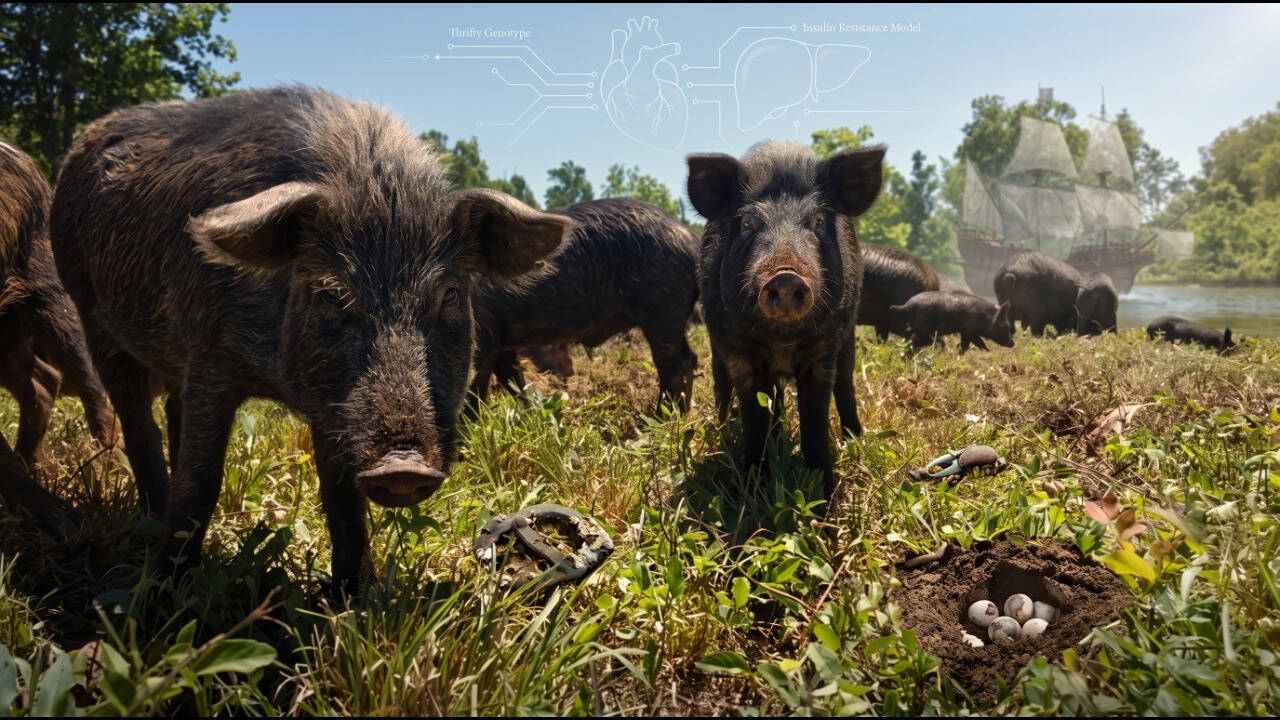
A unique population of hogs on a Georgia island is now playing a crucial role in helping scientists study obesity. These hogs are descended from Spanish pigs that were introduced to the island centuries ago.
The island's isolation has allowed the hogs to develop distinct characteristics, making them an ideal subject for scientific research. Scientists are particularly interested in studying the hogs' genetic makeup and how it relates to their diet and lifestyle.
The hogs on the Georgia island are known to be overweight, which makes them a fascinating case study for obesity research. By studying the hogs' behavior, diet, and physiology, scientists hope to gain a better understanding of the underlying causes of obesity.
The research team is led by experts in the field of obesity and genetics. They are using a combination of genetic analysis, behavioral studies, and physiological measurements to gather data on the hogs. The team is also collaborating with other researchers to compare the findings from the Georgia island hogs with those from human studies.
The study of the Georgia island hogs has the potential to provide valuable insights into the complex factors that contribute to obesity. By understanding the genetic and environmental factors that influence weight gain and obesity, scientists may be able to develop more effective treatments and prevention strategies.
The Georgia island hogs are not only contributing to scientific research but also helping to raise awareness about the importance of addressing obesity. As the prevalence of obesity continues to rise globally, the need for effective solutions has become increasingly urgent.
In the context of the study, the Georgia island hogs are providing a unique opportunity for scientists to explore the complex relationships between genetics, diet, and lifestyle. The findings from this research have the potential to inform the development of new treatments and prevention strategies for obesity.
The study of the Georgia island hogs is a significant step forward in the quest to understand and address obesity. By leveraging the unique characteristics of these hogs, scientists are gaining a deeper understanding of the underlying causes of obesity and developing more effective solutions to combat this growing health concern.
In conclusion, the Georgia island hogs are making a valuable contribution to scientific research on obesity. Their unique characteristics and genetic makeup make them an ideal subject for study, and the findings from this research have the potential to inform the development of new treatments and prevention strategies for obesity.
Frequently asked questions
What is unique about the hogs on the Georgia island?
The hogs on the Georgia island are descended from Spanish pigs and have developed distinct characteristics due to the island's isolation.
Why are scientists studying the hogs on the Georgia island?
Scientists are studying the hogs to gain a better understanding of the underlying causes of obesity and to develop more effective treatments and prevention strategies.