Hormuz Oil Flow Exceeds Projections
US officials claim high oil flow, but data shows decline. What's the truth?
'%3E%3Crect%20width%3D'96'%20height%3D'96'%20fill%3D'%234A235A'%2F%3E%3Ccircle%20cx%3D'30'%20cy%3D'24'%20r%3D'44'%20fill%3D'%23fff'%20opacity%3D'.12'%2F%3E%3Ccircle%20cx%3D'60'%20cy%3D'74'%20r%3D'40'%20fill%3D'%23000'%20opacity%3D'.10'%2F%3E%3C%2Fg%3E%3Cg%20fill%3D'none'%20stroke%3D'%23fff'%20stroke-width%3D'3'%3E%3Ccircle%20cx%3D'48'%20cy%3D'48'%20r%3D'16'%2F%3E%3Cellipse%20cx%3D'48'%20cy%3D'48'%20rx%3D'6.5'%20ry%3D'16'%2F%3E%3Cline%20x1%3D'32'%20y1%3D'42'%20x2%3D'64'%20y2%3D'42'%2F%3E%3Cline%20x1%3D'32'%20y1%3D'54'%20x2%3D'64'%20y2%3D'54'%2F%3E%3C%2Fg%3E%3C%2Fsvg%3E)
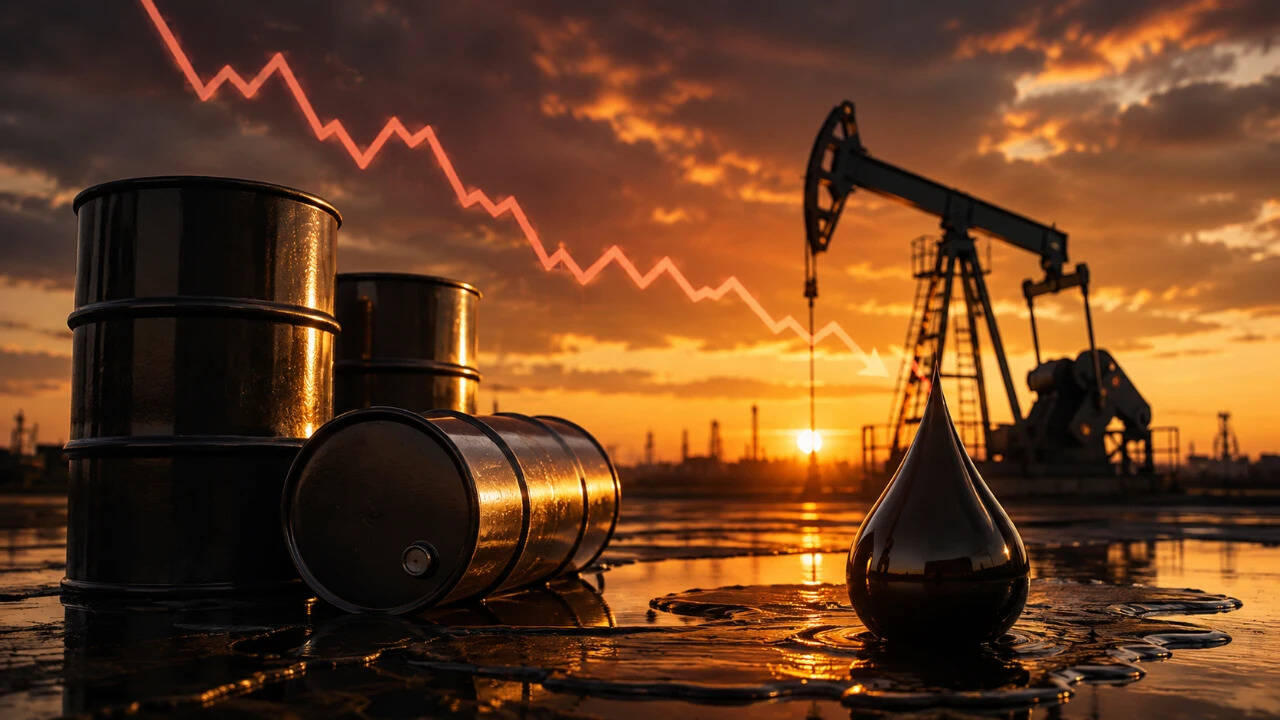
The Strait of Hormuz, a critical waterway for global oil trade, is reportedly seeing a significant amount of crude oil flow through it, according to US officials. They claim that the pace of oil movement is far exceeding market projections, which is a positive sign for the global energy market. However, external data tells a different story, indicating a drop in oil tanker activity and a decline in global stockpiles. This divergence raises questions about the true amount of crude oil flowing into worldwide markets.
The US officials' claims are based on their own assessments and monitoring of the situation. However, the data from external sources, such as oil tanker tracking systems, suggests that the actual amount of oil flowing through the Strait of Hormuz may be lower than what the US officials are claiming. This discrepancy could be due to various factors, including the use of shadow fleets that attempt to mask their locations, making it difficult to accurately monitor oil movements.
The use of shadow fleets is a significant concern, as it can lead to potential volatility in oil prices and supply predictions. These fleets, which are not officially registered or tracked, can carry large amounts of oil, but their movements are not transparent, making it challenging to determine the actual amount of oil being transported. This lack of transparency can lead to market speculation and price fluctuations, which can have far-reaching consequences for the global economy.
The Strait of Hormuz is a critical chokepoint for global oil trade, with a significant portion of the world's oil passing through it. Any disruption to oil flow through this waterway can have significant consequences for the global energy market. Therefore, it is essential to have accurate and reliable data on oil movements to ensure that markets are functioning smoothly and that prices are stable.
In recent years, the global oil market has experienced significant volatility, with prices fluctuating wildly in response to various geopolitical and economic factors. The situation in the Strait of Hormuz is just one of the many factors that can impact global oil prices and supply. As the global economy continues to evolve, it is crucial to have accurate and reliable data on oil movements to ensure that markets are functioning smoothly and that prices are stable.
The discrepancy between the US officials' claims and the external data highlights the need for more transparency and accurate monitoring of oil movements. This can be achieved through the use of advanced tracking systems and international cooperation to ensure that all oil movements are transparent and accountable. By doing so, we can reduce the risk of market speculation and price volatility, ensuring a more stable and predictable global energy market.
In conclusion, the situation in the Strait of Hormuz is complex, with different sources providing conflicting information about the amount of oil flowing through it. While US officials claim that oil is moving at a pace far exceeding market projections, external data suggests a decline in oil tanker activity and global stockpiles. The use of shadow fleets and the lack of transparency in oil movements can lead to potential volatility in oil prices and supply predictions, highlighting the need for more accurate and reliable data on oil movements.
The global implications of the situation in the Strait of Hormuz are significant, with the potential to impact oil prices and supply predictions. As the global economy continues to evolve, it is crucial to have accurate and reliable data on oil movements to ensure that markets are functioning smoothly and that prices are stable. The situation in the Strait of Hormuz is just one of the many factors that can impact global oil prices and supply, and it is essential to monitor it closely to ensure a stable and predictable global energy market.
Frequently asked questions
What is the current situation with oil flow through the Strait of Hormuz?
US officials claim that oil is moving at a pace far exceeding market projections, but external data suggests a decline in oil tanker activity and global stockpiles.
Why is it difficult to monitor oil movements through the Strait of Hormuz?
The use of shadow fleets, which attempt to mask their locations, makes it challenging to accurately monitor oil movements and can lead to potential volatility in oil prices and supply predictions.