Nepal Accepts Foreign Flood Aid, India Responds
Nepal agrees to foreign aid, India sends help
'%3E%3Crect%20width%3D'96'%20height%3D'96'%20fill%3D'%234A235A'%2F%3E%3Ccircle%20cx%3D'30'%20cy%3D'24'%20r%3D'44'%20fill%3D'%23fff'%20opacity%3D'.12'%2F%3E%3Ccircle%20cx%3D'60'%20cy%3D'74'%20r%3D'40'%20fill%3D'%23000'%20opacity%3D'.10'%2F%3E%3C%2Fg%3E%3Cg%20fill%3D'none'%20stroke%3D'%23fff'%20stroke-width%3D'3'%3E%3Ccircle%20cx%3D'48'%20cy%3D'48'%20r%3D'16'%2F%3E%3Cellipse%20cx%3D'48'%20cy%3D'48'%20rx%3D'6.5'%20ry%3D'16'%2F%3E%3Cline%20x1%3D'32'%20y1%3D'42'%20x2%3D'64'%20y2%3D'42'%2F%3E%3Cline%20x1%3D'32'%20y1%3D'54'%20x2%3D'64'%20y2%3D'54'%2F%3E%3C%2Fg%3E%3C%2Fsvg%3E)
Nepal has finally agreed to accept foreign assistance to aid in its flood rescue efforts. The country had initially been hesitant to accept help from other nations, but has now reversed its stance.
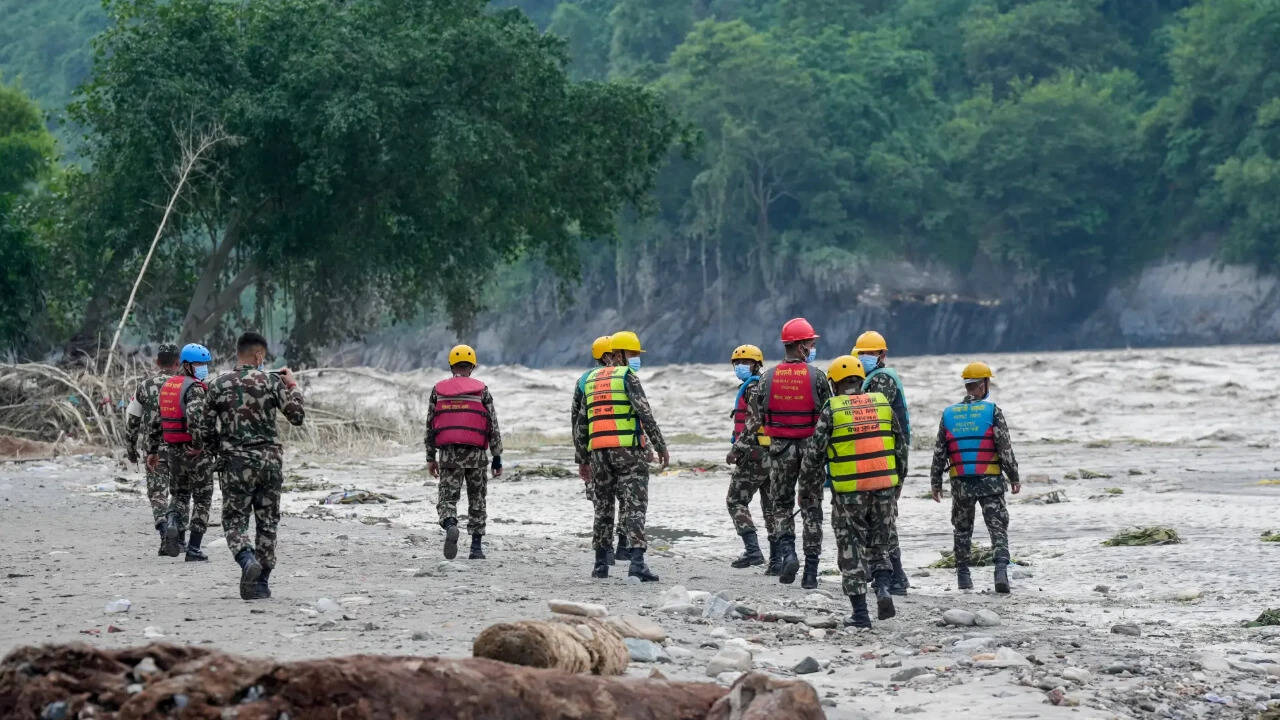
India, being one of the first countries to offer aid, has acted swiftly on Nepal's request. The Indian government has sent a team of rescue personnel and equipment to Nepal to help with the relief efforts.
The floods in Nepal have caused widespread destruction and have affected thousands of people. The situation is dire, with many people still stranded and in need of urgent assistance.
The Indian team, consisting of experts from the National Disaster Response Force (NDRF), has been deployed to the affected areas to provide aid and support to the local authorities. The team is equipped with state-of-the-art equipment, including boats, rescue gear, and medical supplies.
The decision by Nepal to accept foreign aid is seen as a significant development in the relief efforts. The country had initially been reluctant to accept help, citing concerns over sovereignty and independence. However, the scale of the disaster has forced the government to reconsider its stance.
The floods in Nepal are a result of heavy rainfall in the region, which has caused rivers to overflow and inundate large areas of land. The situation is exacerbated by the country's rugged terrain, which makes it difficult for rescue teams to reach affected areas.
The Indian government has been at the forefront of providing aid to Nepal, with Prime Minister Narendra Modi offering his support and assistance to the Nepalese government. The move is seen as a significant gesture of goodwill and friendship between the two nations.
The relief efforts are ongoing, with teams from both India and Nepal working together to provide aid and support to those affected by the floods. The situation remains dire, but the acceptance of foreign aid by Nepal is seen as a positive development in the relief efforts.
The floods in Nepal are a reminder of the importance of regional cooperation and the need for countries to work together in times of crisis. The response by India and other nations is a testament to the strong bonds of friendship and cooperation that exist in the region.
In the coming days, the relief efforts are expected to continue, with a focus on providing aid and support to those affected by the floods. The situation remains challenging, but with the help of foreign aid, Nepal is hopeful of recovering from the disaster and rebuilding its affected areas.
The acceptance of foreign aid by Nepal is a significant development in the relief efforts, and it is expected to have a positive impact on the country's ability to respond to the disaster. With the help of India and other nations, Nepal is hopeful of overcoming the challenges posed by the floods and emerging stronger and more resilient than ever before.
The move by Nepal to accept foreign aid is also seen as a significant step towards strengthening regional cooperation and friendship. The response by India and other nations is a testament to the strong bonds that exist between the countries in the region, and it is expected to have a positive impact on the region as a whole.
In conclusion, the acceptance of foreign aid by Nepal is a significant development in the relief efforts, and it is expected to have a positive impact on the country's ability to respond to the disaster. With the help of India and other nations, Nepal is hopeful of overcoming the challenges posed by the floods and emerging stronger and more resilient than ever before.
Frequently asked questions
Why did Nepal initially refuse foreign aid?
Nepal initially refused foreign aid due to concerns over sovereignty and independence.
What is the role of India in the relief efforts?
India has sent a team of rescue personnel and equipment to Nepal to aid in the relief efforts.