Hyderabad Tackles Heat with Green Buildings
Hyderabad's green buildings outnumbered, experts call for neighborhood planning
'%3E%3Crect%20width%3D'96'%20height%3D'96'%20fill%3D'%231B5E20'%2F%3E%3Ccircle%20cx%3D'30'%20cy%3D'24'%20r%3D'44'%20fill%3D'%23fff'%20opacity%3D'.12'%2F%3E%3Ccircle%20cx%3D'60'%20cy%3D'74'%20r%3D'40'%20fill%3D'%23000'%20opacity%3D'.10'%2F%3E%3C%2Fg%3E%3Cg%3E%3Ccircle%20cx%3D'48'%20cy%3D'48'%20r%3D'15'%20fill%3D'%23fff'%2F%3E%3Cpath%20d%3D'M43%2034%20Q50%2048%2043%2062'%20fill%3D'none'%20stroke%3D'%238a94a6'%20stroke-width%3D'2.4'%2F%3E%3Cpath%20d%3D'M47%2033%20Q54%2048%2047%2063'%20fill%3D'none'%20stroke%3D'%238a94a6'%20stroke-width%3D'1.8'%20stroke-dasharray%3D'1.5%203'%2F%3E%3C%2Fg%3E%3C%2Fsvg%3E)
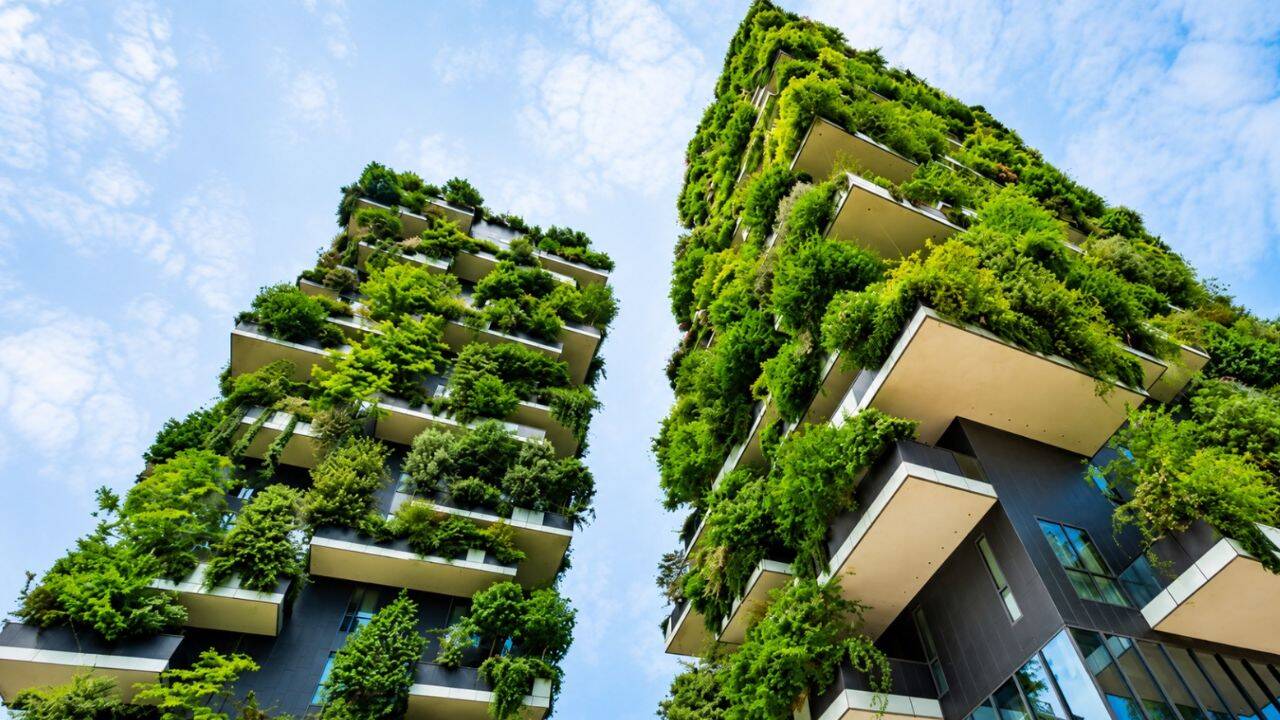
Hyderabad is experiencing extreme heat, and its hottest neighborhoods have a mix of green-certified buildings and conventional structures. Despite the presence of these eco-friendly buildings, they are vastly outnumbered by traditional buildings. Experts emphasize that neighborhood-wide planning is essential to maximize the cooling effects of green buildings.
According to experts, the current adoption rate of green buildings in Hyderabad is only around ten percent of the city's total building stock. This means that there is significant room for growth and improvement in terms of reducing the urban heat island effect. The urban heat island effect occurs when built-up areas like cities experience higher temperatures than surrounding rural areas due to the concentration of heat-absorbing surfaces like buildings and roads.
To mitigate this effect, experts recommend increasing the adoption of green buildings and providing policy incentives to encourage developers to build more sustainable structures. This can include measures like tax breaks, subsidies, or priority permitting for green building projects. By incentivizing green building development, the city can reduce the urban heat island effect and create a more livable environment for its residents.
Hyderabad's hot climate makes it an ideal candidate for green building initiatives. The city's temperature can soar during the summer months, making it essential to find ways to reduce the heat island effect. By adopting more green buildings and implementing neighborhood-wide planning, Hyderabad can build its way out of the heat and create a more sustainable future.
The benefits of green buildings extend beyond just reducing the urban heat island effect. They can also help reduce energy consumption, improve air quality, and provide a healthier living environment for residents. Additionally, green buildings can increase property values and attract businesses and residents who are looking for sustainable and environmentally friendly spaces.
In conclusion, Hyderabad has the opportunity to reduce the urban heat island effect by increasing the adoption of green buildings and implementing neighborhood-wide planning. By providing policy incentives and encouraging developers to build more sustainable structures, the city can create a more livable environment for its residents and build a more sustainable future.
The city's efforts to reduce the urban heat island effect can have a significant impact on the health and well-being of its residents. By reducing the temperature in urban areas, the city can decrease the risk of heat-related illnesses and improve the overall quality of life for its residents. As Hyderabad continues to grow and develop, it is essential that the city prioritizes sustainability and green building initiatives to create a better future for its residents.
What it means for Hyderabad is that the city has a unique opportunity to address the urban heat island effect and create a more sustainable environment. By working together, the city can build its way out of the heat and create a better future for its residents.
Frequently asked questions
What is the current adoption rate of green buildings in Hyderabad?
The current adoption rate of green buildings in Hyderabad is around ten percent of the city's total building stock.
How can Hyderabad reduce the urban heat island effect?
Hyderabad can reduce the urban heat island effect by increasing the adoption of green buildings and implementing neighborhood-wide planning, as well as providing policy incentives to encourage developers to build more sustainable structures.