US to Open Nuclear Cooperation with Saudi Arabia
US set to announce nuclear deal with Saudi Arabia, sparking proliferation concerns.
'%3E%3Crect%20width%3D'96'%20height%3D'96'%20fill%3D'%234A235A'%2F%3E%3Ccircle%20cx%3D'30'%20cy%3D'24'%20r%3D'44'%20fill%3D'%23fff'%20opacity%3D'.12'%2F%3E%3Ccircle%20cx%3D'60'%20cy%3D'74'%20r%3D'40'%20fill%3D'%23000'%20opacity%3D'.10'%2F%3E%3C%2Fg%3E%3Cg%20fill%3D'none'%20stroke%3D'%23fff'%20stroke-width%3D'3'%3E%3Ccircle%20cx%3D'48'%20cy%3D'48'%20r%3D'16'%2F%3E%3Cellipse%20cx%3D'48'%20cy%3D'48'%20rx%3D'6.5'%20ry%3D'16'%2F%3E%3Cline%20x1%3D'32'%20y1%3D'42'%20x2%3D'64'%20y2%3D'42'%2F%3E%3Cline%20x1%3D'32'%20y1%3D'54'%20x2%3D'64'%20y2%3D'54'%2F%3E%3C%2Fg%3E%3C%2Fsvg%3E)
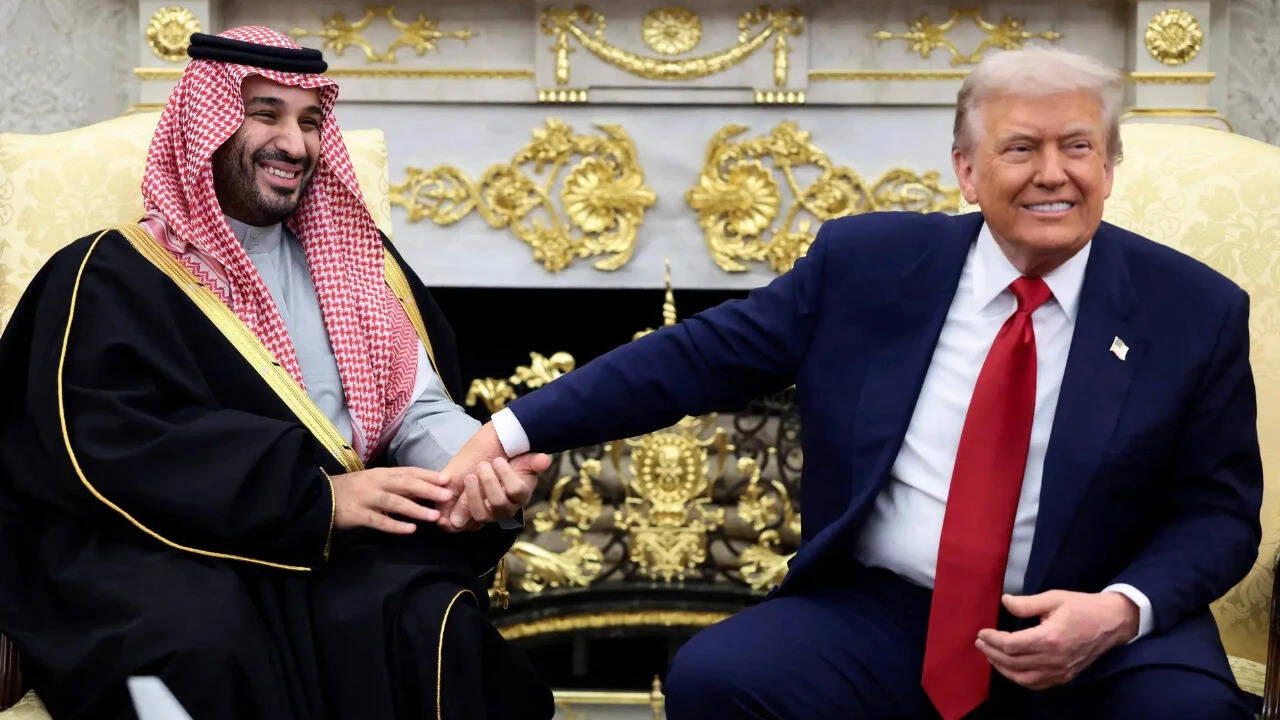
The Trump administration is poised to unveil a significant nuclear cooperation agreement with Saudi Arabia, marking a major shift in the US's approach to the Middle Eastern nation's energy needs. This deal will enable extensive civilian nuclear cooperation and allow for uranium enrichment to take place on Saudi soil.
The US administration believes that this agreement will help counter the growing influence of Russia and China in the region. However, critics have raised concerns about the potential risks of nuclear proliferation and the implications for regional security. They argue that this deal may undermine existing non-proliferation safeguards and create new challenges for the international community.
The agreement is expected to face scrutiny from lawmakers, who will carefully examine the terms of the deal and its potential consequences. The US has long been a proponent of non-proliferation efforts, and this deal may be seen as a departure from that stance.
Saudi Arabia has been seeking to diversify its energy mix and reduce its reliance on oil. The kingdom has announced plans to build several nuclear reactors, and this deal with the US is seen as a key step towards achieving that goal.
The implications of this deal extend beyond the Middle East, as it may have significant consequences for global non-proliferation efforts. The international community has long been concerned about the spread of nuclear technology, and this deal may be seen as a setback for those efforts.
The US administration will need to address the concerns of critics and provide assurances that this deal will not contribute to the proliferation of nuclear weapons. The agreement will also need to be approved by lawmakers, who will carefully consider the potential risks and benefits.
In the broader context, this deal reflects the complex and evolving nature of international relations in the Middle East. The region is home to a number of competing interests and rivalries, and the US is seeking to navigate these complexities while advancing its own interests.
The potential consequences of this deal are far-reaching, and it remains to be seen how it will play out in the coming months and years. One thing is certain, however: the US's decision to pursue nuclear cooperation with Saudi Arabia marks a significant shift in its approach to the region, and it will be closely watched by the international community.
In terms of significance, this deal may have important implications for regional security and global non-proliferation efforts. It may also reflect a shift in the US's approach to the Middle East, as the administration seeks to counter the influence of rival powers and advance its own interests.
Overall, the US's decision to pursue nuclear cooperation with Saudi Arabia is a complex and multifaceted issue, with significant implications for regional security, global non-proliferation efforts, and international relations. As the deal moves forward, it will be closely watched by the international community, and its consequences will be carefully considered by lawmakers and experts alike.
The US administration's argument that this deal will help counter Russian and Chinese influence in the region is a key aspect of its rationale. However, critics argue that this approach may be overly simplistic, and that the deal may have unintended consequences that outweigh any potential benefits.
In conclusion, the US's decision to pursue nuclear cooperation with Saudi Arabia is a significant development with far-reaching implications. As the deal moves forward, it will be important to carefully consider the potential risks and benefits, and to ensure that it does not contribute to the proliferation of nuclear weapons or undermine regional security.
Frequently asked questions
What is the significance of the US-Saudi nuclear deal?
The deal allows for extensive civilian nuclear cooperation and uranium enrichment on Saudi soil, sparking concerns about nuclear proliferation and regional security implications.
Why is the US pursuing nuclear cooperation with Saudi Arabia?
The US administration believes that this agreement will help counter the growing influence of Russia and China in the region.