Madhya Pradesh Handloom Sales Jump 165% in 5 Years
Madhya Pradesh handloom sales surge, Chanderi saris lead sales, weavers seek wage hike
'%3E%3Crect%20width%3D'96'%20height%3D'96'%20fill%3D'%23B3261E'%2F%3E%3Ccircle%20cx%3D'30'%20cy%3D'24'%20r%3D'44'%20fill%3D'%23fff'%20opacity%3D'.12'%2F%3E%3Ccircle%20cx%3D'60'%20cy%3D'74'%20r%3D'40'%20fill%3D'%23000'%20opacity%3D'.10'%2F%3E%3C%2Fg%3E%3Cg%20fill%3D'%23fff'%3E%3Crect%20x%3D'29'%20y%3D'49'%20width%3D'8'%20height%3D'19'%20rx%3D'1'%2F%3E%3Crect%20x%3D'39'%20y%3D'40'%20width%3D'9'%20height%3D'28'%20rx%3D'1'%2F%3E%3Crect%20x%3D'50'%20y%3D'45'%20width%3D'8'%20height%3D'23'%20rx%3D'1'%2F%3E%3Crect%20x%3D'60'%20y%3D'53'%20width%3D'7'%20height%3D'15'%20rx%3D'1'%2F%3E%3Crect%20x%3D'41'%20y%3D'34'%20width%3D'5'%20height%3D'6'%2F%3E%3C%2Fg%3E%3C%2Fsvg%3E)
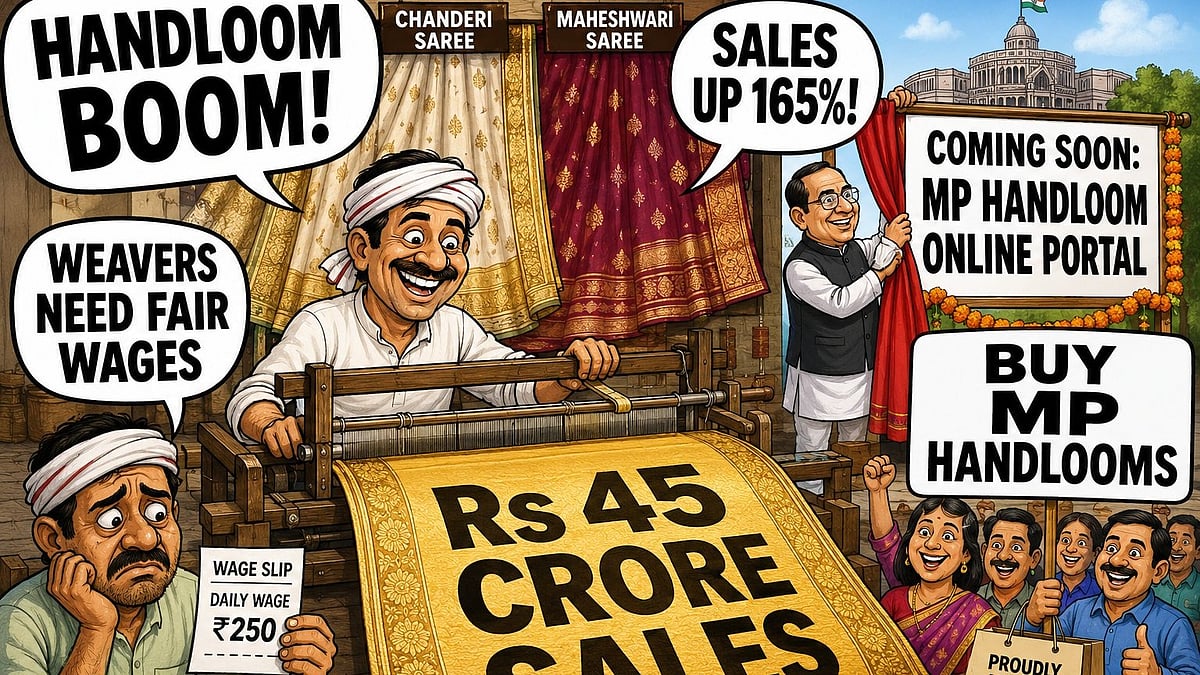
The sales of traditional handloom products in Madhya Pradesh have seen a significant surge, with a 165% increase in the last five years. In 2025-26, the sales of handloom products reached a record Rs 45 crore, up from nearly Rs 17 crore five years ago. Of this amount, around Rs 25 crore went directly to the weavers.
Chanderi saris accounted for the largest share of the total sales, with sales of around Rs 25 crore in 2025-26. Maheshwari saris and dress material followed, with sales of around Rs 12 crore in the last financial year. According to Commissioner Madan Bibhishan Nagargoje, handloom products are marketed directly by the weavers and through fairs in different parts of the country, as well as through Mrignaynee stores.
The Chanderi and Maheshwari weaves are also being promoted under the One District One Product (ODOP) scheme. To further boost sales, the government plans to launch its own website to market handloom products online, reducing dependence on e-commerce platforms like Amazon and Flipkart.
However, despite the surge in demand, weaver wages remain stagnant. Pradeep Koli, a Chanderi weaver, noted that wages have only increased from Rs 40 per tilli (spool) to Rs 50 in the last five years. As a result, weavers earn around Rs 400 to Rs 450 per day, which is insufficient. Koli urged the government to increase labour charges by 20% to 25%, citing the significant difference between the selling price of a saree and the amount received by the weaver.
The success of Madhya Pradesh's handloom industry can be attributed to the efforts of the government and the weavers themselves. The ODOP scheme has helped promote the state's traditional weaves, while the direct marketing of products has increased sales. However, the issue of stagnant weaver wages remains a concern and needs to be addressed to ensure the sustainability of the industry.
The handloom industry is an important part of India's cultural heritage, and the success of Madhya Pradesh's handloom products is a testament to the skill and craftsmanship of its weavers. As the industry continues to grow, it is essential to ensure that the benefits are shared fairly among all stakeholders, including the weavers.
In conclusion, the surge in Madhya Pradesh's handloom sales is a significant achievement, and the government's efforts to promote the industry are commendable. However, the issue of weaver wages needs to be addressed to ensure the long-term sustainability of the industry. With the launch of its own website and the continued promotion of traditional weaves, the future of Madhya Pradesh's handloom industry looks promising.
The significance of this development extends beyond the state of Madhya Pradesh, as it highlights the importance of preserving and promoting India's cultural heritage. The handloom industry is a vital part of India's textile sector, and its success can have a positive impact on the country's economy and society as a whole.
Frequently asked questions
What is the current state of Madhya Pradesh's handloom industry?
The industry has seen a 165% increase in sales in the last five years, with Chanderi saris leading the sales.
What is the main concern of the weavers in Madhya Pradesh?
The weavers are concerned about their stagnant wages, which have only increased from Rs 40 to Rs 50 per tilli (spool) in the last five years.