Supreme Court Acquits Man After 22 Years
Man freed after 22 years in jail. Wrongful conviction overturned.
'%3E%3Crect%20width%3D'96'%20height%3D'96'%20fill%3D'%231A5276'%2F%3E%3Ccircle%20cx%3D'30'%20cy%3D'24'%20r%3D'44'%20fill%3D'%23fff'%20opacity%3D'.12'%2F%3E%3Ccircle%20cx%3D'60'%20cy%3D'74'%20r%3D'40'%20fill%3D'%23000'%20opacity%3D'.10'%2F%3E%3C%2Fg%3E%3Cg%20fill%3D'%23fff'%3E%3Cpath%20d%3D'M31%2041%20L48%2031%20L65%2041%20Z'%2F%3E%3Crect%20x%3D'33'%20y%3D'43'%20width%3D'4'%20height%3D'17'%2F%3E%3Crect%20x%3D'41'%20y%3D'43'%20width%3D'4'%20height%3D'17'%2F%3E%3Crect%20x%3D'51'%20y%3D'43'%20width%3D'4'%20height%3D'17'%2F%3E%3Crect%20x%3D'59'%20y%3D'43'%20width%3D'4'%20height%3D'17'%2F%3E%3Crect%20x%3D'30'%20y%3D'62'%20width%3D'36'%20height%3D'4'%20rx%3D'1'%2F%3E%3C%2Fg%3E%3C%2Fsvg%3E)
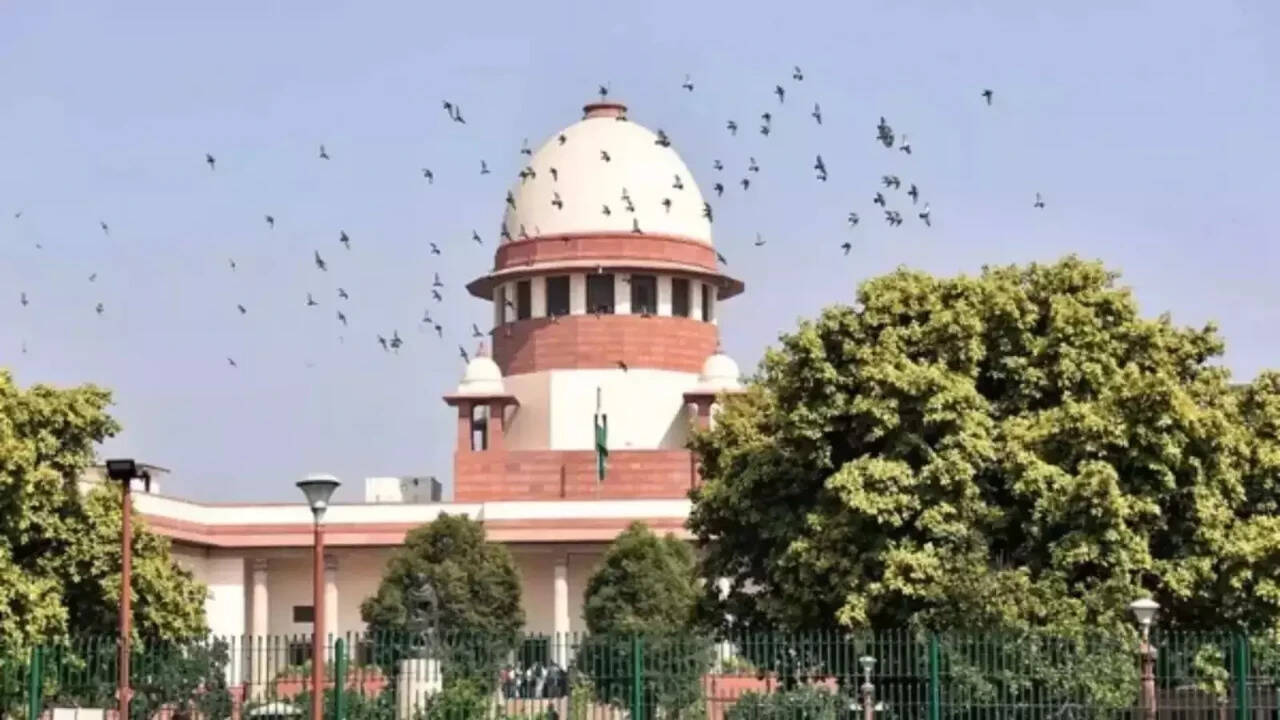
A man who spent 22 years in jail for a crime he did not commit has been acquitted by the Supreme Court. The court's decision comes after a long and arduous journey for the man, who was wrongly convicted due to flawed evidence analysis by the trial court. The High Court had also refused to entertain his delayed appeal, further prolonging his ordeal.
The man's case highlights the deep-seated issues within the judicial system, particularly with regards to marginalized communities. The Supreme Court noted that these communities often face significant barriers in accessing justice, leading to frustrating and lengthy delays.
The trial court's flawed evidence analysis was a critical factor in the man's wrongful conviction. The court had relied on incomplete and inaccurate information, which ultimately led to the man's imprisonment. The High Court's refusal to entertain his delayed appeal only served to compound the injustice.
The Supreme Court's decision to acquit the man is a welcome relief, but it also underscores the need for urgent reforms within the judicial system. The court's emphasis on the struggles faced by marginalized communities in accessing justice is a stark reminder of the systemic issues that need to be addressed.
The man's 22-year ordeal is a stark example of the human cost of wrongful convictions. His case serves as a reminder of the importance of ensuring that the justice system is fair, efficient, and accessible to all.
The Supreme Court's decision is a significant step towards rectifying the injustice perpetrated against the man. However, it also highlights the need for a more comprehensive approach to addressing the systemic issues within the judicial system.
In recent years, there have been several instances of wrongful convictions being overturned by higher courts. These cases have shed light on the need for greater scrutiny of evidence and more robust appeal processes.
The man's acquittal is a testament to the importance of perseverance and the need for a fair and just justice system. His case will hopefully serve as a catalyst for further reforms and improvements within the judicial system.
The Supreme Court's decision has significant implications for the justice system as a whole. It highlights the need for greater awareness and understanding of the issues faced by marginalized communities and the importance of ensuring that justice is accessible to all.
In conclusion, the Supreme Court's acquittal of the man after 22 years in jail is a welcome decision that underscores the need for urgent reforms within the judicial system. The case serves as a reminder of the importance of ensuring that justice is fair, efficient, and accessible to all, particularly for marginalized communities.
The man's case is a stark reminder of the human cost of wrongful convictions and the need for a more comprehensive approach to addressing the systemic issues within the judicial system. The Supreme Court's decision is a significant step towards rectifying the injustice perpetrated against the man, and it will hopefully serve as a catalyst for further reforms and improvements within the judicial system.
What it means for India is that the justice system needs to be more robust and fair, and that marginalized communities need to have better access to justice. The case highlights the need for urgent reforms and improvements within the judicial system, and it serves as a reminder of the importance of ensuring that justice is accessible to all.
Frequently asked questions
How long was the man in jail for?
The man was in jail for 22 years for a crime he did not commit.
What was the reason for the man's wrongful conviction?
The man's wrongful conviction was due to flawed evidence analysis by the trial court and the High Court's refusal to entertain his delayed appeal.