NCLT Rejects Canara Bank's ₹742 Crore Insolvency Plea
NCLT rejects Canara Bank's plea against Globiz Exim. Claim is time-barred.

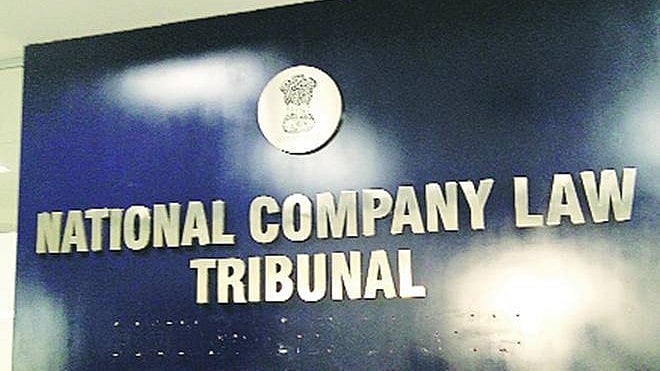
The National Company Law Tribunal (NCLT) has rejected an insolvency petition filed by Canara Bank against Globiz Exim Private Limited, a company belonging to the Kanpur-based Frost Group. The petition was dismissed as the tribunal held that the application was barred by limitation.
The bank had sought initiation of the Corporate Insolvency Resolution Process (CIRP) against the company over an alleged default exceeding ₹742 crore. Canara Bank had filed the petition under Section 7 of the Insolvency and Bankruptcy Code (IBC), seeking insolvency proceedings against Globiz Exim in its capacity as the corporate guarantor for credit facilities extended to Frost International Ltd.
The tribunal observed that the bank's claim was “hopelessly barred by limitation” and that it could not revive a time-barred claim by issuing a fresh demand notice. The bench noted that the notice dated September 1, 2018, was a notice of demand and that the record of limitation of the Corporate Guarantor had commenced with effect from September 6, 2018.
The tribunal further noted that by the time the NeSL authentication took place, the principal borrower, Frost International Ltd., had already been admitted into the Corporate Insolvency Resolution Process (CIRP) and was under the control of the Interim Resolution Professional/Resolution Professional (IRP/RP). The bank contended that the guarantee had been invoked through a demand notice dated January 20, 2025, and claimed that the company had defaulted on dues of more than ₹742 crore.
The bank argued that the limitation period stood extended because the debt was authenticated with the National E-Governance Services Ltd. (NeSL) in November 2023 and due to developments in the insolvency proceedings of the principal borrower. However, the tribunal rejected this argument, holding that no valid acknowledgment of liability had been made by the corporate guarantor after the guarantee was first invoked in September 2018.
The tribunal ruled that the NeSL authentication could not be treated as an acknowledgment capable of extending the limitation period. Referring to the Supreme Court's judgment in Shankar Khandelwal, the tribunal observed that the admission of a creditor's claim by a Resolution Professional is only an administrative exercise and cannot amount to an acknowledgment of debt under the Limitation Act.
The guarantee executed by Globiz Exim was an “on-demand guarantee”, under which the limitation period begins to run from the date of the demand notice. The tribunal held that the fresh demand notice issued by the bank in January 2025 was invalid and could not revive the time-barred claim.
The rejection of the insolvency petition by the NCLT is a significant development in the case, as it prevents the bank from initiating insolvency proceedings against Globiz Exim. The decision is also likely to have implications for other cases involving similar issues of limitation and acknowledgment of debt.
In the context of the Indian banking sector, the NCLT's decision highlights the importance of timely action by banks in recovering debts from defaulting borrowers. The Insolvency and Bankruptcy Code (IBC) provides a framework for banks to recover debts, but the code also has strict timelines and procedures that must be followed.
The NCLT's decision in this case demonstrates that the tribunal will strictly enforce these timelines and procedures, and that banks must be diligent in pursuing debt recovery. The decision is also a reminder that the IBC is a complex and evolving area of law, and that banks and other stakeholders must be aware of the latest developments and judgments in this field.
In conclusion, the NCLT's rejection of Canara Bank's insolvency petition against Globiz Exim is a significant development that highlights the importance of timely action by banks in recovering debts from defaulting borrowers. The decision is likely to have implications for other cases involving similar issues of limitation and acknowledgment of debt, and demonstrates the need for banks to be diligent in pursuing debt recovery under the Insolvency and Bankruptcy Code (IBC).