Scientists Predict Solar Cycle 26 Strength
New method forecasts space weather risks, predicts moderate Solar Cycle 26 strength
'%3E%3Crect%20width%3D'96'%20height%3D'96'%20fill%3D'%23B3261E'%2F%3E%3Ccircle%20cx%3D'30'%20cy%3D'24'%20r%3D'44'%20fill%3D'%23fff'%20opacity%3D'.12'%2F%3E%3Ccircle%20cx%3D'60'%20cy%3D'74'%20r%3D'40'%20fill%3D'%23000'%20opacity%3D'.10'%2F%3E%3C%2Fg%3E%3Cg%20fill%3D'%23fff'%3E%3Crect%20x%3D'29'%20y%3D'49'%20width%3D'8'%20height%3D'19'%20rx%3D'1'%2F%3E%3Crect%20x%3D'39'%20y%3D'40'%20width%3D'9'%20height%3D'28'%20rx%3D'1'%2F%3E%3Crect%20x%3D'50'%20y%3D'45'%20width%3D'8'%20height%3D'23'%20rx%3D'1'%2F%3E%3Crect%20x%3D'60'%20y%3D'53'%20width%3D'7'%20height%3D'15'%20rx%3D'1'%2F%3E%3Crect%20x%3D'41'%20y%3D'34'%20width%3D'5'%20height%3D'6'%2F%3E%3C%2Fg%3E%3C%2Fsvg%3E)
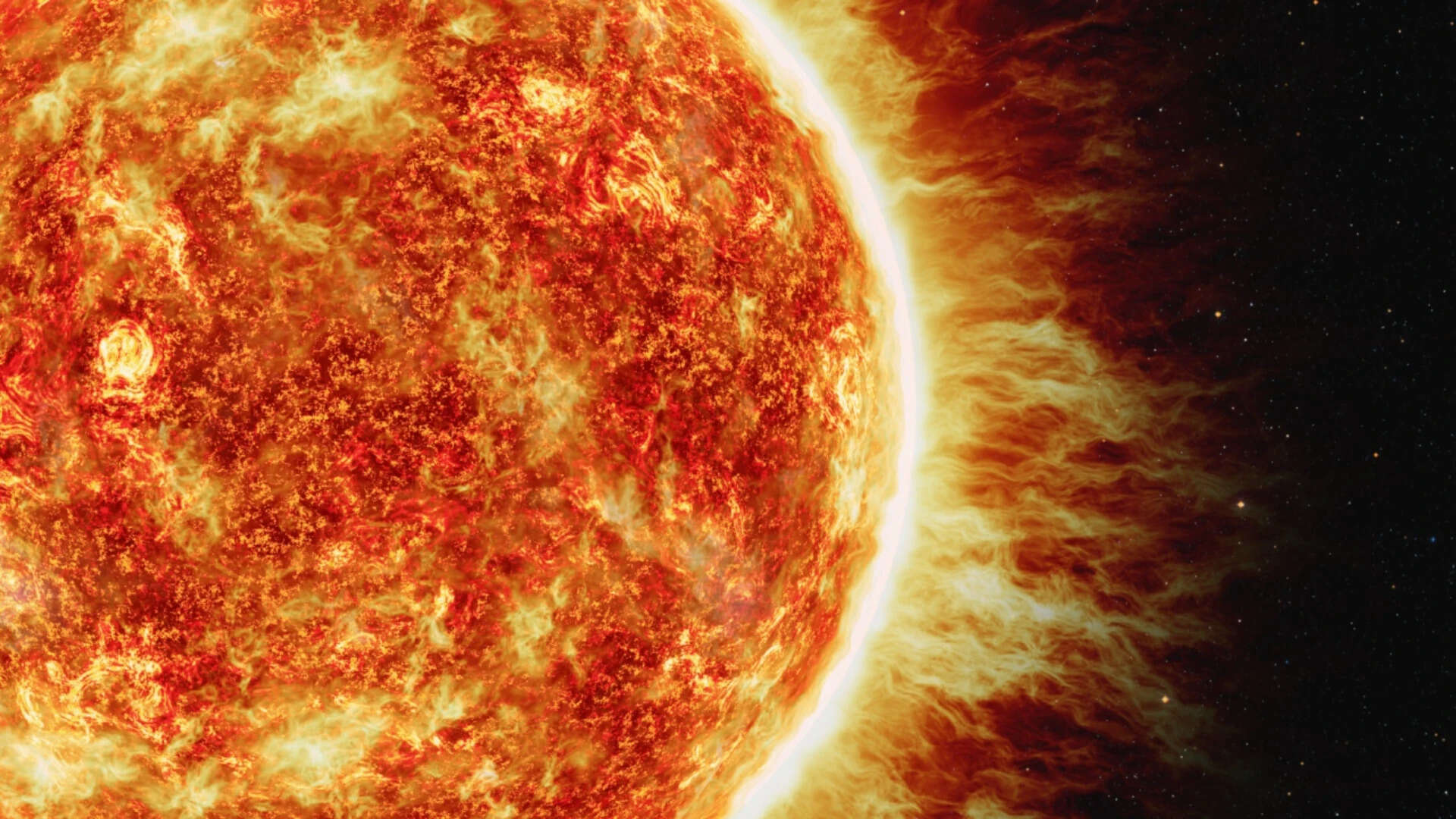
Scientists have made a significant breakthrough in predicting solar cycle strength, which could help forecast future space weather risks. The new method identifies a precise point where extreme space weather abruptly ceases, allowing researchers to predict the next solar cycle's activity up to seven years in advance.
This development is crucial in understanding the Sun's behavior and its impact on Earth's magnetic field. The Sun's solar cycles, which last approximately 11 years, have a significant influence on space weather, including solar flares and coronal mass ejections. These events can cause disruptions to communication systems, power grids, and other technological infrastructure.
The new method has been used to predict the strength of Solar Cycle 26, which is expected to begin in 2025. Early predictions suggest that it may be moderate in strength. This information is vital for scientists and policymakers to prepare for potential space weather risks and take necessary precautions to mitigate their impact.
The prediction of solar cycle strength is a complex task that involves analyzing various solar activity indicators, such as sunspot numbers and magnetic field strength. The new method developed by scientists takes into account these indicators and provides a more accurate forecast of solar cycle activity.
Further refinement of these forecasts will occur in approximately two years, as more data becomes available. This will enable scientists to make more precise predictions about the strength of Solar Cycle 26 and its potential impact on space weather.
The ability to predict solar cycle strength and space weather risks has significant implications for various industries, including telecommunications, navigation, and energy. It can help prevent disruptions to critical infrastructure and ensure the continued functioning of essential services.
In conclusion, the new method for predicting solar cycle strength is a significant breakthrough in understanding the Sun's behavior and its impact on Earth. The prediction of moderate strength for Solar Cycle 26 provides valuable insights into potential space weather risks and will enable scientists and policymakers to take necessary precautions to mitigate their impact.
The continued refinement of these forecasts will be crucial in preparing for future space weather events and minimizing their disruption to technological infrastructure. As scientists continue to monitor the Sun's activity and refine their predictions, we can expect to gain a better understanding of the complex interactions between the Sun and Earth's magnetic field.
The potential consequences of space weather events are significant, and the ability to predict them accurately is essential for preventing disruptions to critical infrastructure. The new method developed by scientists is a significant step forward in this regard, and its continued refinement will be crucial in preparing for future space weather risks.
The impact of space weather on Earth's magnetic field is a complex phenomenon that involves various physical processes. The new method for predicting solar cycle strength takes into account these processes and provides a more accurate forecast of space weather risks. As scientists continue to refine their predictions, we can expect to gain a better understanding of the complex interactions between the Sun and Earth's magnetic field.
In the future, the ability to predict space weather risks accurately will be essential for preventing disruptions to critical infrastructure and ensuring the continued functioning of essential services. The new method developed by scientists is a significant step forward in this regard, and its continued refinement will be crucial in preparing for future space weather events.