Nepal Accepts Foreign Aid After Flash Floods
Nepal allows foreign rescue aid, India and China to assist. Flash floods hit Himalayan region.
'%3E%3Crect%20width%3D'96'%20height%3D'96'%20fill%3D'%234A235A'%2F%3E%3Ccircle%20cx%3D'30'%20cy%3D'24'%20r%3D'44'%20fill%3D'%23fff'%20opacity%3D'.12'%2F%3E%3Ccircle%20cx%3D'60'%20cy%3D'74'%20r%3D'40'%20fill%3D'%23000'%20opacity%3D'.10'%2F%3E%3C%2Fg%3E%3Cg%20fill%3D'none'%20stroke%3D'%23fff'%20stroke-width%3D'3'%3E%3Ccircle%20cx%3D'48'%20cy%3D'48'%20r%3D'16'%2F%3E%3Cellipse%20cx%3D'48'%20cy%3D'48'%20rx%3D'6.5'%20ry%3D'16'%2F%3E%3Cline%20x1%3D'32'%20y1%3D'42'%20x2%3D'64'%20y2%3D'42'%2F%3E%3Cline%20x1%3D'32'%20y1%3D'54'%20x2%3D'64'%20y2%3D'54'%2F%3E%3C%2Fg%3E%3C%2Fsvg%3E)
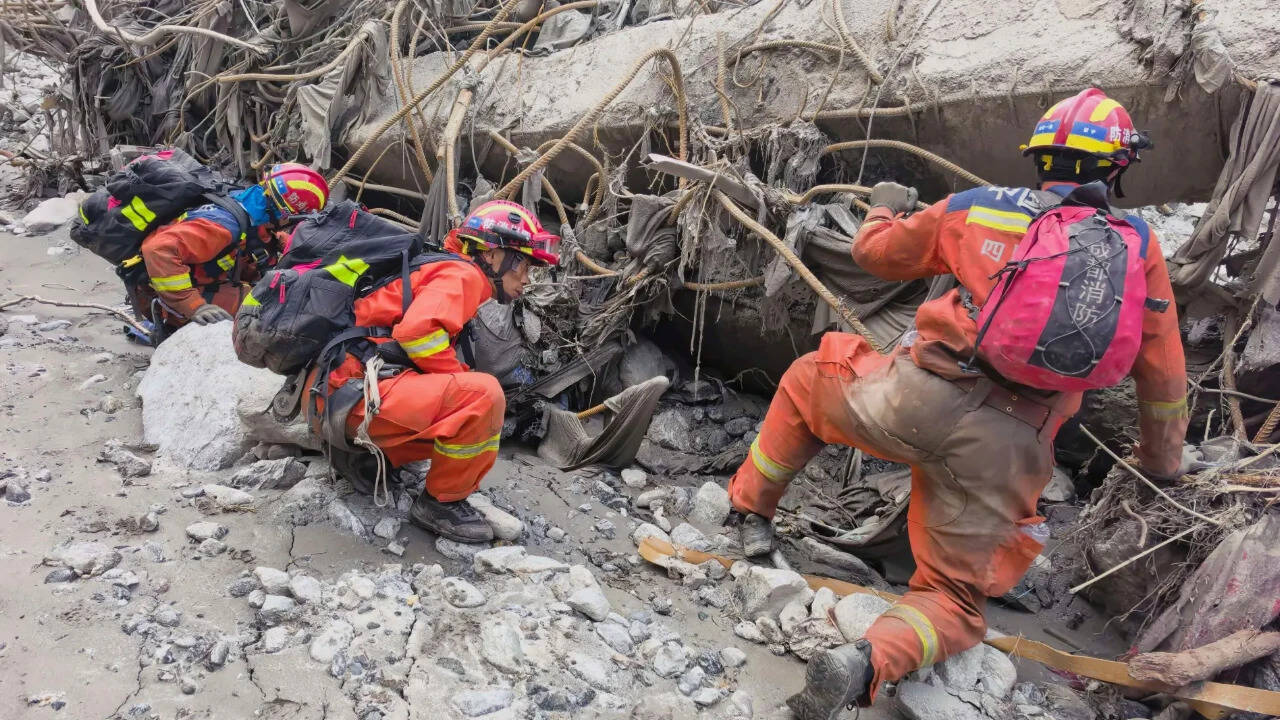
Nepal has reversed its initial decision to decline foreign search-and-rescue teams following the devastating flash floods that struck the country’s Himalayan region on August 26. The government has now allowed limited specialised assistance from India, China, Australia, and South Korea.
The decision was made after countries pressed for assistance amid concerns over their nationals reported missing in the disaster. An inter-ministerial committee, following an assessment by Nepal’s National Disaster Management Centre, approved specialised foreign assistance in areas where domestic capabilities were limited.
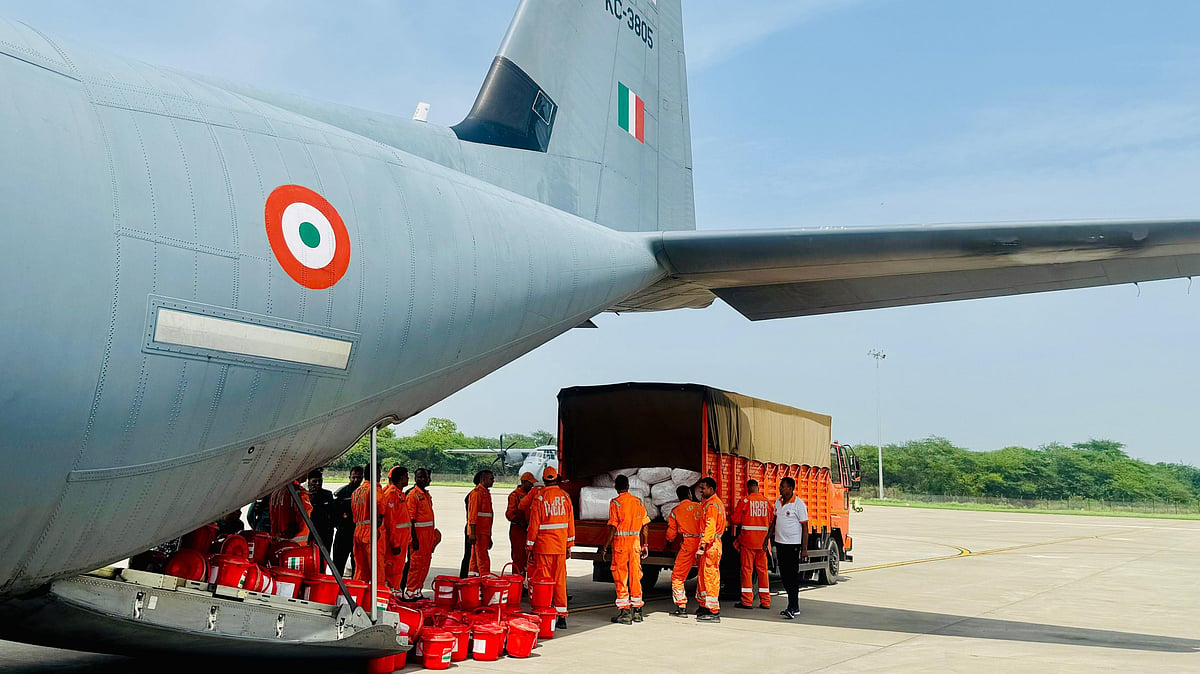
India has offered specialised National Disaster Response Force (NDRF) teams and equipment, including personnel trained in tunnel rescue. It has also offered medical assistance and Bailey bridges to help restore connectivity in affected areas. An Indian Air Force C-130 aircraft has departed, carrying 10 tonnes of essential relief supplies, including medicines and food items, to support those affected.
The assistance will primarily focus on tunnel rescues, particularly at damaged hydropower projects, along with DNA testing and forensic identification of bodies. Nepal has not opened the door to unrestricted deployment of foreign rescue teams, with the government maintaining control over overall search-and-rescue operations.
China has also been cleared to provide specialised assistance, with rescue-related coordination taking place in areas close to the Nepal-China border. Australia and South Korea have likewise been permitted to send experts and technicians for specific requirements.
The flash floods followed a high-altitude landslide or debris flow involving ice, mud, and rocks near the Nepal-China border. The surge severely affected areas along the Bhotekoshi and Trishuli river systems, particularly in Rasuwa and Nuwakot districts.
The disaster has caused massive destruction across the Himalayan region, with many reported missing and affected. The international community has come together to provide assistance, with Nepal’s government working to ensure that the aid is utilised effectively.
The situation is being closely monitored, with rescue efforts ongoing. The government has appealed for calm and cooperation, as the country works to recover from the devastating disaster.
In terms of the impact, the flash floods have highlighted the importance of disaster preparedness and international cooperation. The response to the disaster has shown that countries can come together to provide assistance and support in times of need.
The disaster has also raised concerns about the vulnerability of the Himalayan region to natural disasters. The region is prone to landslides, floods, and earthquakes, and the disaster has highlighted the need for increased investment in disaster preparedness and infrastructure.
Overall, the situation in Nepal is being closely monitored, with the government and international community working together to provide assistance and support to those affected by the disaster.
The acceptance of foreign aid by Nepal is a significant development, as it shows that the country is willing to accept help from other nations in times of need. This cooperation is crucial in responding to natural disasters, and it is hoped that it will lead to a more effective response to the disaster.
In conclusion, the flash floods in Nepal have caused widespread destruction and highlighted the importance of international cooperation in responding to natural disasters. The acceptance of foreign aid by Nepal is a positive step, and it is hoped that it will lead to a more effective response to the disaster and help the country to recover from the devastating effects of the floods.
Frequently asked questions
What countries are providing aid to Nepal after the flash floods?
India, China, Australia, and South Korea are providing specialised assistance to Nepal.
What is the focus of the international aid efforts in Nepal?
The assistance will primarily focus on tunnel rescues, DNA testing, and forensic identification of bodies.