India, Nepal Teams Rescue 6 Trapped Workers In Hydropower Tunnel
Rescue operations continue in Nepal's Chilime hydropower tunnel. Six workers trapped, Indian and Nepali teams working together.
'%3E%3Crect%20width%3D'96'%20height%3D'96'%20fill%3D'%234A235A'%2F%3E%3Ccircle%20cx%3D'30'%20cy%3D'24'%20r%3D'44'%20fill%3D'%23fff'%20opacity%3D'.12'%2F%3E%3Ccircle%20cx%3D'60'%20cy%3D'74'%20r%3D'40'%20fill%3D'%23000'%20opacity%3D'.10'%2F%3E%3C%2Fg%3E%3Cg%20fill%3D'none'%20stroke%3D'%23fff'%20stroke-width%3D'3'%3E%3Ccircle%20cx%3D'48'%20cy%3D'48'%20r%3D'16'%2F%3E%3Cellipse%20cx%3D'48'%20cy%3D'48'%20rx%3D'6.5'%20ry%3D'16'%2F%3E%3Cline%20x1%3D'32'%20y1%3D'42'%20x2%3D'64'%20y2%3D'42'%2F%3E%3Cline%20x1%3D'32'%20y1%3D'54'%20x2%3D'64'%20y2%3D'54'%2F%3E%3C%2Fg%3E%3C%2Fsvg%3E)
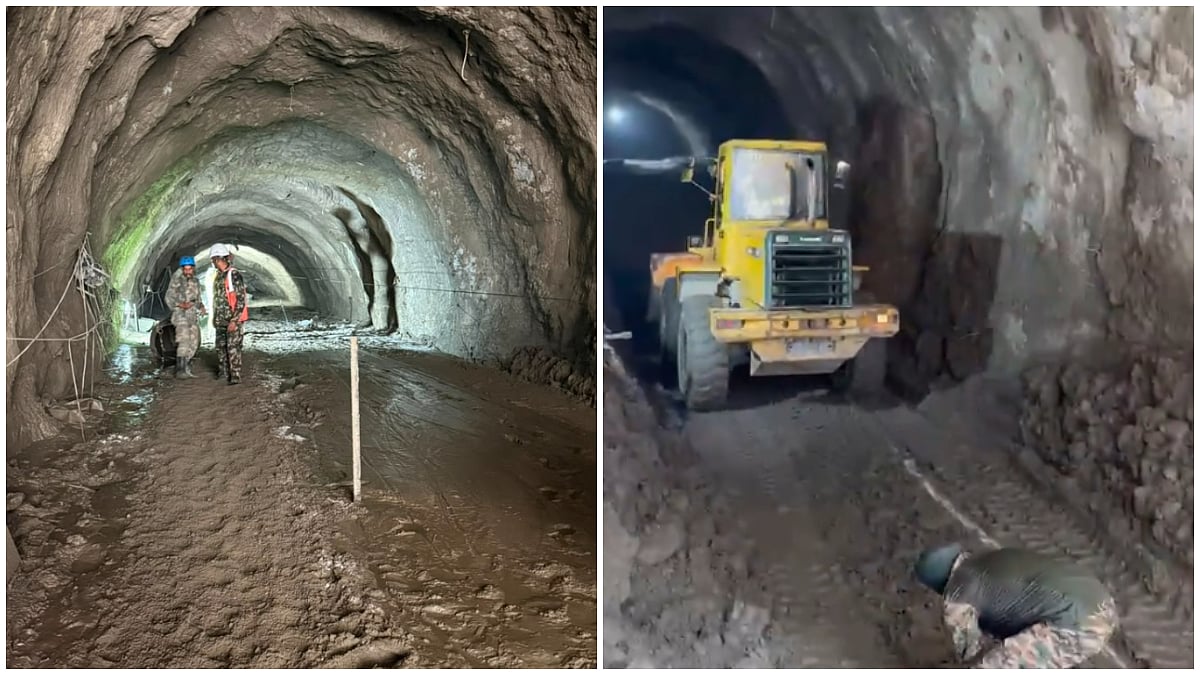
Rescue operations are ongoing at Nepal's Chilime hydropower project, where six workers are believed to be trapped inside a tunnel. Indian and Nepali teams are using heavy machinery to clear mud and debris and advance towards an underground powerhouse.
The operation gained momentum after an excavator, loader, and Bobcat were brought into the tunnel. According to India's Ambassador to Nepal, Naveen Srivastava, the technical team cleared about 70 meters further into the tunnel. The powerhouse is approximately 60 meters further down the tunnel, and rescue teams are working through the night to reach it.
The Border Roads Organisation has prepared the approach road to the rescue site, and Nepal's Army has constructed over a kilometer of access road, enabling rescue equipment to be taken closer to the site. The Nepal Army and Indian rescue personnel are jointly working inside the Chilime tunnel.
There has been no public confirmation that rescuers have established contact with the six trapped workers. However, reports indicate that rescuers found a pocket of air near the area where the workers are believed to be trapped.
The rescue efforts come after flash floods, triggered by an ice-rock avalanche near the Nepal-Tibet border on August 26, devastated towns and villages in northern and central Nepal. The floods killed nearly 1,400 people, and over 5,000 remain missing. The Bhotekoshi River carried the floodwaters downstream, sweeping away homes, vehicles, roads, and bridges, and damaging hydropower projects.
Around 100 people are believed to be trapped in nearly a dozen tunnels linked to hydropower projects in flood-affected areas. The Nepal Army has prioritized rescue operations at the Upper Trishuli-3B hydropower project, where over 100 Army personnel have been deployed.
The rescue efforts are a joint operation between Indian and Nepali teams, with the goal of reaching the trapped workers and providing assistance. The situation is being closely monitored, and updates are being provided as more information becomes available.
The flash floods have had a significant impact on Nepal's hydropower projects, with many tunnels and powerhouses damaged or destroyed. The rescue efforts are a critical part of the response to the disaster, and the joint operation between Indian and Nepali teams is a testament to the cooperation and coordination between the two countries.
In conclusion, the rescue operation at the Chilime hydropower tunnel is ongoing, with Indian and Nepali teams working together to reach the six trapped workers. The situation is complex, and the rescue efforts are challenging, but the joint operation is a critical part of the response to the disaster.
The rescue operation highlights the importance of cooperation and coordination between countries in responding to natural disasters. The joint effort between Indian and Nepali teams demonstrates the commitment to saving lives and providing assistance in times of need.
As the rescue operation continues, the people of Nepal and India remain hopeful that the trapped workers will be rescued safely. The situation is being closely monitored, and updates will be provided as more information becomes available.
The rescue operation is a significant undertaking, and the challenges are substantial. However, with the joint effort between Indian and Nepali teams, there is hope that the trapped workers will be rescued, and the situation will be brought under control.
In the aftermath of the flash floods, the rescue operation is a critical part of the response to the disaster. The joint operation between Indian and Nepali teams is a testament to the cooperation and coordination between the two countries, and it highlights the importance of working together in times of need.
The rescue operation will continue until the trapped workers are rescued, and the situation is brought under control. The people of Nepal and India remain hopeful that the operation will be successful, and the trapped workers will be rescued safely.
The significance of the rescue operation cannot be overstated. It highlights the importance of cooperation and coordination between countries in responding to natural disasters. The joint effort between Indian and Nepali teams demonstrates the commitment to saving lives and providing assistance in times of need.
In conclusion, the rescue operation at the Chilime hydropower tunnel is a significant undertaking, and the challenges are substantial. However, with the joint effort between Indian and Nepali teams, there is hope that the trapped workers will be rescued, and the situation will be brought under control.
Frequently asked questions
What is the current status of the rescue operation in Nepal's Chilime hydropower tunnel?
The rescue operation is ongoing, with Indian and Nepali teams working together to reach the six trapped workers.
What triggered the flash floods in Nepal?
The flash floods were triggered by an ice-rock avalanche near the Nepal-Tibet border on August 26.