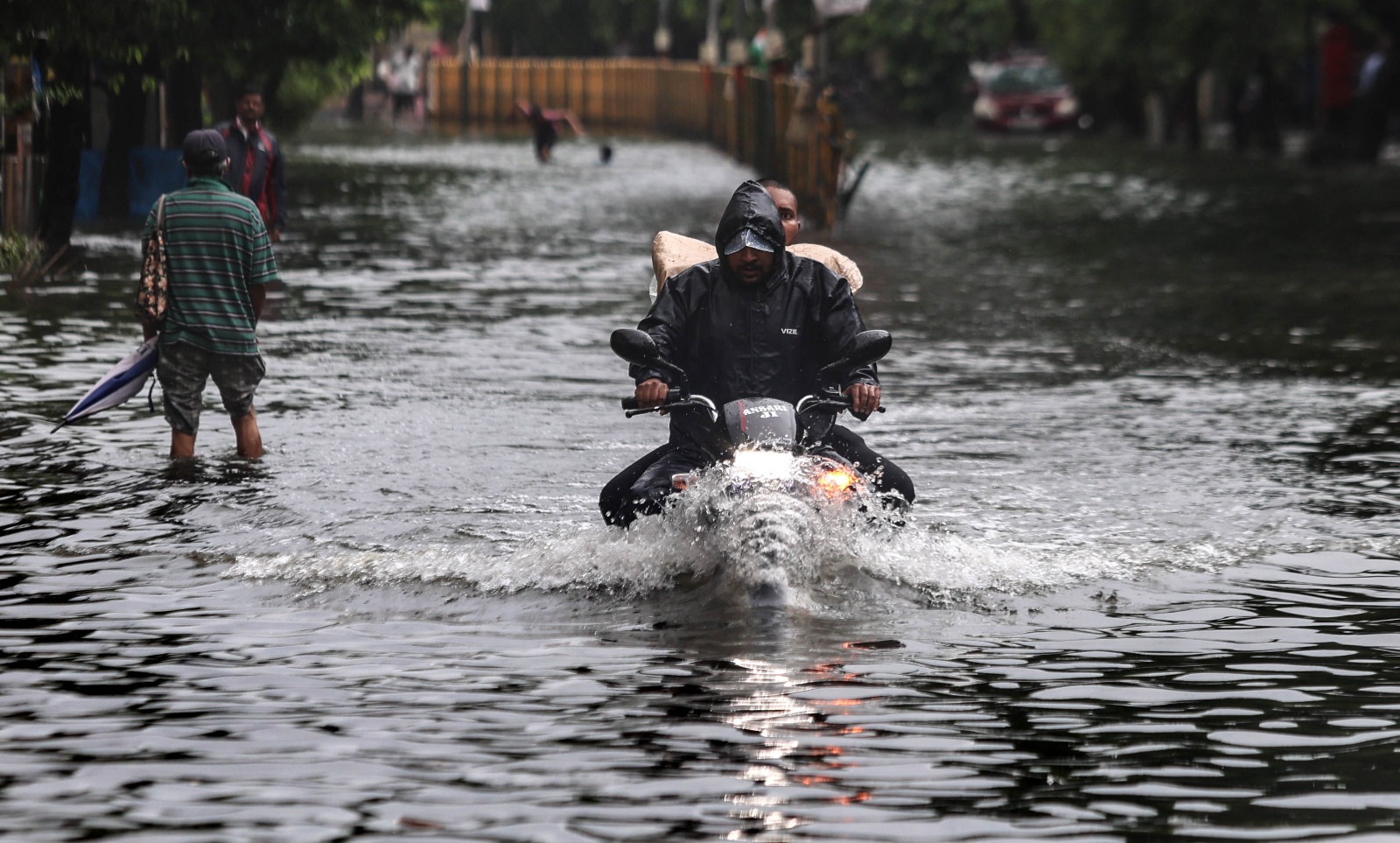
Mumbai Water Stock Reaches 88.40% Amid Heavy Rainfall
Mumbai's water stock rises, lake levels witness 2.22% spike in 24 hours.
'%3E%3Crect%20width%3D'96'%20height%3D'96'%20fill%3D'%23B3261E'%2F%3E%3Ccircle%20cx%3D'30'%20cy%3D'24'%20r%3D'44'%20fill%3D'%23fff'%20opacity%3D'.12'%2F%3E%3Ccircle%20cx%3D'60'%20cy%3D'74'%20r%3D'40'%20fill%3D'%23000'%20opacity%3D'.10'%2F%3E%3C%2Fg%3E%3Cg%20fill%3D'%23fff'%3E%3Crect%20x%3D'29'%20y%3D'49'%20width%3D'8'%20height%3D'19'%20rx%3D'1'%2F%3E%3Crect%20x%3D'39'%20y%3D'40'%20width%3D'9'%20height%3D'28'%20rx%3D'1'%2F%3E%3Crect%20x%3D'50'%20y%3D'45'%20width%3D'8'%20height%3D'23'%20rx%3D'1'%2F%3E%3Crect%20x%3D'60'%20y%3D'53'%20width%3D'7'%20height%3D'15'%20rx%3D'1'%2F%3E%3Crect%20x%3D'41'%20y%3D'34'%20width%3D'5'%20height%3D'6'%2F%3E%3C%2Fg%3E%3C%2Fsvg%3E)
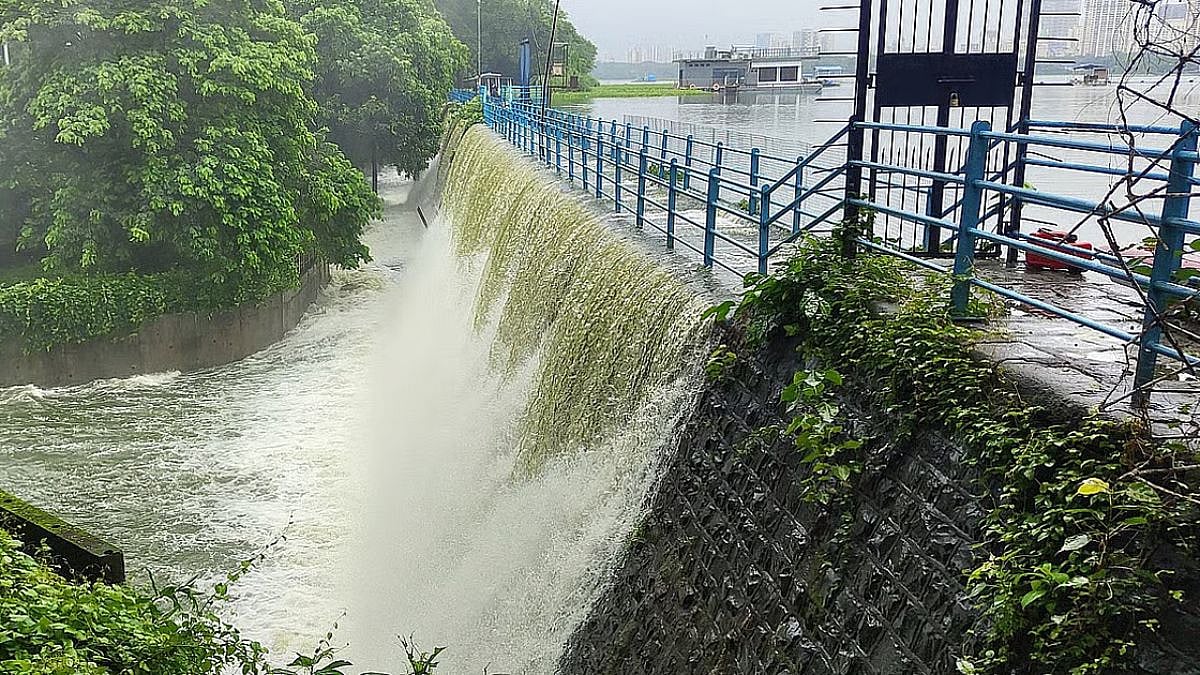
Mumbai's drinking water reserves have continued to swell following steady monsoon rainfall, with the combined stock in the seven lakes supplying water to the city rising to 88.40 per cent of their total live storage capacity.
According to the latest data released by the Brihanmumbai Municipal Corporation's (BMC) Hydraulic Engineer's Department, the increase follows rainfall recorded between 6 am on Sunday, July 26, and 6 am on Monday, July 27, 2026. The city's reservoir stock registered a 2.22 percentage point rise during this period.
The seven reservoirs, Upper Vaitarna, Modak Sagar, Tansa, Middle Vaitarna, Bhatsa, Vihar, and Tulsi, now collectively hold 12,79,534 million litres (ML) of water against their total live storage capacity of 14,47,363 ML.
Among the reservoirs, Modak Sagar, Vihar, and Tulsi remain at 100 per cent capacity. Tansa has reached 98.93 per cent, while Middle Vaitarna stands at 91.21 per cent. Bhatsa, the city's largest reservoir, has climbed to 86.86 per cent, while Upper Vaitarna has reached 75.76 per cent of its useful storage capacity.
The catchment areas continued to receive rainfall over the past 24 hours, with Middle Vaitarna recording the highest rainfall at 113 mm, followed by Upper Vaitarna with 80 mm, Modak Sagar with 63 mm, Tansa with 57 mm, Bhatsa with 31 mm, Tulsi with 17 mm, and Vihar with 8 mm.
Four reservoirs have already started overflowing this monsoon, with Vihar and Tulsi beginning to overflow on July 7, Tansa on July 22, and Modak Sagar on July 23. With reservoir levels now nearing 90 per cent of total live storage capacity, the sustained monsoon rainfall has strengthened Mumbai's water reserves, offering substantial relief and ensuring a comfortable drinking water supply for the city in the months ahead.
The Bhandup Complex, which houses Mumbai's Master Control Centre for water supply operations, recorded 25 mm of rainfall during the period, taking the season's cumulative rainfall at the complex to 2,246 mm.
The rise in water stock is a welcome relief for the city, which has been facing water scarcity issues in recent years. The BMC has been working to improve the city's water supply infrastructure, and the increased water stock is expected to help meet the city's drinking water needs.
The monsoon season is expected to continue for several more weeks, and the BMC is closely monitoring the water levels in the reservoirs to ensure that the city's drinking water supply remains stable.
In conclusion, the increase in Mumbai's water stock is a positive development for the city, and the BMC's efforts to improve the water supply infrastructure are expected to pay off in the coming months.
The city's residents can breathe a sigh of relief as the water stock is expected to last throughout the year, providing a comfortable drinking water supply.
Frequently asked questions
What is the current water stock in Mumbai?
The current water stock in Mumbai is 88.40% of the total live storage capacity.
Which reservoirs have started overflowing?
Vihar, Tulsi, Tansa, and Modak Sagar have started overflowing.