Mumbai Lake Levels Rise To 49.84%
Heavy rainfall boosts Mumbai's water reserves, lake levels rise to nearly 50%. Water stock increases by 0.86% in 24 hours.

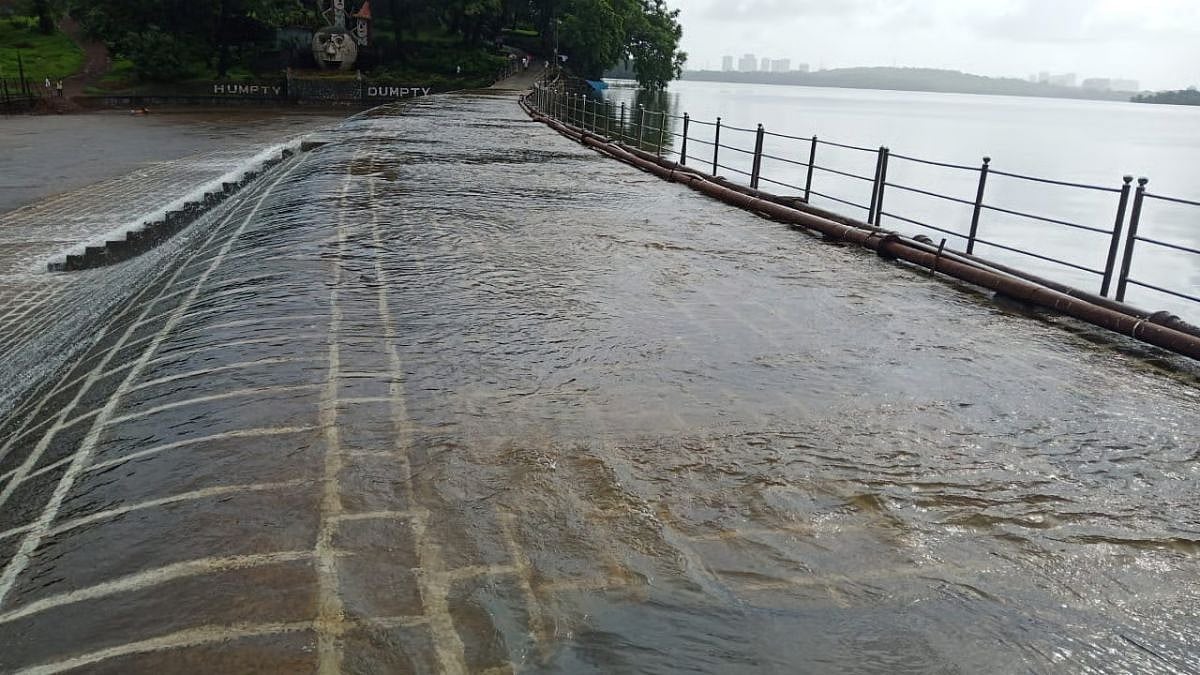
Mumbai's lake levels have risen to 49.84% of their total useful live storage after a week of heavy rainfall in the city and neighbouring districts. According to the Hydraulic Engineer's Department report released on Sunday morning, the total water stock in the seven reservoirs supplying drinking water to Mumbai has reached 721,354 million litres (ML) out of their total useful storage capacity of 1,447,363 ML.
The significant improvement in Mumbai's water reserves is a result of the heavy rainfall that lashed the city over the past week. Just 10 days ago, the water stock had fallen to 38 percent, but the recent rainfall has helped to boost the levels. The water stock increased by only 0.86 percent in the last 24 hours, owing to comparatively lower rainfall over the past day.
Among the major lakes, Modak Sagar holds 105,461 ML (81.80%), while Tansa has 114,152 ML (78.68%) of its useful storage. Bhatsa, the largest contributor to Mumbai's water supply, currently holds 317,680 ML, which is 44.30% of its total capacity. Other lakes, including Vehar Lake, have recorded full capacity at 100 percent, followed by Tulsi, which recorded 99.66 percent.
The Upper Vaitarna, Middle Vaitarna, Tansa and Modak Sagar reservoir system collectively stores 367,957 ML, accounting for 52.98% of its combined useful capacity. In the last 24 hours, Middle Vaitarna recorded a rise in water level of 0.13 metres, followed by Bhatsa (0.02 m) and Tansa (0.001 m), respectively. However, there were marginal declines in Modak Sagar, Vehar and Tulsi at 0.13 m, 0.04 m and 0.03 m, respectively.
The report also noted that the Middle Vaitarna WSCPO gate remains closed, while Upper Vaitarna's water release was stopped on July 6 at 10 am. The cumulative rainfall recorded at the Bhandup Complex has reached 1,716 mm.
The rise in Mumbai's lake levels is a welcome relief for the city, which has been facing water scarcity issues in recent years. The heavy rainfall has helped to boost the water reserves, and the city's water supply is expected to be stable for the coming months.
The improvement in Mumbai's water reserves is also a result of the efforts made by the BMC to improve the city's water infrastructure. The corporation has been working to increase the city's water storage capacity and to reduce water losses through leakage and other means.
In conclusion, the rise in Mumbai's lake levels to 49.84% is a significant improvement, and it is expected to have a positive impact on the city's water supply. The city's residents can breathe a sigh of relief, knowing that the water reserves are stable, and the city is well-prepared to meet the water demands of its growing population.
The recent rainfall has also highlighted the importance of conservation and management of water resources. The city's water supply is a precious resource, and it is essential to use it judiciously to ensure that it lasts throughout the year. The BMC and the city's residents must work together to conserve water and to reduce waste, to ensure that the city's water reserves remain stable and secure.
The rise in Mumbai's lake levels is a positive development, and it is expected to have a significant impact on the city's water supply. The city's residents can look forward to a stable and secure water supply, and the city's economy is expected to benefit from the improved water infrastructure.