WHO: 60% of Global Health Facilities Fail Sanitation Standards
Major gaps in sanitation and hygiene found in healthcare facilities worldwide. Only 40% meet basic standards.
'%3E%3Crect%20width%3D'96'%20height%3D'96'%20fill%3D'%234A235A'%2F%3E%3Ccircle%20cx%3D'30'%20cy%3D'24'%20r%3D'44'%20fill%3D'%23fff'%20opacity%3D'.12'%2F%3E%3Ccircle%20cx%3D'60'%20cy%3D'74'%20r%3D'40'%20fill%3D'%23000'%20opacity%3D'.10'%2F%3E%3C%2Fg%3E%3Cg%20fill%3D'none'%20stroke%3D'%23fff'%20stroke-width%3D'3'%3E%3Ccircle%20cx%3D'48'%20cy%3D'48'%20r%3D'16'%2F%3E%3Cellipse%20cx%3D'48'%20cy%3D'48'%20rx%3D'6.5'%20ry%3D'16'%2F%3E%3Cline%20x1%3D'32'%20y1%3D'42'%20x2%3D'64'%20y2%3D'42'%2F%3E%3Cline%20x1%3D'32'%20y1%3D'54'%20x2%3D'64'%20y2%3D'54'%2F%3E%3C%2Fg%3E%3C%2Fsvg%3E)
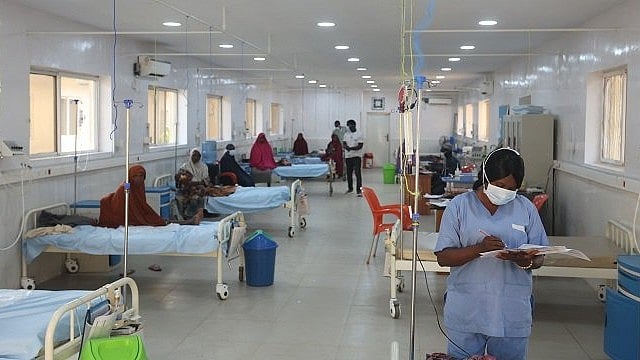
A recent report by the World Health Organisation (WHO) and United Nations Children's Fund (UNICEF) has revealed that only four in 10 healthcare facilities worldwide meet basic sanitation standards. The report, titled Progress on Water, Sanitation, Hygiene, Environment Cleaning and Waste Management in Healthcare Facilities 2015-25, highlights significant gaps in water, sanitation, hygiene, environmental cleaning, and waste management across healthcare facilities.
The report was released through the WHO-UNICEF Joint Monitoring Programme for Water Supply, Sanitation and Hygiene (JMP) and provides global estimates for all five basic service areas, including sanitation and environmental cleaning. According to the report, an estimated 85% of healthcare facilities had basic water services, 72% had basic hygiene services, and 71% had basic health-care waste management services in 2025.
However, only 59% of facilities met basic environmental cleaning standards, and just 40% met the requirements for basic sanitation. The report notes that the remaining 60% of healthcare facilities that failed to meet basic sanitation standards did not necessarily lack toilets, but rather failed to meet the criteria for improved and usable toilets that cater to the needs of patients, staff, women, and girls, and people with limited mobility.
Bruce Gordon, Unit Head, Water, Sanitation and Health (WSH), WHO, stated that the findings show important progress but also expose major gaps in the foundations of safe, high-quality care. He emphasized the need for reliable water, accessible sanitation, hand hygiene, effective environmental cleaning, and safe waste management to be integrated into health planning, financing, and monitoring.
The report also highlights the absence of menstrual hygiene facilities and accessible toilets as the most common reasons facilities failed to meet the basic sanitation standard. Evariste Kouassi Komlan, Director of Water, Sanitation and Hygiene (WASH), UNICEF, noted that a toilet is not enough if it is unsafe, inaccessible, or does not meet the needs of women, girls, and people with disabilities.
The lack of basic sanitation and hygiene facilities in healthcare facilities poses serious risks to women during childbirth, newborns, and young children. The report emphasizes the need for safe, inclusive, and dignified WASH services to deliver quality care and protect health.
The findings of the report have significant implications for global health, highlighting the need for increased investment and attention to improving sanitation and hygiene facilities in healthcare facilities worldwide. By addressing these gaps, healthcare facilities can provide safer and more effective care, ultimately saving lives and improving health outcomes.
In conclusion, the report by WHO and UNICEF highlights the critical need for improved sanitation and hygiene facilities in healthcare facilities worldwide. The findings emphasize the importance of integrating reliable water, accessible sanitation, hand hygiene, effective environmental cleaning, and safe waste management into health planning, financing, and monitoring to deliver safe, high-quality care.
The report's findings also underscore the need for increased attention to the specific needs of women, girls, and people with disabilities in healthcare facilities. By prioritizing the improvement of sanitation and hygiene facilities, healthcare facilities can reduce the risks associated with inadequate facilities and provide safer and more effective care.
Overall, the report provides a critical assessment of the state of sanitation and hygiene in healthcare facilities worldwide, highlighting the need for urgent action to address the significant gaps in these services. By working together to improve sanitation and hygiene facilities, we can reduce the risks associated with inadequate facilities and provide safer and more effective care to patients worldwide.
The significance of this report cannot be overstated, as it highlights a critical issue that affects healthcare facilities worldwide. The findings of the report have significant implications for global health, and it is essential that healthcare facilities, governments, and international organizations work together to address the gaps in sanitation and hygiene facilities.
In the end, the report by WHO and UNICEF serves as a call to action, emphasizing the need for improved sanitation and hygiene facilities in healthcare facilities worldwide. By prioritizing this critical issue, we can reduce the risks associated with inadequate facilities and provide safer and more effective care to patients worldwide.
Frequently asked questions
What percentage of healthcare facilities meet basic sanitation standards?
Only 40% of healthcare facilities meet basic sanitation standards.
What are the most common reasons facilities fail to meet basic sanitation standards?
The absence of menstrual hygiene facilities and accessible toilets are the most common reasons facilities fail to meet basic sanitation standards.