Bombay HC Criticises Maharashtra Over Manual Scavenging
Bombay HC condemns manual scavenging, Maharashtra policy criticised, 81 deaths reported
'%3E%3Crect%20width%3D'96'%20height%3D'96'%20fill%3D'%23B3261E'%2F%3E%3Ccircle%20cx%3D'30'%20cy%3D'24'%20r%3D'44'%20fill%3D'%23fff'%20opacity%3D'.12'%2F%3E%3Ccircle%20cx%3D'60'%20cy%3D'74'%20r%3D'40'%20fill%3D'%23000'%20opacity%3D'.10'%2F%3E%3C%2Fg%3E%3Cg%20fill%3D'%23fff'%3E%3Crect%20x%3D'29'%20y%3D'49'%20width%3D'8'%20height%3D'19'%20rx%3D'1'%2F%3E%3Crect%20x%3D'39'%20y%3D'40'%20width%3D'9'%20height%3D'28'%20rx%3D'1'%2F%3E%3Crect%20x%3D'50'%20y%3D'45'%20width%3D'8'%20height%3D'23'%20rx%3D'1'%2F%3E%3Crect%20x%3D'60'%20y%3D'53'%20width%3D'7'%20height%3D'15'%20rx%3D'1'%2F%3E%3Crect%20x%3D'41'%20y%3D'34'%20width%3D'5'%20height%3D'6'%2F%3E%3C%2Fg%3E%3C%2Fsvg%3E)
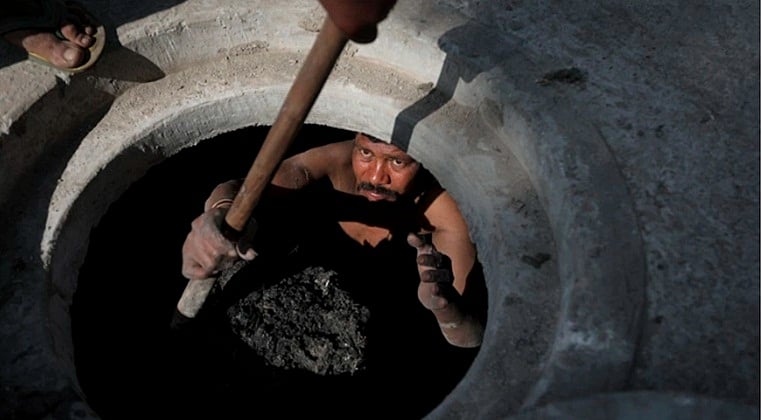
The Bombay High Court has strongly condemned the continued practice of manual scavenging in Maharashtra, highlighting the stark contrast between India's technological advancements and the persistence of caste-based practices that violate human dignity.
A division bench of Justices Bharati Dangre and Manjusha Deshpande expressed disappointment that, 75 years after Independence, the country has failed to eradicate this social evil.
The court was hearing petitions challenging provisions in Maharashtra government resolutions issued in 2019 and 2025, which made private housing societies and contractors responsible for paying compensation when sanitation workers died or suffered accidents during hazardous cleaning.
Senior Advocate Gayatri Singh argued that the policy had deprived families of timely relief, as local authorities often refused assistance, claiming that the concerned society or contractor was responsible.
The petitioners alleged that Maharashtra authorities had failed to enforce safeguards and laws governing manual scavenging and hazardous cleaning, including the Central Government's Standard Operating Procedure for sewer and septic-tank cleaning.
The State informed the court that 81 deaths linked to manual scavenging had been identified, with the families receiving Rs 10 lakh each, involving total expenditure of Rs 8.10 crore.
The bench noted that despite the enactment of laws such as the Employment of Manual Scavengers and Construction of Dry Latrines (Prohibition) Act, 1993, and the Prohibition of Employment as Manual Scavengers and their Rehabilitation Act, 2013, the practice of manual scavenging continued to claim lives.
The court criticised provisions excluding workers engaged at private premises from compensation payable by the State or local authorities, highlighting the risks faced by untrained workers engaged by private societies without protective equipment.
The continued deaths and injuries due to manual scavenging are a stark reminder of the need for effective implementation of laws and policies to protect the rights and dignity of sanitation workers.
The Bombay High Court's criticism of Maharashtra's policy on manual scavenging serves as a wake-up call for the state government to take concrete steps to address this social evil and ensure that the laws and regulations are enforced effectively.
In conclusion, the persistence of manual scavenging in Maharashtra is a serious concern that requires immediate attention and action from the state government to prevent further loss of life and protect the dignity of sanitation workers.
Frequently asked questions
What is manual scavenging?
Manual scavenging refers to the practice of cleaning human waste from sewers, septic tanks, and other areas without the use of mechanical equipment.
What laws govern manual scavenging in India?
The Employment of Manual Scavengers and Construction of Dry Latrines (Prohibition) Act, 1993, and the Prohibition of Employment as Manual Scavengers and their Rehabilitation Act, 2013, are the key laws governing manual scavenging in India.