Fatty Pancreas Linked To Diabetes, Cancer
A fatty pancreas is now recognized as a disease. It increases the risk of diabetes and cancer.
'%3E%3Crect%20width%3D'96'%20height%3D'96'%20fill%3D'%23B3261E'%2F%3E%3Ccircle%20cx%3D'30'%20cy%3D'24'%20r%3D'44'%20fill%3D'%23fff'%20opacity%3D'.12'%2F%3E%3Ccircle%20cx%3D'60'%20cy%3D'74'%20r%3D'40'%20fill%3D'%23000'%20opacity%3D'.10'%2F%3E%3C%2Fg%3E%3Cg%20fill%3D'%23fff'%3E%3Crect%20x%3D'29'%20y%3D'49'%20width%3D'8'%20height%3D'19'%20rx%3D'1'%2F%3E%3Crect%20x%3D'39'%20y%3D'40'%20width%3D'9'%20height%3D'28'%20rx%3D'1'%2F%3E%3Crect%20x%3D'50'%20y%3D'45'%20width%3D'8'%20height%3D'23'%20rx%3D'1'%2F%3E%3Crect%20x%3D'60'%20y%3D'53'%20width%3D'7'%20height%3D'15'%20rx%3D'1'%2F%3E%3Crect%20x%3D'41'%20y%3D'34'%20width%3D'5'%20height%3D'6'%2F%3E%3C%2Fg%3E%3C%2Fsvg%3E)
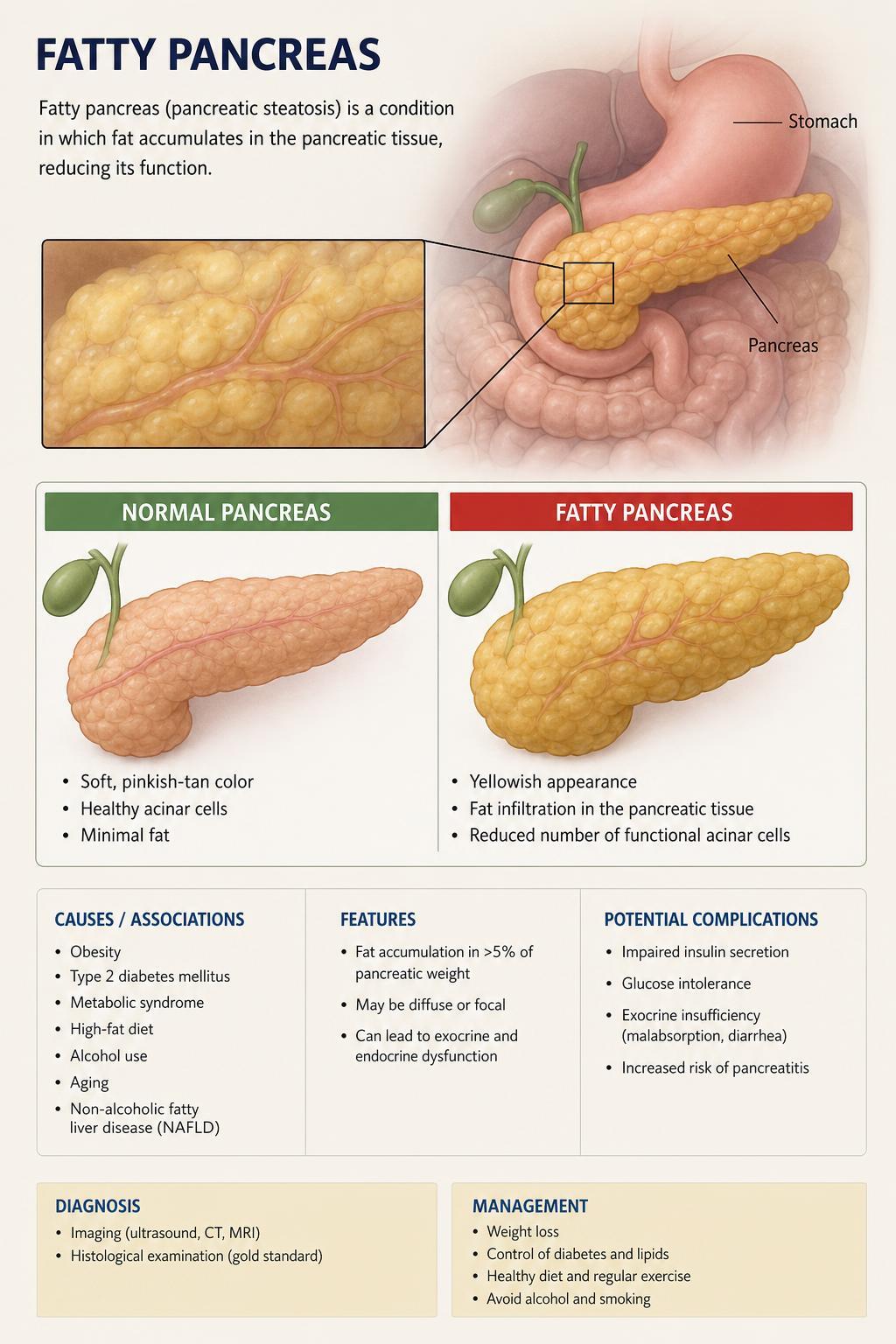
A fatty pancreas, a condition where the pancreas contains excess fat, is now being recognized as a distinct disease entity. This condition has been linked to an increased risk of developing diabetes and cancer.
The pancreas is a vital organ that plays a crucial role in regulating blood sugar levels and producing digestive enzymes. However, when it becomes fatty, its ability to function properly is impaired.
Research has shown that a fatty pancreas can lead to insulin resistance, a precursor to type 2 diabetes. Additionally, the excess fat in the pancreas can also increase the risk of pancreatic cancer.
The exact causes of a fatty pancreas are still not fully understood, but factors such as obesity, physical inactivity, and a diet high in fat and sugar are thought to contribute to its development.
In recent years, there has been a growing awareness of the importance of pancreatic health, and the recognition of a fatty pancreas as a disease is a significant step forward.
The diagnosis of a fatty pancreas typically involves imaging tests such as ultrasound or MRI, which can detect the presence of excess fat in the pancreas.
Treatment options for a fatty pancreas are still limited, but lifestyle changes such as losing weight, increasing physical activity, and eating a healthy diet can help to reduce the amount of fat in the pancreas and improve its function.
In the context of India, where the prevalence of diabetes is high, the recognition of a fatty pancreas as a disease is particularly significant. It highlights the need for increased awareness and education about the importance of pancreatic health and the risks associated with a fatty pancreas.
The Indian Council of Medical Research (ICMR) has been conducting research on the causes and consequences of a fatty pancreas, and the findings have important implications for public health policy.
In conclusion, the recognition of a fatty pancreas as a disease is an important development in the field of medicine. It highlights the need for increased awareness and education about the importance of pancreatic health and the risks associated with a fatty pancreas.
For Mumbai residents, this news is particularly relevant, given the high prevalence of diabetes and obesity in the city. It serves as a reminder of the importance of maintaining a healthy lifestyle and being aware of the risks associated with a fatty pancreas.