Bibhab Talukdar Leads Conservation Efforts In Kaziranga
Kaziranga National Park's conservation efforts, World Nature Conservation Day, Bibhab Talukdar's role
'%3E%3Crect%20width%3D'96'%20height%3D'96'%20fill%3D'%231B5E20'%2F%3E%3Ccircle%20cx%3D'30'%20cy%3D'24'%20r%3D'44'%20fill%3D'%23fff'%20opacity%3D'.12'%2F%3E%3Ccircle%20cx%3D'60'%20cy%3D'74'%20r%3D'40'%20fill%3D'%23000'%20opacity%3D'.10'%2F%3E%3C%2Fg%3E%3Cg%3E%3Ccircle%20cx%3D'48'%20cy%3D'48'%20r%3D'15'%20fill%3D'%23fff'%2F%3E%3Cpath%20d%3D'M43%2034%20Q50%2048%2043%2062'%20fill%3D'none'%20stroke%3D'%238a94a6'%20stroke-width%3D'2.4'%2F%3E%3Cpath%20d%3D'M47%2033%20Q54%2048%2047%2063'%20fill%3D'none'%20stroke%3D'%238a94a6'%20stroke-width%3D'1.8'%20stroke-dasharray%3D'1.5%203'%2F%3E%3C%2Fg%3E%3C%2Fsvg%3E)
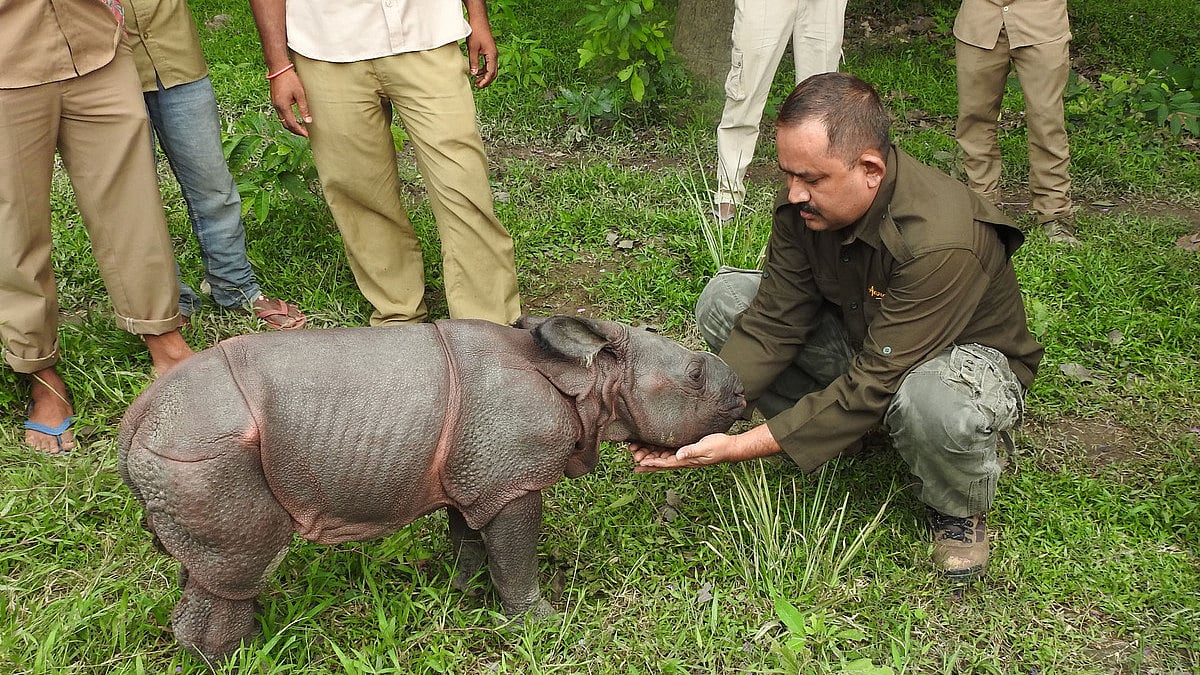
On World Nature Conservation Day, the focus shifts to Kaziranga National Park, a UNESCO World Heritage Site in Assam, which has been at the forefront of conservation efforts. The park, spread over 429 square kilometers, is home to a rich biodiversity, including 480 species of birds, 34 kinds of mammals, and 42 varieties of fish, many of which are rare, endangered, or near extinction.
In 2007, a report by journalists Adrian Levy and Cathy Scott-Clark exposed the link between wildlife trade and global terrorism in Kaziranga. The report revealed that terrorists affiliated with Al Qaeda sponsored poaching in the reserve for profit. However, in recent years, the state has made significant progress in curbing wildlife crime, with 2022 and 2025 being declared as 'no-poaching' years.
Dr. Bibhab Kumar Talukdar, the founder of Aaranyak, a Guwahati-based non-governmental organization, has played a vital role in the conservation efforts. Aaranyak aims to complement the government's efforts in biodiversity conservation across Northeast India. Talukdar believes that collaboration is the cornerstone of Assam's conservation model, citing the Indian Rhino Vision 2020 (IRV 2020) initiative as a prime example.
The IRV 2020 initiative, launched by the Assam government in 2005, successfully translocated and reintroduced Greater One-horned Rhinos back into Manas National Park between 2008 and 2020. Talukdar served as a member of both the Rhino Task Force of Assam and its Translocation Core Committee. He attributes the turnaround in conservation efforts to the realization that there was no single solution and that a multi-faceted approach was necessary.
The role of independent individuals like Talukdar and organizations like Aaranyak has been significant in rewriting the fate of conservation in the state. While the state government apparatus has played a critical role, the efforts of local communities, conservation organizations, and the Assam Police, especially its Special Task Force, have also been instrumental in achieving the 'no-poaching' years.
Kaziranga's conservation efforts have been recognized globally, and the park's success story serves as a model for other conservation initiatives. The dedication of the Assam government, forest department, and local communities has been remarkable, and the collaboration between government and non-governmental organizations has been the key to success.
As the world marks World Nature Conservation Day, the story of Kaziranga National Park and the efforts of Dr. Bibhab Talukdar and Aaranyak serve as a reminder of the importance of conservation and the need for collaborative efforts to protect our planet's most vulnerable ecosystems.
The conservation of Kaziranga National Park is a significant achievement, and it has far-reaching implications for the environment and the local communities. The park's success story is a testament to the power of collaboration and the importance of protecting our natural heritage.
In conclusion, the conservation efforts in Kaziranga National Park are a shining example of what can be achieved through collaboration and dedication. As we celebrate World Nature Conservation Day, we must recognize the importance of protecting our planet's biodiversity and the role that individuals and organizations like Dr. Bibhab Talukdar and Aaranyak play in this effort.
The story of Kaziranga National Park serves as a reminder that conservation is a collective effort, and it requires the participation of governments, local communities, and non-governmental organizations. The success of the conservation efforts in Kaziranga is a beacon of hope for other conservation initiatives, and it highlights the importance of protecting our natural heritage for future generations.
The conservation of Kaziranga National Park is not just a local issue; it has global implications. The park's biodiversity is a treasure trove of rare and endangered species, and its conservation is essential for maintaining the delicate balance of the ecosystem. The efforts of Dr. Bibhab Talukdar and Aaranyak are a testament to the power of individual and organizational efforts in making a difference in conservation.
As we look to the future, it is essential that we continue to support conservation efforts like those in Kaziranga National Park. The park's success story is a reminder that conservation is a long-term commitment, and it requires sustained efforts and dedication. We must recognize the importance of protecting our natural heritage and the role that individuals and organizations play in this effort.
In the end, the conservation of Kaziranga National Park is a story of hope and resilience. It is a reminder that even in the face of adversity, collective efforts can lead to significant achievements. As we celebrate World Nature Conservation Day, we must recognize the importance of conservation and the role that individuals and organizations like Dr. Bibhab Talukdar and Aaranyak play in protecting our planet's most vulnerable ecosystems.
Frequently asked questions
What is the significance of Kaziranga National Park
Kaziranga National Park is a UNESCO World Heritage Site and home to a rich biodiversity, including 480 species of birds, 34 kinds of mammals, and 42 varieties of fish.
What is the role of Aaranyak in conservation efforts
Aaranyak is a Guwahati-based non-governmental organization that aims to complement the government's efforts in biodiversity conservation across Northeast India.