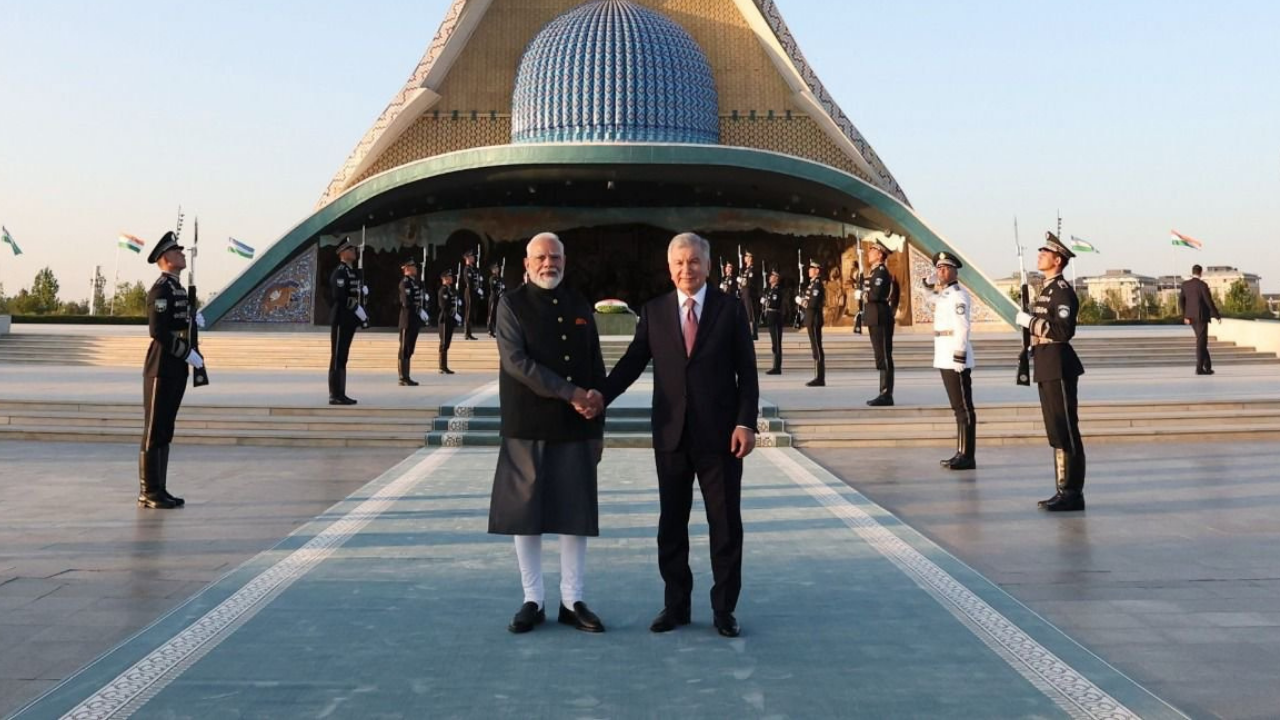
India, Uzbekistan Establish Uranium Supply Deal: PM Modi
India and Uzbekistan to establish long-term uranium supply arrangement. PM Modi announces deal during delegation-level talks in Tashkent.
'%3E%3Crect%20width%3D'96'%20height%3D'96'%20fill%3D'%234A235A'%2F%3E%3Ccircle%20cx%3D'30'%20cy%3D'24'%20r%3D'44'%20fill%3D'%23fff'%20opacity%3D'.12'%2F%3E%3Ccircle%20cx%3D'60'%20cy%3D'74'%20r%3D'40'%20fill%3D'%23000'%20opacity%3D'.10'%2F%3E%3C%2Fg%3E%3Cg%20fill%3D'none'%20stroke%3D'%23fff'%20stroke-width%3D'3'%3E%3Ccircle%20cx%3D'48'%20cy%3D'48'%20r%3D'16'%2F%3E%3Cellipse%20cx%3D'48'%20cy%3D'48'%20rx%3D'6.5'%20ry%3D'16'%2F%3E%3Cline%20x1%3D'32'%20y1%3D'42'%20x2%3D'64'%20y2%3D'42'%2F%3E%3Cline%20x1%3D'32'%20y1%3D'54'%20x2%3D'64'%20y2%3D'54'%2F%3E%3C%2Fg%3E%3C%2Fsvg%3E)
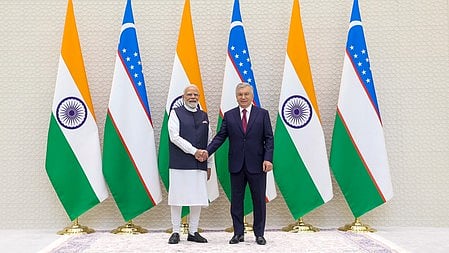
Prime Minister Narendra Modi announced on Sunday that India and Uzbekistan will establish a long-term arrangement for the supply of uranium. This announcement was made during his delegation-level talks with Uzbekistan President Shavkat Mirziyoyev in Tashkent.
The two leaders discussed various aspects of cooperation between the two countries, including economic partnership and trade. PM Modi expressed his appreciation for President Mirziyoyev's initiative to identify key projects and outline a timeline for advancing their bilateral economic partnership.
In addition to the uranium supply arrangement, the two countries will also establish a Coordination Council at the level of Foreign Ministers to guide all aspects of cooperation. The Joint Commission will be elevated from the Secretary level to the Ministerial level, and a Business Summit will be jointly organised with participation from business leaders from both countries.
PM Modi also thanked President Mirziyoyev for the warm welcome extended to him during his visit to Uzbekistan. He appreciated the grand welcome and the wonderful experience he had during his dinner meeting with the President.
The establishment of a long-term uranium supply arrangement between India and Uzbekistan is a significant development in their bilateral relations. It reflects the growing cooperation between the two countries in various fields, including energy and trade.
India has been seeking to diversify its uranium supplies to meet its growing energy needs. The country has been investing heavily in nuclear energy, and the establishment of a long-term uranium supply arrangement with Uzbekistan will help to secure its energy future.
The cooperation between India and Uzbekistan is not limited to energy alone. The two countries have been working together in various fields, including trade, investment, and culture. The establishment of sister-city and sister-state arrangements between the two countries is a testament to their growing friendship and cooperation.
In recent years, India has been seeking to strengthen its ties with Central Asian countries, including Uzbekistan. The region is rich in natural resources, including uranium, and offers significant opportunities for trade and investment.
The visit of PM Modi to Uzbekistan is a significant development in their bilateral relations. It reflects the growing importance of the region in India's foreign policy and its desire to strengthen its ties with Central Asian countries.
In conclusion, the establishment of a long-term uranium supply arrangement between India and Uzbekistan is a significant development in their bilateral relations. It reflects the growing cooperation between the two countries in various fields, including energy and trade, and is a testament to their growing friendship and cooperation.
The deal is expected to have a positive impact on India's energy sector, and will help to secure its energy future. It is also expected to strengthen the bilateral relations between the two countries and promote cooperation in various fields.
The cooperation between India and Uzbekistan is a significant development in the region, and is expected to have a positive impact on the regional economy. It is also expected to promote peace and stability in the region, and to strengthen the ties between the two countries.
Overall, the establishment of a long-term uranium supply arrangement between India and Uzbekistan is a significant development in their bilateral relations, and is expected to have a positive impact on the region.
Frequently asked questions
What is the significance of the uranium supply deal between India and Uzbekistan?
The deal is significant as it will help India to secure its energy future and promote cooperation between the two countries in various fields.
What are the other areas of cooperation between India and Uzbekistan?
The two countries are cooperating in various fields, including trade, investment, and culture, and have established sister-city and sister-state arrangements.