Supreme Court: Merit-Selected Reserved Candidates Can Get Better Posts
Reserved-category candidates selected on merit can get better posts. Supreme Court reiterates principle.
'%3E%3Crect%20width%3D'96'%20height%3D'96'%20fill%3D'%231A5276'%2F%3E%3Ccircle%20cx%3D'30'%20cy%3D'24'%20r%3D'44'%20fill%3D'%23fff'%20opacity%3D'.12'%2F%3E%3Ccircle%20cx%3D'60'%20cy%3D'74'%20r%3D'40'%20fill%3D'%23000'%20opacity%3D'.10'%2F%3E%3C%2Fg%3E%3Cg%20fill%3D'%23fff'%3E%3Cpath%20d%3D'M31%2041%20L48%2031%20L65%2041%20Z'%2F%3E%3Crect%20x%3D'33'%20y%3D'43'%20width%3D'4'%20height%3D'17'%2F%3E%3Crect%20x%3D'41'%20y%3D'43'%20width%3D'4'%20height%3D'17'%2F%3E%3Crect%20x%3D'51'%20y%3D'43'%20width%3D'4'%20height%3D'17'%2F%3E%3Crect%20x%3D'59'%20y%3D'43'%20width%3D'4'%20height%3D'17'%2F%3E%3Crect%20x%3D'30'%20y%3D'62'%20width%3D'36'%20height%3D'4'%20rx%3D'1'%2F%3E%3C%2Fg%3E%3C%2Fsvg%3E)
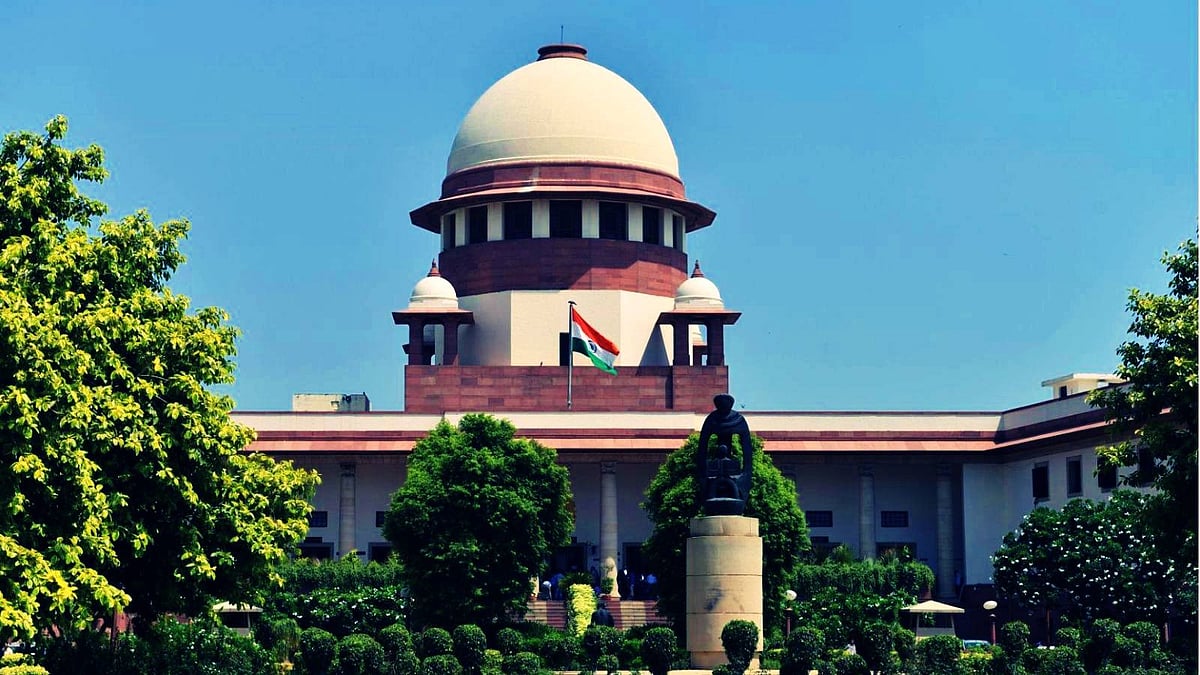
The Supreme Court has reaffirmed a crucial principle regarding reservation and allocation of government posts. According to the court, a reserved-category candidate who is selected in the open category on merit can be considered for a better post under the reserved category if they have scored higher marks than a reserved-category candidate already allotted that post.
A bench of Justice MM Sundresh and Justice Prasanna B Varale made this observation while hearing a batch of petitions related to the allocation of services to reserved-category candidates who were selected on open merit in the 6th Combined Civil Services Examination conducted by the Jharkhand Public Service Commission (JPSC).
The court held that a candidate belonging to a reserved category who is otherwise eligible and has been placed in the open category on merit cannot be denied a better post under the reserved category merely because they were selected against an open seat. This means that if a reserved-category candidate scores high enough to qualify in the open category without relying on a reservation-related relaxation, and their marks are higher than those of another reserved-category candidate occupying a preferred post, the higher-scoring candidate can claim consideration for that better reserved-category post.
The bench referred to the law laid down in Union of India v. Ramesh Ram and said that there was no difficulty in holding that an eligible reserved-category candidate fitted into the open category is entitled to a better reserved post than a reserved-category candidate who has secured fewer marks.
The dispute before the Supreme Court arose from a judgment of the Jharkhand High Court concerning service allocation following the 6th Combined Civil Services Examination. The petitioners had argued that although they had secured higher marks and had been selected in the open category, they were allotted other services. At the same time, some reserved-category candidates with lower marks were allotted the Jharkhand Administrative Service, which was their preferred service.
The Jharkhand High Court had earlier upheld the decision of a Single Judge who refused to direct the State and JPSC to allot the petitioners the Administrative Service. The petitioners included Chandan, a Scheduled Caste candidate, who secured 611 marks out of 1,150 and was allotted Jharkhand Information Service, Sanjay Kumar Mahto, an EBC-I candidate, who secured 621 marks and was allotted Jharkhand Finance Service, and Gautam Kumar, an EBC candidate, who secured 619 marks and was also allotted Jharkhand Finance Service.
The Supreme Court's decision is significant as it clarifies the principle of reservation and allocation of government posts. It ensures that reserved-category candidates who are selected on merit are not denied better posts under the reserved category.
The court's ruling is based on the principle of merit and fairness. It recognizes that reserved-category candidates who score higher marks should be considered for better posts, regardless of whether they were selected in the open category or the reserved category.
In conclusion, the Supreme Court's decision is a significant development in the area of reservation and allocation of government posts. It provides clarity and fairness to the process, ensuring that meritorious candidates are given due consideration for better posts.
The decision is also likely to have implications for future recruitment processes, as it sets a precedent for the allocation of services to reserved-category candidates. It is expected to benefit reserved-category candidates who are selected on merit, as they will now have a better chance of getting allocated to their preferred services.
Overall, the Supreme Court's ruling is a welcome development, as it promotes fairness and merit in the allocation of government posts. It is likely to have a positive impact on the recruitment process, ensuring that the most meritorious candidates are selected for the best posts, regardless of their category.
The decision is a testament to the Supreme Court's commitment to upholding the principles of fairness and equality. It demonstrates the court's willingness to clarify complex issues and provide guidance on important matters, ensuring that the rights of all candidates are protected.
In the context of India's reservation policy, the Supreme Court's decision is significant. It recognizes the importance of merit and fairness in the allocation of government posts, while also ensuring that reserved-category candidates are given due consideration.
The decision is likely to be welcomed by reserved-category candidates who feel that they have been unfairly denied better posts in the past. It provides them with a sense of hope and optimism, as they can now expect to be considered for better posts based on their merit.
In conclusion, the Supreme Court's decision is a landmark ruling that is likely to have far-reaching implications for the allocation of government posts. It promotes fairness, merit, and equality, and is a significant development in the area of reservation and allocation of government posts.
What it means for India is that the country is moving towards a more merit-based system, where the most deserving candidates are selected for the best posts, regardless of their category. This is a positive development, as it will lead to a more efficient and effective allocation of government posts.
The decision is also likely to have implications for other areas of public policy, such as education and employment. It may lead to a re-evaluation of the reservation policy, with a greater emphasis on merit and fairness.
Overall, the Supreme Court's ruling is a significant development that is likely to have a positive impact on India's public policy. It promotes fairness, merit, and equality, and is a step towards creating a more just and equitable society.
The decision is a reminder that the Supreme Court is a powerful institution that plays a crucial role in shaping India's public policy. It demonstrates the court's commitment to upholding the principles of fairness and equality, and its willingness to clarify complex issues and provide guidance on important matters.
In the end, the Supreme Court's decision is a victory for merit and fairness. It ensures that the most deserving candidates are selected for the best posts, regardless of their category. This is a positive development, as it will lead to a more efficient and effective allocation of government posts, and will promote fairness and equality in India's public policy.
Frequently asked questions
What did the Supreme Court rule on reservation and allocation of government posts?
The Supreme Court ruled that merit-selected reserved candidates can get better posts than lower-scoring candidates.
What is the principle of merit and fairness in the allocation of government posts?
The principle of merit and fairness ensures that the most deserving candidates are selected for the best posts, regardless of their category.